
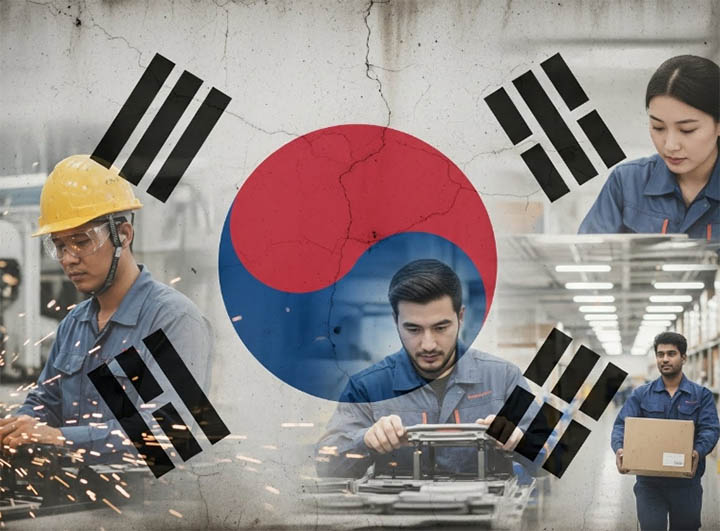
A Guide to Foreign Workers in Korea’s Manufacturing and Production Sector
What Life and Work Really Look Like, Explained by a Korean Local
When people abroad think of working in Korea, they often imagine offices in Seoul, tech companies, or English teaching jobs. But the reality is that manufacturing and production work forms the backbone of Korea’s economy, and foreign workers play a critical role in keeping that system running.
As a Korean local, I’ve met many foreign workers in factories, industrial zones, and small manufacturing towns. Their experiences are rarely talked about honestly in English. This guide is meant to fill that gap, explaining how this sector works, what foreign workers can expect, and what life is really like on and off the factory floor.
Why Korea Depends on Foreign Manufacturing Workers
Korea’s manufacturing sector includes factories producing auto parts, electronics, machinery, plastics, food products, and textiles. These jobs are physically demanding, often repetitive, and increasingly avoided by younger Koreans.
As a result, foreign workers have become essential. Without them, many small and medium-sized factories simply could not operate. This isn’t a temporary trend. It’s now built into how the industry functions.
Who Are the Foreign Workers in This Sector
Most foreign manufacturing and production workers come from Southeast Asia, Central Asia, and parts of Eastern Europe. Common nationalities include Vietnamese, Thai, Filipino, Uzbek, Mongolian, and Nepalese workers.
Some arrive through government programs, while others come via company sponsorship. Many workers are on fixed-term contracts and renew them based on performance and legal eligibility.
Despite language and cultural differences, these workers often become long-term residents, deeply familiar with Korean daily life.
Common Job Roles in Manufacturing and Production
Foreign workers are usually assigned to roles that require consistency and physical stamina rather than advanced Korean language skills.
Typical positions include:
- Assembly line work
- Machine operation
- Packaging and quality inspection
- Welding and metal processing
- Food production and preparation
The work can be intense, especially during peak seasons, but it is structured and predictable.
Working Conditions: What to Expect Honestly
This is where expectations need to be realistic.
Factory work in Korea often involves:
- Long standing hours
- Shift work, including nights
- Overtime during busy periods
- Strict safety rules
The environment varies greatly by company. Some factories are modern and well-managed. Others are older and physically tough. What I often tell foreigners is this: your experience depends more on the employer than the industry itself.
Pay and Overtime Culture
Wages for manufacturing workers are usually based on Korea’s minimum wage, with overtime and night shifts significantly increasing monthly income.
Many foreign workers earn more through overtime than through base pay. This can be financially rewarding but physically demanding. Some workers prioritize saving money quickly, while others struggle with burnout if rest is limited.
Understanding your contract clearly before starting work is crucial.
Housing and Daily Life Outside Work
Housing is often provided or arranged by the employer. This may include:
- Dormitory-style rooms
- Shared apartments
- Factory-adjacent housing
Living conditions are usually basic but functional. Many foreign workers form strong social circles with coworkers, often from the same country or region. These communities become emotional support systems, especially for newcomers.
Language Barriers and Communication
Most factories operate primarily in Korean. While basic instructions are often taught through repetition, misunderstandings do happen.
Workers who make even small efforts to learn basic Korean phrases tend to adapt faster and feel more respected. From a Korean perspective, effort matters more than fluency.
Legal Status and Worker Protections
Foreign manufacturing workers are protected under Korean labor law. This includes:
- Minimum wage
- Workplace safety standards
- Rest days and holidays
However, navigating complaints or disputes can be intimidating, especially with language barriers. NGOs and migrant worker support centers play an important role here, helping workers understand their rights.
Challenges Foreign Workers Commonly Face
Based on what I’ve observed and heard directly:
- Physical exhaustion
- Homesickness
- Communication difficulties
- Power imbalance with employers
These challenges are real, but many workers also express pride in their resilience and independence.
Why Many Workers Still Choose This Path
Despite the difficulties, manufacturing work in Korea offers:
- Stable income
- Legal employment
- Opportunities to save money
- Exposure to Korean society beyond tourist areas
For many, it’s a stepping stone toward long-term plans, whether that’s supporting family back home or building skills for the future.
Advice from a Korean Local
If you’re considering this path:
- Research employers carefully
- Ask about overtime expectations
- Learn basic workplace Korean
- Connect with support organizations early
Korean society may feel rigid at first, but respect and consistency go a long way.
Final Thoughts
Foreign workers in Korea’s manufacturing and production sector are not temporary helpers. They are an essential part of the country’s industrial ecosystem.
Understanding the realities — both good and difficult — helps set realistic expectations and prevents disappointment. From a Korean local’s point of view, these workers deserve far more recognition than they receive.
If you’re thinking about working in this field, preparation and mindset matter just as much as paperwork.