
A Late Review, but Still Worth It: Why K-Pop: Demon Hunters Hit Harder Than Anyone Expected
I actually wrote this piece back in June, right after watching K-Pop: Demon Hunters, but somehow it sat quietly in my drafts until now. Looking back, though, the timing almost feels right. After months of global buzz, chart records, and endless fan discussions, it’s clear this film wasn’t just a temporary trend. It was something smarter, more calculated, and more culturally aware than most animated releases we’ve seen in years.
Released by Sony Pictures Animation in June 2025, K-Pop: Demon Hunters didn’t just perform well on Netflix. It dominated conversations. It crossed industries. And most impressively, it pulled in viewers who normally wouldn’t touch K-Pop content at all.
So what made it work?
A Story That Understands Both Tradition and Modern Obsession
At its core, K-Pop: Demon Hunters succeeds because it treats Korean culture as more than a visual aesthetic. The film blends modern idol fandom with traditional Korean shamanism in a way that feels intentional, not gimmicky.
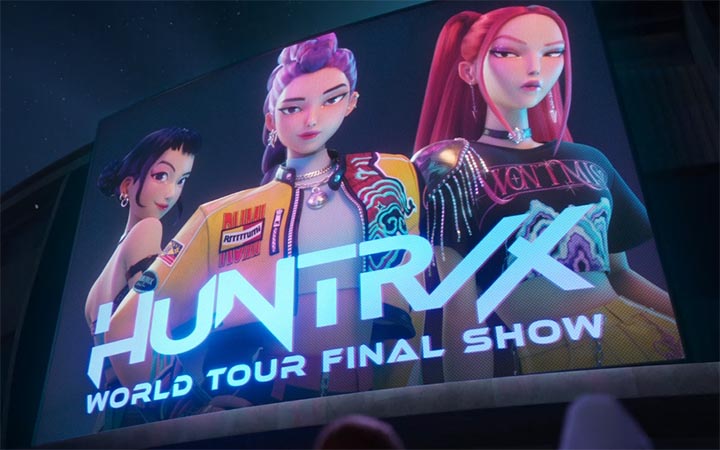
We follow Huntress, a wildly popular girl group who secretly live as demon hunters, while their rivals, the Saja Boys, are revealed to be demons hiding behind perfect choreography and fan service. What’s clever here is that the movie doesn’t rush to make one side purely evil. The audience is encouraged to like both groups, which mirrors real K-Pop fandom culture where loyalty and emotional investment run deep.
By turning the central conflict into a K-Pop showdown rather than a simple fight scene, the film reframes good versus evil as performance, influence, and public perception. That choice alone elevates the narrative far beyond a standard animated action plot.
Music That Isn’t Decorative, but Essential
One of the biggest surprises for many viewers was how deeply the music is woven into the story. This isn’t a musical where songs pause the plot. Here, the songs are the plot.
Tracks like Golden, Your Idol, Soda Pop, and How It’s Done didn’t just chart well, they actively pushed the narrative forward. Seeing four songs from an animated film land in the Billboard Hot 100 Top 10 at the same time wasn’t just impressive, it was unprecedented.
The story behind Golden adds another layer of fascination. Composer Lee Jae originally wrote the song for another artist and intentionally made the vocal range nearly impossible, spanning three octaves, assuming he’d never have to perform it himself. Director Maggie Kang, however, was so moved by the demo that she insisted Lee Jae record the final version. That decision paid off. The song’s difficulty sparked the viral Golden Challenge, pulling even casual listeners into the film’s orbit.
Visual Direction That Feels Like Korea, Not Just Inspired by It
Sony Pictures Animation’s signature energy is all over this film, but what makes it stand out is how deliberately Korean the visual language feels. From color palettes to motion design, everything is tuned to reflect a modern Korean sensibility rather than a generic East Asian aesthetic.
Action scenes are staged like high-budget K-Pop music videos, especially the opening sequence where the members battle demons mid-air before landing flawlessly on a stadium stage. It’s over-the-top in the best way, and it immediately tells you this movie understands performance culture on a deep level.
Even smaller details, like the way Korean food is animated, matter. The close-ups of steaming dishes and familiar street food don’t feel accidental. They quietly reinforce the lifestyle aspect of Hallyu, reminding viewers that K-Pop has always been about more than music alone.
Why It Works Even If You Don’t Like K-Pop
Possibly the smartest decision the film makes is refusing to assume the audience already loves K-Pop. The humor is accessible, the emotional beats are universal, and the sound design is rich enough to impress viewers who came in with zero fandom background.
Parents can enjoy it. Casual Netflix browsers can enjoy it. Longtime fans will obviously love it. By framing K-Pop as a language of energy, teamwork, and emotional connection rather than a niche obsession, the film opens the door instead of guarding it.
Final Thoughts
Watching K-Pop: Demon Hunters months after its release only confirms what many suspected early on. This wasn’t a lucky hit. It was a carefully crafted cultural crossover that understood exactly what it was doing.
It respected tradition without freezing it in the past. It celebrated fandom without mocking it. And most importantly, it trusted its audience to keep up.
Sometimes posting late just means you had time to realize what you were really watching.