Common Korean Construction Safety Signals and Terms — A Local’s Practical Guide
This guide is particularly useful for workers from Russia, Kazakhstan, Uzbekistan, etc
If you’re preparing to work on a construction site in Korea, one of the things that quickly becomes clear is this: understanding local safety signals and terminology isn’t just helpful — it’s essential. Korea has its own safety words, phrases, and written warnings on signs that might look intimidating at first glance. But once you know the core terms and what they mean in practice, you’ll feel much more confident getting around a site.
No jargon, no mystery — just the words you’ll actually encounter.
Why Safety Language Matters on Korean Construction Sites
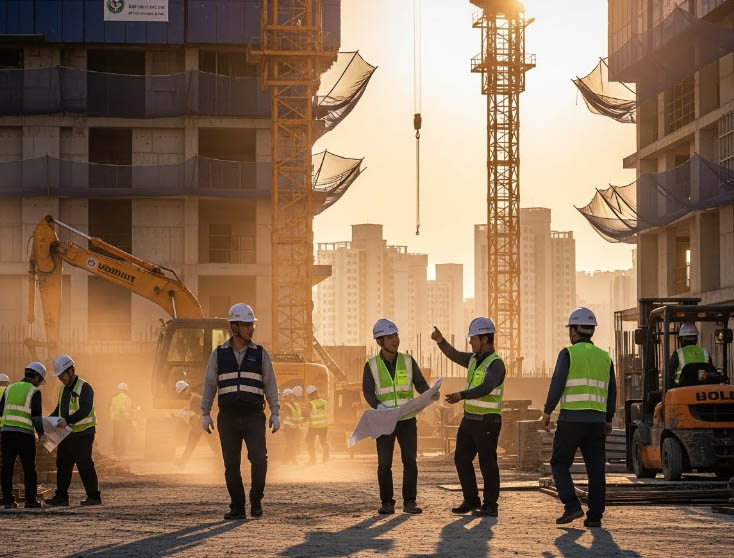
Korean construction culture takes safety seriously because sites are busy, heavy machinery is moving constantly, and the work pace can be intense. Signs aren’t just polite suggestions — they’re practical commands designed to prevent injury.
Even if you’re not fluent in Korean, knowing these terms will help you:
- Follow instructions quickly
- Avoid hazards
- Understand supervisor directions
- Respect local norms
- Work safely with Korean colleagues
Now, let’s get into the actual words and phrases.
Basic Safety Terms You’ll See Everywhere
Here are the foundational terms that appear again and again:
안전 (Anjeon) — Safety
This is the core word you’ll see on signs, posters, and instructions. If a sign contains “안전,” it’s about staying safe.
주의 (Juyi) — Caution
This is the Korean equivalent of “Be careful.” When you see this, pay immediate attention.
경고 (Gyeonggo) — Warning
Stronger than caution. A 경고 sign means there’s significant risk ahead.
위험 (Wiheom) — Danger
This is used in high-risk areas where immediate awareness is crucial.
Common Construction Safety Instructions
You’ll often see these posted at site entrances, equipment zones, and hazard points.
안전모 착용 (Anjeonmo Chak-yong) — Wear safety helmet
Construction sites in Korea require helmets at all times. This phrase appears on signs and is often announced verbally.
안전장비 착용 (Anjeon Jangbi Chak-yong) — Wear safety gear
This covers gear beyond helmets — gloves, boots, goggles, etc.
작업중 (Jag-eop Jung) — Work in progress
This means workers are actively doing construction work. Stay alert.
출입금지 (Chul-ip Geumji) — No entry
This is not a polite suggestion — it means do not enter without permission.
Safety Signals You’ll Hear on Site
Korean construction sites often use brief, loud, standardized verbal signals or short phrases that translate roughly like this:
조심해 (Josimhae) — Be careful
This is the everyday safety alert.
멈춰! (Meomchwo!) — Stop!
A quick command used if something dangerous is about to happen.
위험! (Wiheom!) — Danger!
Shouted when an immediate hazard is present.
다치지 마! (Dachiji Ma!) — Don’t get hurt!
More conversational, but still a reminder to tread carefully.
In many Korean workplaces, these verbal cues are taken seriously and responded to instantly.
Signs Related to Machinery and Movement
On Korean construction sites, you’ll see machine-specific warnings like:
중장비 이동중 (Jungjangbi Idong-jung) — Heavy equipment moving
This tells you that excavators, cranes, or loaders are likely operating nearby.
승강기 조작중 (Seungganggi Jojak-jung) — Elevator/lift in operation
If your site uses external lifts or platforms, this alerts you to movement overhead.
낙하물 주의 (Nakhamul Juyi) — Watch for falling objects
Always a crucial warning near scaffolding or upper-level work.
미끄럼 주의 (Mikkeureom Juyi) — Watch your step/slippery surface
Good to know especially in rainy seasons or where surfaces are uneven.
Emergency and First Aid Terms
Every site needs emergency awareness. Here are terms you might see near first-aid stations or emergency exits:
응급처치 (Eunggeup Cheochi) — First Aid
Signs that point to first aid kits or stations.
출구 (Chul-gu) — Exit
Important in safety planning.
구급차 (Gugeupcha) — Ambulance
Used in emergency contact instructions.
Knowing these words helps you recognize support points when things go wrong.
How Koreans Use Colors and Symbols
Korean safety signage often uses standard visual cues:
- Red = danger or stop
- Yellow = caution
- Blue = required action (e.g., wear gear)
- Green = safe condition or first aid
For example, a yellow sign with “주의” tells you to slow down and look around. A red sign with “위험” means don’t go further without protective action.
Understanding these visual cues helps you interpret signs even before deciphering every word.
Tips for Foreigners on Korean Construction Sites
Here’s how to make safety language work for you:
1. Learn these key terms first
Even basic recognition makes a huge difference.
2. Watch what others do
If all workers are wearing certain gear where a sign stands, follow their lead.
3. Ask for clarification
It’s normal to ask your supervisor: “What does this sign mean?” Koreans prefer a safe, clear work environment.
4. Use simple Korean phrases
Express basic safety needs — like “물 주세요” (Please give water) or “어디 위험해요?” (Where is danger?) — and people will help.
Final Thoughts from a Korean Local
Korean construction sites might seem full of unfamiliar words and bold signs, but most of them are logical once you learn the patterns. Korea’s safety culture is serious — and signs and signals reflect that seriousness.
The goal is not to memorize every sign in a single day, but to become comfortable recognizing key alerts and responding quickly. Safety language isn’t just vocabulary — it’s part of how people collaborate, protect each other, and work together every day.
When you internalize these terms, you’re not just staying safe — you’re showing respect for your team, your workplace, and Korean craftsmanship.
That makes you not just a worker, but part of the crew.