
Common Mistakes Foreigners Make on the Ja-gi So-gae-seo (Cover Letter)
You’ve aced the resume (Iryeokseo) and now you face the Ja-gi So-gae-seo (자기소개서), the Korean “Self-Introduction Letter” or cover letter. This document is far more critical in Korea than a standard Western cover letter—it’s your chance to prove you are a perfect cultural fit and that your personality aligns with the company’s ethos.
However, foreigners often commit critical errors here by applying Western standards of self-promotion, which can be interpreted as arrogance or a lack of self-awareness.
As a local, I’m here to give you the honest blueprint for the seven most common mistakes foreigners make on the Ja-gi So-gae-seo and how to fix them to secure that interview!
Mistake 1: Focusing Only on “I” and Individual Achievement
The Error: Writing the entire letter as a list of personal, individualistic accomplishments (“I single-handedly saved the project,” “I was the top performer”).
The Why: Korean corporate culture heavily prioritizes the team (Uri) and harmony (Hosu). Excessive individual self-praise can be seen as arrogant and suggest you won’t be a collaborative team player.
The Fix: Frame your achievements as contributions to a collective goal. Use phrases like, “My role was to support the team’s goal by…” or “I learned the importance of collaboration when…”
Mistake 2: Writing a Generic, One-Size-Fits-All Letter
The Error: Using the exact same Ja-gi So-gae-seo template for every company.
The Why: The Ja-gi So-gae-seo is meant to show sincerity and diligence (Seong-sil). Failing to tailor the letter suggests you lack commitment to the specific company.
The Fix: Research the company’s core values (often found on their website). Integrate their mission statement or product philosophy into your motivation paragraph. Show that you did your homework!
Mistake 3: Presenting a Problem Without a Solution
The Error: Focusing too much on describing a challenging experience (e.g., a difficult project or a former conflict) without detailing the solution or the growth achieved.
The Why: The company is looking for reliable employees. While sharing weaknesses is acceptable, dwelling on negativity or failure without a clear, positive resolution is a red flag.
The Fix: Use the structure: Situation > Action > Result > Learned Growth. Ensure the “Learned Growth” section is the longest, emphasizing resilience and adaptability.
Mistake 4: Being Overly Creative or Casual in Tone
The Error: Starting the letter with a witty anecdote, using excessive slang, or trying to inject too much personality (e.g., “My personality is like a persistent bear that always achieves its goals”).
The Why: Formality, respect, and professionalism are highly valued. The Ja-gi So-gae-seo is a formal document. Overly casual or unusual comparisons can confuse or be perceived as immature.
The Fix: Maintain a respectful, formal tone (Jondaemal style in English or Korean) throughout. Be sincere, but let your achievements and diligence speak for themselves.
Mistake 5: Focusing on Your Needs (The Self-Serving Motivation)
The Error: Writing heavily about how the job will “help you achieve your personal goals,” “allow you to live in Korea,” or “provide good work-life balance.”
The Why: A company’s priority is profit and collective success. They are not a charity. Focusing only on personal benefit suggests low commitment to the company’s mission.
The Fix: Focus your motivation on what you can give the company. Example: “I am applying because my global marketing skills are perfectly suited to lead your expansion into the American market.”
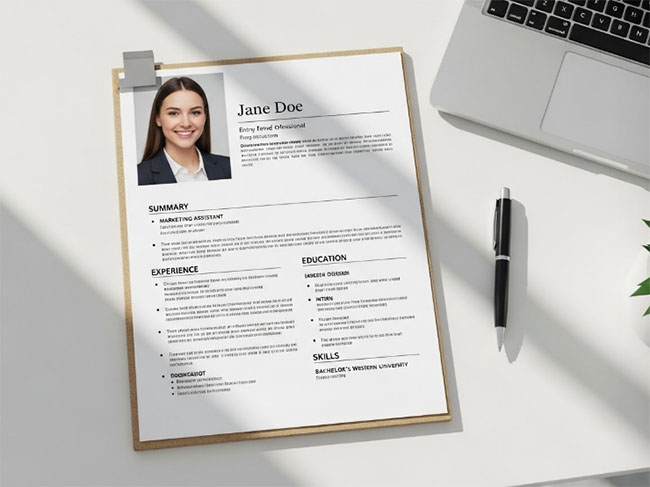
Mistake 6: Ignoring the Mandatory Photo
The Error: Submitting an application without a professional, appropriate headshot, assuming it’s unnecessary (as in the West).
The Why: For most Korean applications, the photo is mandatory and is a test of your professionalism and respect for the standard format.
The Fix: Use a clean, formal photo (suit/business attire, neutral background).
Mistake 7: Translating Directly (The Language Mismatch)
The Error: Directly translating a technical or cultural term from your native language into Korean or English, which loses meaning or sounds awkward.
The Why: This shows a lack of Nunchi or understanding of local professional phrasing.
The Fix: If writing in English, use clear, precise corporate language. If submitting in Korean, always have a native speaker review your Jagi So-gae-seo for natural flow and correct honorifics.