
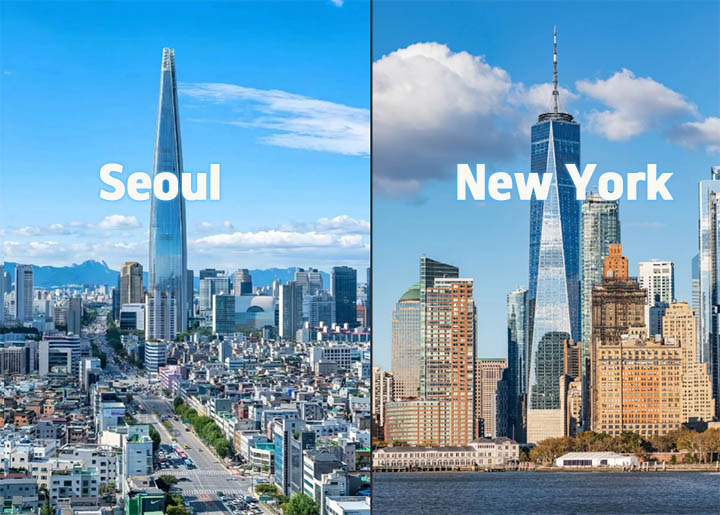
Cost of Living in Seoul vs. NYC: A Detailed Comparison for Expats
If you’re thinking about moving abroad, finding a job overseas, or just daydreaming about life in a new city, there’s one question that always comes up first: How much will it cost? Seoul and New York City are two of the most exciting, dynamic cities in the world, but they feel very different when you open your wallet.
As someone living in Seoul and familiar with both local realities and international expectations, I’ll walk you through a detailed comparison of daily life costs in Seoul vs. NYC — the good, the surprising, and the downright eye-opening.
Housing: Rents That Tell Two Very Different Stories
When you compare Seoul and New York City rent, “expensive” means very different things.
In New York City, even a tiny studio in Queens or Brooklyn can easily cost $2,000 a month or more, while a one-bedroom in Manhattan often goes well above $3,000.
In Seoul, many people are shocked at how much more affordable rent can be. A small one-room (officetel or gosiwon) near central Seoul might cost $600 to $1,000 a month. Larger two-bedrooms in good neighborhoods typically range from $1,200 to $2,000 — much more budget-friendly than NYC.
Seoul also has deposit-based housing (jeonse) where you pay a large lump sum upfront instead of monthly rent. This system can be expensive in cash but reduces monthly costs dramatically.
Bottom line: Seoul’s rent is generally significantly cheaper than NYC’s, especially if you’re not living right in the tourist core.
Utilities: A Smaller Hit in Seoul (Usually)
Utility costs include electricity, gas, water, internet, and sometimes building maintenance. These vary a lot by season and apartment type.
In NYC, expect to pay $150–$250 per month for basic utilities in a small apartment, plus internet.
In Seoul, utilities are often lower — especially if you live in modern buildings with efficient heating and insulation. It’s not uncommon to see total utilities around $80–$150 per month. Internet in Seoul is typically cheaper and ridiculously fast — a big plus for students and remote workers.
The caveat: winter heating costs in Seoul can spike, especially if you rely on electric heating.
Food and Groceries: Seoul Can Be Cheaper — or Tastier
Food is where comparisons get interesting.
In NYC, groceries at major supermarkets are expensive, especially produce and dairy. Eating out is convenient but costly — a casual meal can easily hit $15–$25, and pizza or burgers with sides often go north of $30.
In Seoul, grocery basics like rice, ramen, eggs, and vegetables are generally cheaper. Meat prices vary, but overall groceries tend to cost less than in NYC. Dining out can be extremely affordable too — a bowl of noodles or bibimbap might be $5–$8, and casual BBQ meals run $10–$20 per person.
International food and imported goods (like almond milk or Western snacks) can be pricey in Seoul, so choices matter.
Bottom line: Daily meals and local groceries in Seoul usually cost less, and the food variety is incredible.
Transportation: Efficient and Affordable Seoul
One area many expats rave about is Seoul’s public transportation.
In New York City, a MetroCard ride costs $2.75, and monthly passes are around $132 (as of recent pricing). Taxis and ride-shares can get expensive quickly.
In Seoul, a subway or bus costs around $1–$2 per ride, with monthly passes often under $100 depending on zones. Taxis in Seoul are also cheaper for similar distances compared to NYC.
Both cities have excellent transit, but Seoul’s network is newer, cleaner, and a bit more punctual — and it won’t make as large a dent in your monthly budget.
Healthcare and Insurance: Very Different Systems
Healthcare costs in NYC are notoriously high without insurance. A simple doctor visit can be over $100 without coverage, and prescriptions add up.
In Korea, the national health insurance system covers most services and is required for residents. Even with copays, routine healthcare is far more affordable than in the US. Many expats find doctor bills in Seoul to be surprisingly reasonable.
Bottom line: Healthcare in Seoul is significantly more affordable, but you must enroll in the national system or maintain private coverage.
Entertainment and Social Life: Fun Costs That Add Up
Both cities are cultural capitals with endless options.
NYC offers Broadway shows, world-class museums, and high-end dining, but prices reflect that prestige. A night out can be easily $60+ per person once food, drinks, and tickets are counted.
Seoul has booming nightlife, trendy cafés, and temples-to-towers experiences that can be much cheaper. Live music, shows, and cultural performances often cost less than equivalent NYC events. Street food, markets, and local festivals keep entertainment flexible for all budgets.
Pocket Money for Students and Expats
Here’s a rough monthly snapshot (excluding rent):
- Seoul: $500–$900 — transportation, food, utilities, entertainment
- NYC: $900–$1,500 — transportation, food, utilities, entertainment
Your personal style matters, but for most people, daily life expenses are noticeably lower in Seoul.
Quality of Life: More Than Just Numbers
Cost of living is not only about dollars. Seoul’s pedestrian culture, ultra-fast internet, safety, and convenient urban layout make everyday life comfortable. NYC’s electrifying energy, diversity, and endless opportunity are world-class, but come with a higher price tag.
If you want a city that feels alive but still affordable, Seoul has few equals. If you want a global career hub with unmatched cultural diversity, NYC shines despite the cost.
Final Thought: Which City Is Truly Cheaper?
On paper and in daily life, Seoul is generally much cheaper than New York City — especially for rent, food, and transportation. But the choice between the two should also consider personal priorities, career goals, and lifestyle expectations.
If your wallet matters first, Seoul often wins. If your network and global clout matter most, NYC may still hold value despite the higher cost.
Both cities are amazing — just in very different ways.