
Cultural Differences You’ll Face in a Korean International Marriage: A Local Perspective
Marrying someone from another country is beautiful, exciting, and often deeply rewarding but it also comes with cultural dynamics that can surprise you if you’re not prepared. In Korea, international marriage is increasingly common, and many couples navigate cultural differences while building a life together. As a Korean woman who has observed and lived alongside many multicultural families, I want to share realistic, honest, and relatable insights into what you might experience.
This isn’t about “good vs bad.” It’s about different and understanding difference makes the journey smoother and richer.
Family and Extended Family Expectations
One of the most noticeable cultural contrasts in international marriages in Korea involves family dynamics.
Korean families often value close involvement in major life decisions. This comes from a long tradition where family ties are central to identity and support. In practice, this can mean:
- Frequent visits with grandparents
- Parents offering opinions on everything from careers to children’s education
- Close coordination on holidays and celebrations
For some international partners, this level of involvement feels warm and supportive. For others, it can feel intrusive at first. Over time, most couples find balance through clear communication, respect, and gentle boundary-setting.
Understanding that family involvement is cultural, not personal interference helps a lot.
Communication Styles: Direct vs. Indirect
Communication in Korean culture tends to be more indirect and context-sensitive than in many Western cultures. What does that mean?
Where you might say “I don’t like this,” a Korean partner (and by extension, Korean family members) might express discomfort more subtly — through tone, implication, or silence.
This is not evasiveness. It’s a cultural preference for harmony and respect. Once you recognize this pattern, you’ll find yourself picking up on emotional nuance instead of waiting for blunt statements.
The key is to gently encourage openness while appreciating the cultural style that values respect and non-confrontation.
Public Expression of Affection and Social Norms
In some cultures, public displays of affection — holding hands, hugging, kissing — are commonplace. In Korea, especially in older generations, public affection is more modest.
That said, younger Koreans are more relaxed about public affection, particularly in big cities. International couples often navigate this with good humor: showing affection in ways that feel natural to both people while respecting local social norms when they’re out together.
It’s a small thing, but it’s one of those subtle differences that first catches your attention.
Celebrations, Holidays, and Rituals
Korean life is rich with celebrations that might feel unfamiliar at first. Unlike Western holidays like Thanksgiving or Christmas, Koreans celebrate:
- Lunar New Year (Seollal)
- Chuseok (Korean Thanksgiving)
- Parents’ Day and Teacher’s Day
- Family ancestor memorial rites
Some of these celebrations involve traditional foods, formal greetings, and group activities. International spouses often find that participating in these traditions deepens their connection to their partner’s family and culture. It’s not just ritual — it’s belonging.
Gender Roles: Cultural Expectations vs. Individual Values
Korean culture has historically had clear expectations about gender roles, especially in marriage. While this is changing rapidly, many expectations persist — like responsibility for major holidays, perceived “breadwinner” roles, or caregiving duties.
In modern Korea, you’ll find couples who fully embrace equality, others who prefer traditional roles, and everything in between. The key here is mutual dialogue early and often, to define what works for your relationship rather than relying on assumed norms.
Raising Children: Language and Cultural Identity
When multicultural couples have children, parenting becomes a space where cultural differences are most visible — and most enriching.
Questions often include:
- Which language(s) will we speak at home?
- How do we honor both cultural heritages?
- What schooling options align with our values?
Children growing up with two cultural identities can be remarkably adaptable and empathetic — but these choices take intentional planning. Many families create hybrid traditions that honor both cultures in celebrations, discipline, and daily communication.
Food and Daily Life: Small Things With Big Meaning
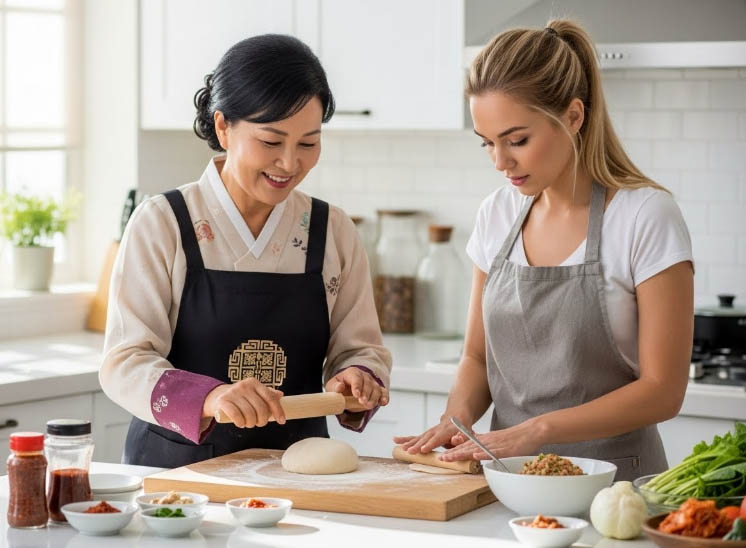
Food is not just nourishment in Korea — it’s social glue. Sharing meals, preparing food together, and understanding table manners are everyday parts of family life.
An international partner might be surprised by:
- Communal eating styles
- Importance of side dishes (banchan)
- Sharing soups and rice as family staples
These details may feel small, but they quickly become daily rituals that shape life together.
Language Learning: Practical and Emotional
Learning Korean is often more than a practical tool — it’s a gesture of love. Many international spouses find that studying Korean opens doors to deeper emotional connection, family integration, and social confidence.
Even basic conversational Korean can transform everyday interactions from polite and surface-level to meaningful and warm.
Support Systems: You’re Not Alone
International marriage in Korea isn’t unusual anymore. Many cities have support centers for multicultural families, language assistance programs, and peer groups where spouses exchange experiences and advice.
These communities offer practical help and emotional support — especially when cultural misunderstandings feel overwhelming.
Growth Through Difference
Finally, cultural differences in international marriage are not barriers to love — they are invitations to growth. They teach patience, curiosity, and empathy. They challenge assumptions and broaden perspectives. Most couples find that learning from each other’s culture makes their relationship stronger, richer, and more resilient.
International marriage is not easy in every moment. But it can be profoundly rewarding when two people learn to merge not just lives, but histories, values, and ways of seeing the world.
From coffee table conversations to family holiday dinners, cultural differences become opportunities to understand not only your partner but yourself in a deeper way.
That journey is one of the most meaningful parts of international marriage in Korea.