
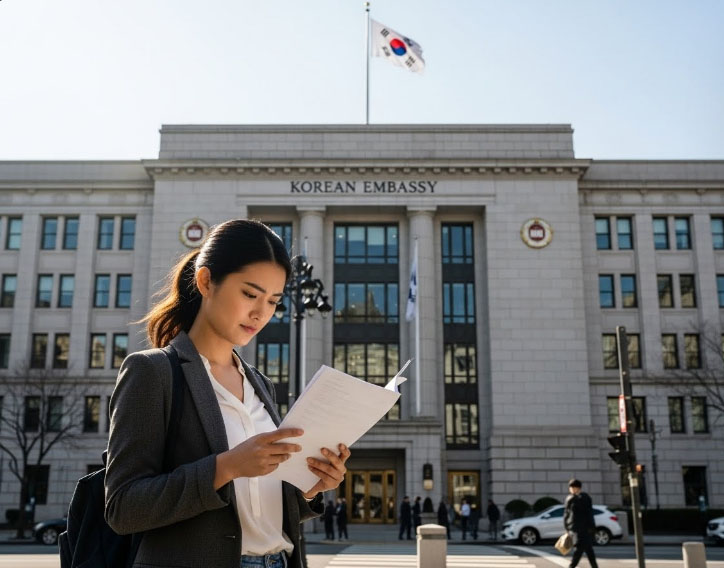
D-2 Student Visa Checklist: All Documents You Need
If you are planning to study at a Korean university, there is one thing standing between you and your new life of late-night convenience store snacks and library marathons: the D-2 student visa. As a Korean local who has watched countless students go through the process, I can promise you this one thing. The D-2 visa is not difficult, but it is extremely detail-sensitive. One missing document, one wrong date, one unofficial stamp, and suddenly you are waiting another month.
To save you from unnecessary headaches, I created a simple and realistic checklist based on what Korean embassies actually ask for today. If you prepare everything below, your visa experience will be much smoother.
1. Valid Passport
Your passport must not be damaged and should have enough validity left to cover your study period. If it expires soon, renew it early. Korean immigration does not accept temporary, handwritten, or nearly expired passports.
2. Completed Visa Application Form
Every embassy has its own format, so download the correct form from your local Korean consulate. Fill it out clearly, without missing any boxes. Small mistakes like mismatched signatures or incorrect dates can lead to delays.
3. Recent Passport Photo
Most embassies require a specific size with a plain background. Do not use a selfie, a cropped group photo, or an old picture from three hairstyles ago. Follow the instructions exactly.
4. Certificate of Admission from the University
This is your proof that a Korean university officially invited you. The school sends it after you are accepted. Make sure it includes your program, study period, and university seal. Immigration pays close attention to this document, so keep it clean and presentable.
5. Proof of Financial Ability
This one causes the most trouble for applicants. Korea wants to make sure you can afford tuition and living expenses. Depending on your country and the specific consulate, you may need one or more of the following:
- Bank statements showing stable funds
- Scholarship certificates
- Financial sponsor documents
- A notarized affidavit of support
Big, sudden deposits are a red flag, so show consistent financial history rather than dramatic last-minute money.
6. Transcript and Graduation Certificate
Your academic records prove that you are academically prepared for your program. Provide official transcripts and a certified graduation certificate from your previous school. If the documents are not in English or Korean, you may need a notarized translation.
7. Study Plan or Statement of Purpose
Some embassies require a short statement explaining why you want to study in Korea, why you chose your program, and how it fits your goals. Keep it clear and honest. Immigration officers can sense when someone writes something they do not believe.
8. Proof of Tuition Payment
Some universities require you to pay tuition before visa processing. Keep the receipt and attach it if the embassy requests it. Even if it is optional, submitting it can speed up your approval.
9. Criminal Background Check
This requirement varies by country, but many embassies ask for a recent nationwide background check. It must be official, clean, and if necessary, apostilled or notarized depending on your region.
10. Health Records or Medical Tests
Not all applicants need this, but some consulates request a tuberculosis test or general medical check. Requirements change often, so check with your local embassy before you apply.
11. Additional Documents for Certain Applicants
- Financial sponsor ID copies
- Family relationship certificates
- Proof of previous Korean stay
- Documents supporting scholarships
- Anything that confirms your personal situation
Remember, the embassy can always request extra documents based on your case.
Final Advice from a Korean Local
Here is the truth. The D-2 visa is not about impressing immigration officers. It is about proving that you are ready, organized, and prepared to study seriously. The applicants who get rejected are usually the ones who underestimate the paperwork.
If you prepare in advance and follow the checklist, you will be boarding your plane much sooner than you think. Good luck, and welcome to your new academic life in Korea.