
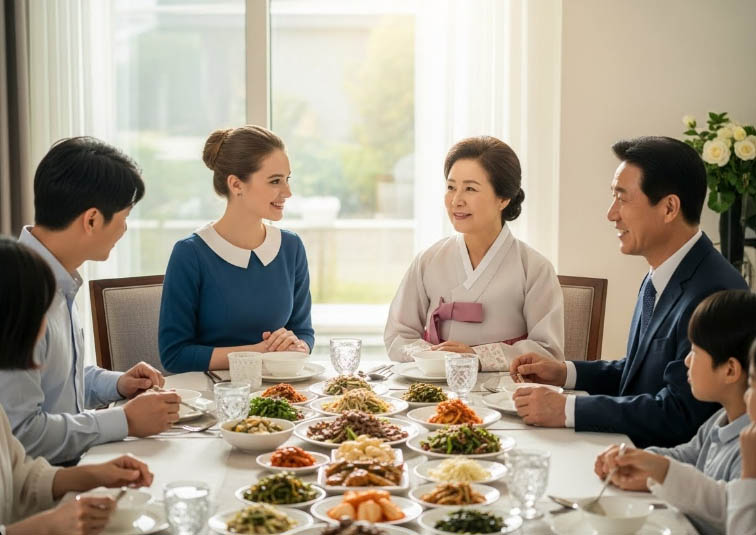
Dealing with Language Barriers with Korean In-Laws
A Korean Local’s Honest Guide for Foreign Spouses
Meeting your partner’s parents is a universally nerve-wracking moment, but when you add a language barrier into the mix, it can feel like navigating a maze with no exit signs. As a Korean woman who has seen countless international couples figure this out, I can tell you one thing: you’re not alone, and there are ways to make this situation comfortable, respectful, and even meaningful.
Let’s talk about realistic, down-to-earth strategies for dealing with language barriers with Korean in-laws, from first impressions to everyday interactions.
Why Language Barriers Matter with Korean In-Laws
In Korea, family relationships are closely tied to respect, communication, and social harmony. Even subtle miscommunication can feel huge when your in-laws are trying to welcome you. Many Korean families are warm and curious, but they may struggle to express it if they don’t speak your language well or you don’t speak Korean.
The good news is this: language is only one piece of communication. Tone, body language, intention, and effort count for a lot here.
First Impressions: It’s About Effort, Not Perfection
When you meet your Korean in-laws for the first time, they won’t expect perfect Korean. What they do appreciate immediately is effort.
Even simple greetings like “안녕하세요 (annyeonghaseyo)” and “처음 뵙겠습니다 (cheoeum boepgetseumnida)” go a long way. Koreans notice gestures that show you are trying, not just translating.
But don’t stress over accuracy on your first visit. Kindness and sincerity matter more than linguistic perfection.
Use Simple Korean and Slow Speech
Here’s a tip you’ll hear again and again from Koreans:
Short sentences, clear pronunciation, and gentle pacing make Korean easier to understand—even for advanced learners.
In-laws usually have limited English, so it’s best to avoid long or complex English explanations if you’re unsure they will be understood. Instead:
- Use basic Korean phrases you do know
- Repeat key words rather than entire sentences
- Smile, nod, and show engagement
- Ask for clarification when you’re uncertain
They will respect that you want to communicate clearly, not flawlessly.
The Role of Your Partner: Your Cultural Bridge
Your partner is the most important communication link between you and your in-laws. But be careful not to rely solely on them as a translator in every situation. This can make them feel torn between two roles: spouse and interpreter.
Instead, encourage your partner to:
- Help translate key messages
- Explain cultural context
- Support understanding without taking over every conversation
This creates balance and gives space for direct connection between you and your in-laws.
Learning Key Cultural Phrases
Instead of memorizing random vocabulary, focus on cultural phrases that matter to your in-laws.
For example:
- Expressions of gratitude
- Responses to compliments
- Polite ways to decline food or offers
- Phrases that show respect for age and experience
These are the phrases that Korean families actually use every day—not textbook sentences.
Body Language and Nonverbal Cues Matter
Koreans are very attentive to nonverbal communication, especially when language is limited.
Eye contact, tone, posture, and gestures can all communicate warmth or discomfort without a single word.
For example:
- A slight bow is seen as respectful
- Active listening (nodding, eye focus) shows engagement
- Gentle facial expressions matter more than dramatic gestures
Once they see you are genuinely engaged, their warmth often increases—even if the words are simple.
Be Patient with Silence
In many Western cultures, silence in a conversation feels awkward. In Korean culture, silence can be thoughtful, respectful, or simply part of listening.
When language doesn’t come easily, silence can be a neutral space—not a problem to fix.
Don’t rush to fill every pause. Let the conversation unfold.
Use Tools Wisely: Technology and Translation Apps
There is no shame in using translation apps. Most Korean families understand that technology helps bridge language gaps.
Some tips:
- Use live translation sparingly in conversation to avoid awkward pauses
- Focus on translating key ideas rather than every word
- Confirm understanding through repetition or paraphrasing
In many homes, a translated phrase followed by a smile works better than struggling for a perfect Korean sentence.
Shared Activities Can Speak Louder Than Words
Sometimes the easiest way to bond is not through language at all.
Shared meals, helping in the kitchen, watching TV together, and participating in family routines can create connection faster than perfect conversation.
Actions often speak louder than words with Korean families, and most appreciate participation more than linguistic fluency.
Dealing with Misunderstandings
Misunderstandings will happen—and that’s okay.
When they do:
- Acknowledge the misunderstanding
- Clarify gently
- Apologize if needed
- Move forward with humor and grace
Korean families are generally forgiving when they see sincere effort.
Final Thoughts from a Korean Local
Language barriers with in-laws are real, but they are not obstacles—they are opportunities.
Every sincere attempt to communicate builds trust, respect, and deeper connection. Your effort signals love not just for your partner, but for their family and culture.
Remember: your in-laws are human too. They want to know you, understand you, and be understood by you. Language might be the first challenge, but understanding and kindness make the bridge far stronger than any words alone.