
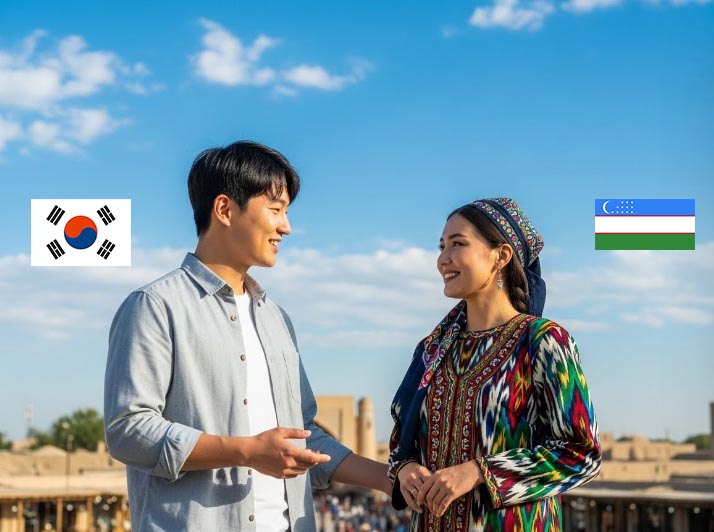
Differences in Marriage and Culture between Korea and Uzbekistan
Why Comparing These Two Cultures Matters
From a Korean perspective, Uzbekistan might feel geographically distant, but culturally, the comparison becomes surprisingly meaningful when people start forming families across borders. As international marriages between Koreans and Uzbeks increase, many foreigners ask a very practical question: Why do couples from these two cultures sometimes struggle to understand each other, even when they care deeply?
The answer usually lies not in personality, but in deeply rooted cultural expectations around marriage, family, and daily life.
How Marriage Is Viewed in Korean Culture
In Korea, marriage has traditionally been seen as a social milestone, not just a personal choice. Although younger generations are changing this view, marriage still carries strong expectations tied to stability, responsibility, and family reputation.
Marriage is often closely connected to:
- Financial readiness
- Career stability
- Approval from parents
- Social timing
Romantic love matters, but practical concerns often come first. Many Korean couples spend years preparing for marriage, discussing housing, finances, and future plans in detail before setting a date.
Marriage is also seen as the beginning of a relationship not just between two people, but between two families.
How Marriage Is Viewed in Uzbek Culture
In Uzbekistan, marriage is also highly valued, but the emotional tone can feel different. Marriage is deeply connected to family, tradition, and community, and it often happens earlier in life compared to Korea.
Key characteristics of Uzbek marriage culture include:
- Strong emphasis on family unity
- Active involvement of relatives
- Clear gender roles in many households
- Respect for tradition and elders
Marriage is not only about the couple’s future, but about maintaining harmony within extended family networks. Emotional closeness and daily family interaction are often emphasized more than long-term financial planning.
Family Structure: Nuclear vs Extended
One of the biggest differences appears after marriage.
In Korea, modern families are increasingly nuclear. Couples often live separately from parents, especially in cities, and privacy is highly valued. While parents remain influential, daily life decisions are usually made by the couple themselves.
In Uzbek culture, extended family life is far more common. Living close to relatives, frequent family gatherings, and shared responsibilities are normal. Parents and elders often play an active role in decision-making, even after marriage.
This difference can be surprising for couples who are not prepared for it.
Gender Roles and Expectations
Both cultures traditionally value defined gender roles, but they express them differently.
In Korea:
- Dual-income households are common
- Women often balance work and family
- Expectations around appearance, parenting, and emotional labor remain strong
In Uzbekistan:
- Traditional roles are more clearly defined in many families
- Women are often expected to prioritize home and family
- Men are viewed as primary providers
When couples come from these two backgrounds, misunderstandings can arise unless expectations are discussed openly.
Communication Style and Emotional Expression
Koreans often communicate indirectly. Reading the atmosphere, understanding unspoken signals, and avoiding open conflict are common social habits. Emotional restraint is often seen as maturity.
Uzbek culture tends to be more emotionally expressive. Direct communication, warmth, and visible affection within families are more accepted. Silence may be interpreted differently, sometimes as distance rather than respect.
In marriage, these differences can affect how couples argue, apologize, or express care.
Religion and Daily Life
Religion also plays a role in shaping values.
Korea has a mix of religious and non-religious lifestyles, and religious practice is often a personal choice. In many families, religion does not strongly dictate daily routines.
In Uzbekistan, Islam influences cultural norms even for people who are not strictly religious. This can affect food choices, holidays, clothing preferences, and social behavior.
These differences become especially important when raising children.
Raising Children: Different Priorities
Korean parenting is often highly education-focused. Academic achievement, structured schedules, and long-term success are major concerns.
Uzbek parenting places strong emphasis on:
- Respect for elders
- Family loyalty
- Moral behavior
- Community belonging
Neither approach is right or wrong, but blending them requires compromise and understanding.
Where Conflicts Often Begin
In Korean–Uzbek marriages, tension often arises from:
- Different expectations about in-laws
- Household responsibilities
- Parenting styles
- Financial priorities
- Emotional communication
Most conflicts are not cultural problems themselves, but unspoken assumptions carried from each culture.
What Makes These Marriages Work
From what I see in Korea, couples who succeed tend to:
- Talk openly about expectations early
- Learn each other’s cultural logic, not just habits
- Set boundaries with extended family respectfully
- Build a shared “third culture” at home
Successful couples don’t choose one culture over the other. They create something new together.
Final Thoughts from a Korean Perspective
Korea and Uzbekistan are different in many ways, but they share one important value: marriage is taken seriously. That shared seriousness is often what helps couples overcome differences.
Understanding cultural gaps before marriage doesn’t eliminate challenges, but it does replace confusion with empathy. And in multicultural relationships, empathy is often the most important language of all.
For readers trying to understand Korea through real human relationships, this comparison offers one clear message: cultural differences don’t disappear in marriage, but with respect and patience, they can become a source of strength rather than conflict.
Why Some Korean Manufacturing Jobs Pay More Than Office Jobs