
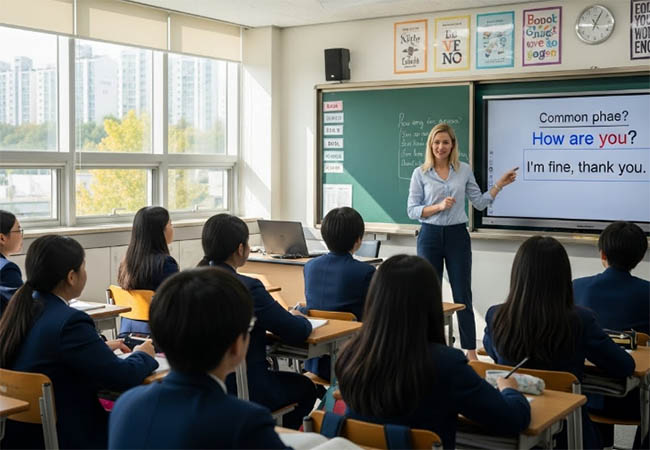
What English Teachers Should Know Before Working in Korea
Annyeonghaseyo, future educators! You’ve secured your teaching contract, and you’re ready to trade in your old routine for kimchi and the Korean classroom. Working as an English teacher (often on an E-2 visa) is the most common and accessible entry point to living in Korea, but the reality inside the classroom and the office might be different from what you expect.
As your Korean insider, I’m here to give you the essential, strategic guide on What English Teachers Should Know Before Working in Korea—from visa practicalities to classroom culture. Get ready for your new life!
1. Visa and Documentation (The Paperwork Marathon)
The E-2 visa process is complex and requires meticulous preparation.
Apostilles Are Mandatory: Your university diploma and your background check must be authenticated with an Apostille stamp (or consular equivalent). This process takes time, often weeks, and cannot be skipped. Start this immediately.
The Health Check: Upon arrival in Korea, you will undergo a mandatory health check (which includes drug and HIV testing). Passing this is essential for finalizing your visa and receiving your Alien Registration Card (ARC).
ARC is Your ID: Once issued, the ARC is your primary form of identification in Korea. You need it for banking, getting a phone contract, and traveling internally. The ARC process takes several weeks after your arrival.
2. Workplace Realities: Public vs. Private
Your day-to-day work life will differ dramatically based on whether you work in a public school or a private academy.
Public Schools (EPIK/GEPIK): You’ll usually co-teach with a Korean teacher. Your schedule is stable, you get ample vacation time (often 18-22 days per year plus national holidays), and the work-life balance is generally good. However, you often have less control over curriculum development.
Private Academies (Hagwons): These require faster-paced teaching, often with higher hourly loads, including evenings and weekends. The starting salary can be slightly higher, but vacation time is minimal (typically 10 days per year plus national holidays). Be sure to read your contract thoroughly regarding severance and vacation clauses.
3. Classroom and Student Culture
Korean students are generally respectful, but the learning environment operates under different expectations than Western schools.
Respect and Hierarchy: Students are expected to show deep respect for teachers, often bowing when greeting you. Hierarchy (Jondaemal – polite language) is embedded in the student-teacher relationship.
The Focus on Testing: The Korean education system is highly focused on test results (especially for older students). The pressure is high, and your curriculum may be geared toward memorization and exam preparation rather than free discussion or creativity.
No Discipline Issues (Usually): Severe discipline problems are rare in Korean classrooms compared to many Western countries. Students are typically focused, but they might be shy or hesitant to participate in open discussions.
4. Financial and Living Logistics
Your financial package includes several key benefits unique to working in Korea.
Housing/Allowance: Most contracts include either a furnished studio apartment or a monthly housing allowance (e.g., ₩400,000 to ₩600,000 KRW). This significantly reduces your initial living costs.
National Health Insurance: Your employer is legally required to enroll you in the National Health Insurance (NHI) scheme. This provides affordable, world-class healthcare, which is one of the best perks of working in Korea.
Severance Pay: By Korean law, if you complete a full 12-month contract, your employer must give you an extra month’s salary (severance pay) upon completion. This is mandatory and should be clearly written in your contract.
Preparing for these realities will ensure a smoother transition and a successful teaching experience in Korea.