
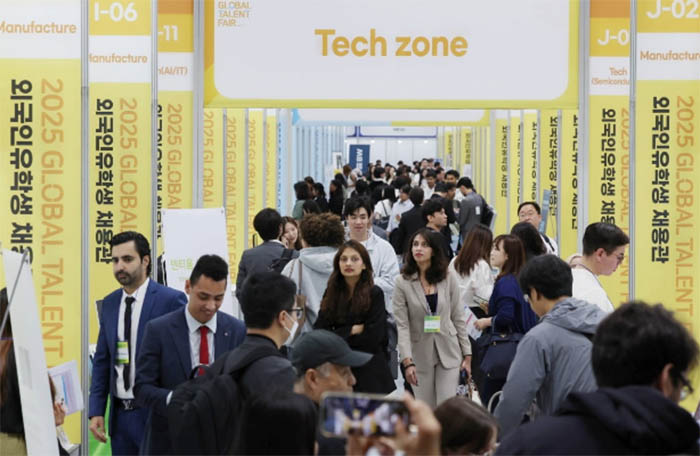
Korea’s Global Community
Foreign Residents by Purpose and Country
You see them everywhere—students bustling through university districts, expats in professional towers, and tourists exploring ancient palaces. South Korea is a magnet for the world, and the number of foreigners living and visiting here has exploded, driven by economic opportunity and the unstoppable force of the Korean Wave (Hallyu).
So, who exactly is here, and where are they coming from?
While official, finalized 2025 statistics are still being compiled by the Ministry of Justice, we can analyze the latest trends and demographic proportions to give you a clear, up-to-the-minute picture of Korea’s global community by purpose and nationality. As a local, I’m here to translate the big data into big understanding!
Pillar 1: Foreign Stayers by Purpose (The Big Picture)
As of the latest major reports leading into 2025, the total number of foreigners staying in Korea long-term (over 90 days) is consistently over 2.5 million, with the split typically falling into these major categories:
1. Employment & Business
This represents the largest single group of long-term residents, covering primary visa types like E-7 (Specialized), E-9 (Non-Specialized), and F-4 (Overseas Korean). They are driven by major needs in manufacturing, construction, and high-tech sectors.
2. Study Abroad
This is the fastest-growing sector, covering D-2 (Student) and D-4 (Language Training) visas. Growth is robust across both degree programs and Korean language programs, fueled by the global appeal of Korean universities and the GKS scholarship.
3. Marriage & Residency
This is a highly stable group, covering F-6 (Marriage Migrant) and F-5 (Permanent Resident) visas. These residents are building permanent family lives and contributing to Korea’s growing multicultural identity.
4. Tourism/Short-Term
While not counted in the long-term figure, the volume of tourists (B-1/B-2/C-3 visas) represents tens of millions of annual visitors, driven by the massive popularity of K-Content and safe travel infrastructure.
Pillar 2: Top Countries by Long-Term Residency (The Demographic Map)
The demographics of long-term residents are heavily influenced by geographic proximity, historical ties, and labor migration patterns. These countries consistently dominate the long-term residency statistics:
1. China (중국): Consistently the largest group, representing over 40% of all foreigners. This includes ethnic Koreans (Joseonjok), students, and skilled workers. They are dominant in both the F-4 (Overseas Korean) and D-2 (Student) categories.
2. Vietnam (베트남): A rapidly growing group, highly dominant in the E-9 (Non-Professional Employment) and International Marriage sectors, reflecting strong economic and labor ties.
3. Thailand (태국): Significant presence in both short-term visits and non-professional employment.
4. United States (미국): Holds a strong, stable position, driven primarily by the E-2 (Teaching), E-7 (Specialized), and family/military ties.
5. Japan (일본): Strong presence in tourism, business, and educational exchange due to close proximity.
6. Uzbekistan & Philippines: Represent strong, consistent sources for labor and international marriage.
- Key Trend Alert: While the total number of Western long-term residents (USA, Canada, Europe) is stable, the Student Visa (D-2/D-4) category shows the fastest percentage growth among Western and European nationals, driven by the Hallyu effect.
Pillar 3: The Tourism Boom (High Fluctuation)
- Dominant Source: Pre-2025 data shows China, Japan, the United States, and Taiwan consistently supply the largest numbers of annual tourists.
- Purpose: The primary motivation for tourism is K-Content (K-Drama filming locations, K-Pop events), K-Beauty/Medical Tourism, and the appeal of the safe, efficient travel infrastructure.
The global community in Korea is dynamic, showing clear growth in specialized labor and education, confirming Korea’s status as a leading global destination for both career and culture!