
How Do Korean Men Show Affection?
A Local Korean Perspective on Love and Care
If you’ve watched K-dramas, you might think Korean men show affection with dramatic gestures, heartfelt monologues, and cinematic timing. In real life, affection isn’t always that glamorous — but it is genuine in its own way. The way Korean men express love often reflects cultural values: respect, thoughtfulness, and subtlety.
As a Korean woman living here, I want to share how affection typically shows up in Korean relationships not in clichés, but in everyday behaviors you’ll see in real life.
Affection Starts With Actions, Not Words
Korean men aren’t always expressive with grand verbal declarations — at least not at the beginning of a relationship. Instead, they show care through consistent actions.
This can look like:
- Remembering your likes and dislikes
- Walking you to the subway station
- Ordering your favorite food without being asked
In Korean culture, actions speak loudly. Saying “I care about you” is often replaced with doing something thoughtful without a dramatic announcement.
Texting and Check-Ins: Small Messages, Big Meaning
Communication through messaging is huge here. Korean men often send short but frequent texts — not long love letters, but simple check-ins such as:
- “Did you eat?”
- “Are you home safely?”
- “It’s cold today — dress warmly.”
These messages might feel small, but they carry emotional weight. It’s a way of saying “I’m thinking about you” without overt romantic language.
Koreans use digital communication heavily, so consistency matters more than verbosity.
Planning Dates With Care
When a Korean man likes someone, he often puts real thought into planning dates. It’s not always about expensive outings — it’s about planning something tailored to you.
Maybe he suggests:
- A quiet café near your university
- A festival happening downtown
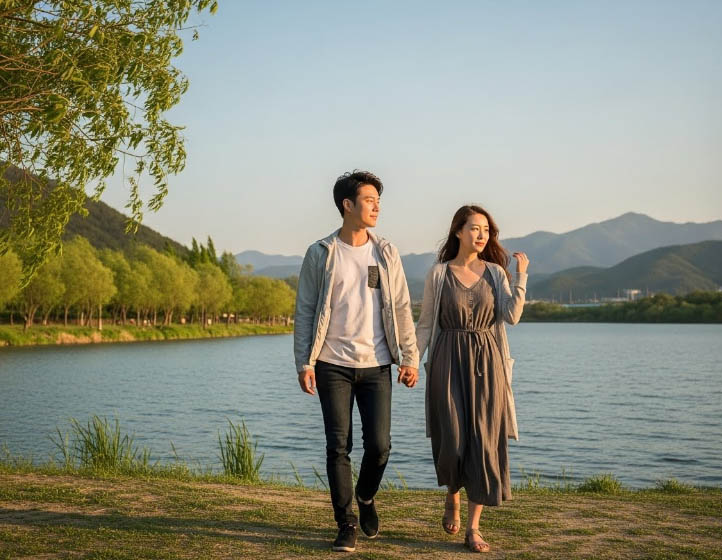
- A walk along the Han River
Affection here is shown through intentional planning rather than extravagant surprises.
Physical Affection Can Be Subtle at First
Public displays of affection (PDA) in Korea tend to be more subtle compared to some Western countries. Early in relationships, you’ll often see:
- Hand-holding
- Light hugs
- Walking closely side by side
Full embraces and public kissing do happen, especially among younger couples, but Korean men often wait until the relationship feels secure before escalating PDA.
Affection is respectful and mindful of personal and social comfort levels.
Supporting You in Practical Ways
For many Korean men, showing affection means being a reliable partner:
- Helping you with tasks
- Offering support during stressful periods
- Being present when you need someone
This practical support is deeply valued — it communicates love without fanfare.
Affection here often looks like dependability rather than drama.
Introducing You to Friends and Family
This is a cultural milestone. When a Korean man introduces you to his inner circle — friends, coworkers, or especially family — it’s a big deal.
Korean social circles are tight, and family approval matters. This kind of introduction signals that he sees you as a significant part of his life.
It’s not something done casually.
Taking on “Traditional” Care Roles (In a Modern Way)
Some Korean men show affection by embodying cultural norms of care, such as:
- Helping carry items
- Paying for meals (especially early in dating)
- Offering practical advice
This isn’t automatic entitlement — it’s rooted in a cultural understanding of caring through responsibility.
Modern Korean relationships often balance this with shared expenses and mutual support, but the underlying gesture of caring remains.
Verbal Affection Grows With Comfort
As relationships deepen, many Korean men become more verbally expressive. You might hear phrases like:
- “I like being with you.”
- “I’m glad I met you.”
- “I want to see you again.”
These words may come later in the relationship, but when they do, they often feel sincere and grounded rather than performative.
Affection through language in Korea is built on familiarity and trust.
Affection Is a Two-Way Street
It’s important to note that dating isn’t one-sided. Korean women also show affection in ways that resonate with Korean social norms: frequent texting, thoughtful gestures, and prioritizing time together.
Relationships here are reciprocal. Affection is not meant to be dramatic — it’s meant to be felt.
Cultural Nuance: What Westerners Might Misinterpret
Here are a few real cultural notes:
- Silence or a calm demeanor doesn’t mean disinterest. It can indicate comfort.
- Delayed plans are not always careless — they may reflect consideration of your schedule and feelings.
- Paying for things early in a relationship can be cultural, not transactional.
Understanding context prevents misreading affectionate intent.
Final Thought: Affection That Grows With Comfort and Respect
Korean men may not always show affection in the boldest or fastest way. But when they care, they show up consistently, think of you in the small moments, and include you in their world.
Affection in Korea tends to be:
- Thoughtful rather than flashy
- Consistent rather than theatrical
- Respectful rather than presumptive
If you pay attention to actions over words alone, you’ll see affection here is steady and sincere — and that’s a beautiful thing.