
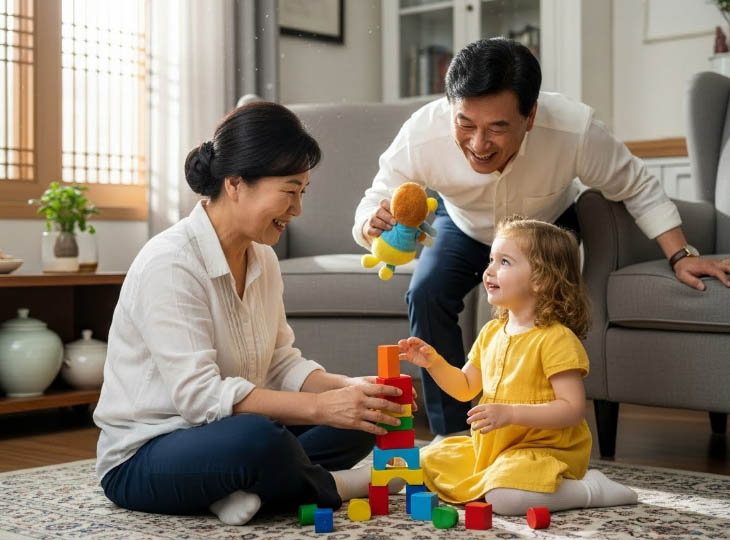
How Korean Grandparents Influence Bilingual Development
A Korean Local’s Honest Perspective for Multicultural Families
When people talk about raising bilingual children in Korea, they usually focus on schools, parents, or language programs. What often gets overlooked is one of the most powerful influences of all: Korean grandparents.
As a Korean woman who has seen countless multicultural families up close, I can confidently say this. Grandparents do not just influence language. They shape attitudes, priorities, and daily habits in ways parents often underestimate.
Whether that influence helps or hinders bilingual development depends on awareness, communication, and a bit of cultural negotiation.
Why Grandparents Matter So Much in Korea
In Korea, grandparents are rarely just occasional visitors. Many families live nearby, visit weekly, or even share the same home. This naturally gives grandparents a strong role in childcare.
Grandparents often spend long hours with young children, especially before kindergarten. That means they are providing massive language input during the most sensitive years of development.
For bilingual children, this input is almost always entirely in Korean.
The Korean Language Becomes the Default
Most Korean grandparents feel a deep responsibility to help their grandchildren succeed socially and academically. In their minds, that success starts with perfect Korean.
Because of this, grandparents may gently or firmly encourage children to respond in Korean, even if the child understands another language. This is usually not intentional pressure. It comes from love and concern.
However, over time, children learn an important lesson: Korean is the language that gets approval, praise, and smooth communication.
Unspoken Attitudes Toward the Second Language
Here is where things get tricky.
Many Korean grandparents grew up in a very different Korea, one that emphasized homogeneity and conformity. Even today, some grandparents see the non-Korean language as unnecessary, confusing, or even a barrier.
They may say things like learning two languages will delay speech or focusing on Korean should come first. These beliefs are outdated, but they are still common.
Children absorb these attitudes quickly, even when they are never stated directly.
Emotional Bonds Can Strengthen Korean Dominance
Grandparents and grandchildren often share a special emotional bond. Meals, stories, walks, and daily routines become deeply associated with Korean language and culture.
This emotional connection strengthens Korean fluency very naturally. From a developmental perspective, this is not a problem. Strong Korean skills are essential for life in Korea.
The issue arises when there is no equally meaningful space for the second language.
When Grandparents Can Support Bilingualism
Not all influence is negative.
Some Korean grandparents are curious, open-minded, and even proud of raising bilingual grandchildren. When grandparents show interest in the second language, children feel validated rather than divided.
Even small actions matter. Allowing the child to respond in another language, showing curiosity about foreign words, or supporting time with the non-Korean parent can make a difference.
Support does not require fluency. It requires respect.
Navigating Cultural Sensitivity as Parents
For foreign parents, correcting grandparents directly can feel uncomfortable. In Korean culture, elders are respected, and confrontation is avoided.
Instead of framing bilingualism as a preference, successful families often frame it as a long-term advantage. Explaining that bilingual skills support education, global opportunities, and even family communication helps grandparents understand the bigger picture.
Korean grandparents are more receptive when they believe something benefits the child’s future.
Setting Gentle but Firm Boundaries
Boundaries do not have to be cold or disrespectful.
Simple agreements such as allowing the non-Korean parent’s language at home, during certain routines, or on specific days can protect bilingual development without causing conflict.
Children need clarity. If rules change depending on who is present, the weaker language will disappear first.
The Reality Most Families Face
In most multicultural families in Korea, Korean becomes dominant no matter what. This is normal and not a failure.
The goal is not equal fluency at all times. The goal is preserving the ability, confidence, and emotional connection to the second language long-term.
Grandparents can either accelerate language loss or help slow it down.
A Korean Woman’s Candid Advice
If you are raising a bilingual child in Korea, do not ignore the grandparent factor.
Talk early, explain often, and observe carefully. Children thrive when the adults around them send consistent, respectful messages about language and identity.
Bilingualism survives not through pressure, but through permission.
Final Thoughts
Understanding how Korean grandparents influence bilingual development is not about assigning blame. It is about recognizing reality.
From my local perspective, families who succeed are the ones who treat grandparents as part of the system, not obstacles. With communication, respect, and consistency, bilingualism can survive even in a very Korean-centered environment.