
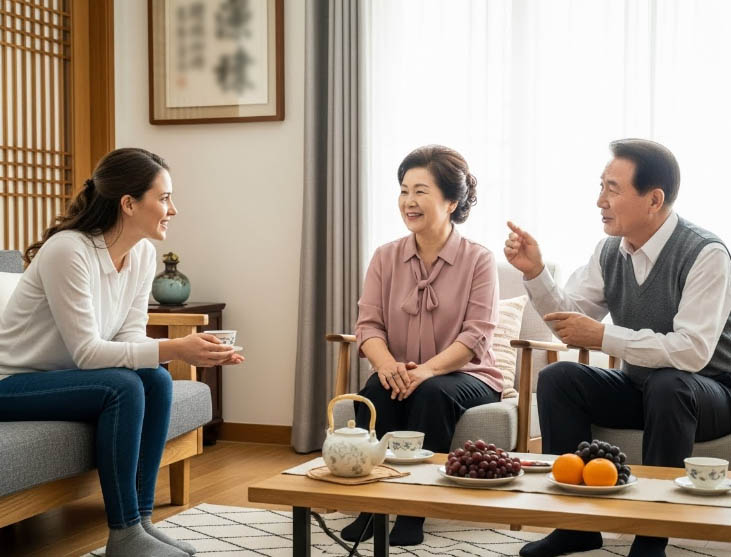
How to Communicate With Korean In-Laws When Your Korean Is Limited: A Local Perspective
Communicating with Korean in-laws can feel intimidating, especially when your Korean is far from fluent. From a Korean local’s point of view, however, language ability is not the most important factor. Attitude, effort, and understanding cultural expectations matter far more than perfect grammar.
Many foreign spouses worry that limited Korean will automatically create distance. In reality, Korean parents-in-law often focus less on what you say and more on how you behave, how you show respect, and how consistent your effort feels over time.
Understanding What Really Matters to Korean In-Laws
In Korean families, communication is layered. Words matter, but tone, timing, and actions often speak louder. Even when your Korean is simple, polite expressions combined with respectful behavior go a long way.
Parents-in-law usually care more about sincerity than fluency. A few well-chosen phrases used consistently can build trust faster than long, complicated sentences.
Use Politeness Strategically, Not Perfectly
Honorifics in Korean can feel overwhelming, but the key is intention, not mastery. Using polite sentence endings and respectful body language already places you on the right side of expectations.
Simple greetings, expressions of thanks, and polite responses repeated regularly create a sense of stability and comfort for older family members.
Let Your Spouse Be a Bridge, Not a Shield
Many foreign spouses rely completely on their partner to translate, which is natural at first. Over time, however, it helps to participate even in small ways.
Listening carefully, responding with short phrases, or reacting appropriately shows engagement. Korean in-laws notice when you are present rather than withdrawn, even if you do not understand everything.
Nonverbal Communication Carries Extra Weight
In Korean culture, small gestures matter. Standing up to greet elders, offering items with both hands, and paying attention during conversations communicate respect without words.
These actions often soften the impact of language limitations and create emotional closeness faster than speech alone.
Prepare a Survival Set of Family Phrases
Instead of trying to learn broad Korean, focus on family-specific phrases. Expressions related to meals, health, gratitude, and daily routines are used repeatedly in family settings.
When these phrases come naturally, conversations feel smoother and less stressful for everyone involved.
Accept Silence Without Panic
Korean families are often comfortable with quiet moments, especially across generations. Silence does not always mean awkwardness or disapproval.
Many foreign spouses assume they must fill gaps with conversation, but calm presence is often enough. Being relaxed signals confidence and respect.
Show Effort Consistently, Not Intensely
Grand gestures rarely matter as much as steady effort. Greeting properly, checking in politely, and remembering small details build long-term goodwill.
Korean parents-in-law value reliability. They notice when effort continues even after the early stages of marriage.
Misunderstandings Are Normal, Not Failures
Even Korean spouses misunderstand their own parents sometimes. Cultural and generational gaps exist within Korean families themselves.
When misunderstandings happen, humility and openness matter more than explanations. A gentle apology or a warm response often resolves issues faster than perfect clarification.
From a Korean Local’s Perspective
Korean in-laws rarely expect a foreign spouse to sound Korean. What they hope for is respect, warmth, and visible effort to be part of the family.
Limited language does not limit connection. Consistent care, small words spoken sincerely, and thoughtful behavior often speak louder than fluency ever could.