
How to Navigate Hospitals in Korea without Fluent Korean
No Korean, No Panic
If you’re living in Korea or planning an extended stay, one of the first big worries people mention is, “What if I get sick and can’t speak Korean?” Hospitals and clinics here do operate primarily in Korean, but over the past decade the system has gradually become more accessible for non-Korean speakers. The key to navigating healthcare in Korea is less about fluency and more about preparation, confidence, and knowing what resources are available.
From my perspective as someone who lives here, I can tell you that many foreigners come away from their first visit thinking, “That was easier than I expected.” And in many cases, it is — if you know how the process works.
Choose the Right Facility for Your Visit
Not all medical facilities in Korea are equally equipped to support non-Korean speakers, so it helps to choose wisely:
Larger hospitals in major cities like Seoul, Busan, or Daegu often have:
- English-speaking reception staff
- Interpretation services
- English forms or instructions
International clinics are another great option. These are medical centers set up specifically to serve foreign residents and often have staff fluent in multiple languages.
Neighborhood clinics and smaller hospitals may not have dedicated language support, but the staff will usually try to communicate with you using simple English, translation apps, and gestures.
Before you go, search terms like:
- Korea hospitals for foreigners
- Korea medical care without Korean
- 한국 병원 이용 방법
- как ориентироваться в больницах Кореи
to find facilities with better language support.
Prepare Your Essential Documents
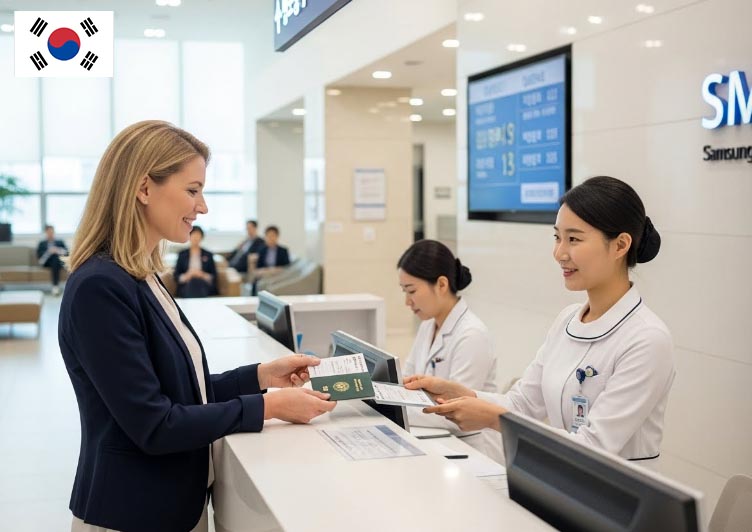
When you arrive at a hospital, there are a few things you should bring with you:
- Passport
- Alien Registration Card (ARC) or your visa
- Health insurance card (if you have National Health Insurance)
- A short note about your symptoms or medical history
Having these ready makes the registration process go much more smoothly. Even if you’re unsure how to say something in Korean, handing over your ARC and insurance card lets the staff begin the process right away.
Use Translation Tools Like a Pro
Translation apps are more than a convenience here — they’re practically a must.
You can use:
- Live speech translation during conversations
- Photo translation to read signs and printed documents
- Saved phrases for common situations
Hospitals are used to seeing people use phones this way, and many staff will slow down or repeat themselves to help the translation app catch accurate meaning.
Practicing a few key medical phrases before your visit can also help. You don’t have to be fluent — just clear and calm.
Ask for Language Support on Arrival
In many larger hospitals, you can request an interpreter or multilingual support. When you check in, try phrases like:
“영어 가능한 직원 있나요?”
(“Is there someone who can speak English?”)
Even if there isn’t a dedicated interpreter sitting at reception, many hospitals can pull in staff who speak English or another language to help you during your visit.
Explain Your Symptoms Clearly and Simply
When you talk to the nurse or doctor, focus on clarity, not grammar perfection. Here’s what you can do:
- Point to where it hurts
- Show numbers like temperature
- Use simple English and translator apps
- Ask yes/no questions to confirm understanding
Non-verbal communication is okay — pointing, nodding, and showing symptom notes are all quite normal in a medical setting when language is limited.
Understand the Registration and Payment Process
When you arrive and present your documents, hospital staff will:
- Register your visit
- Assign you a patient number
- Direct you to a waiting area
In Korea, even with limited Korean, this first part is fairly standardized and often takes less time compared with some Western systems.
If you’re enrolled in the National Health Insurance, your co-pay will be calculated at the desk, and treatment costs are usually much lower as a result. If you’re not on the Korean insurance system yet, you’ll pay a higher out-of-pocket rate — but it’s still often less than in many Western countries.
Pharmacy and Prescription Pickup
After seeing the doctor, you’ll often receive a prescription slip. Take this slip to the pharmacy counter within the hospital or outside.
Pharmacists in Korea are quite used to helping foreigners. Even if your Korean is minimal, they will:
- Show which medicines to take
- Explain dosage
- Use simple English or repeat slowly so you can translate
If language is a concern, ask the pharmacist to write the dosage in simple English or transliterate it into the Latin alphabet — this makes later use easier.
Follow-Up Care and Next Visits
If your visit requires follow-up appointments or extra tests, the doctor will tell you when to come back. Since language can be tricky, don’t hesitate to say something like:
“I need this in writing, please.”
Many hospitals will give you a printed instruction sheet, which you can translate later.
This written record becomes very helpful for remembering dates, medication names, and instructions.
Emergency Visits: What to Do
In an emergency, dial 119. Ambulance services in Korea respond quickly, and emergency rooms operate around the clock.
Even without fluent Korean, emergency care is provided based on need first, language second. Show your ARC and medical insurance card if you have it, and medical professionals will treat you right away.
Cultural Tips That Make a Difference
Here are a few things I’ve noticed help foreigners feel more at ease:
- Be polite and patient — Koreans respond warmly to courtesy
- Smile and be calm — it helps in stressful situations
- Carry a symptom note — jot down how you’re feeling before you go
- Bookmark hospital contact pages — many have English info
Korean staff may not speak perfect English, but their willingness to help often surprises foreigners in a good way.
What to Expect Emotionally
Going to a hospital in a foreign country can feel intimidating, but the Korean system’s structure — clear reception desks, organized patient flows, and a respectful atmosphere — often reduces anxiety more than people expect. Foreigners frequently tell me they were more worried about the language barrier than the medical visit itself.
Once they walk through the door and start talking — even with simple phrases and translation tools — they find the experience isn’t nearly as overwhelming as they feared.
Conclusion: Communication Over Perfection
Navigating hospitals in Korea without fluent Korean is entirely doable. The steps are not mysterious — they just require preparation, confidence, and the willingness to use the tools around you.
Focus on:
- Choosing the right hospital
- Bringing key documents
- Using translation tools
- Asking for language support
- Communicating symptoms clearly
From my perspective as someone living here, most foreigners end up feeling pleasantly surprised by how manageable and respectful the healthcare experience is — even without perfect Korean.