
Is Korean Manufacturing Declining or Growing?
A Reality Check from Inside Korea
If you search online, you will find completely opposite answers to this question. Some headlines say Korean manufacturing is declining. Others claim it is stronger than ever. As a Korean local, the honest answer is this: Korean manufacturing is not disappearing, but it is definitely changing.
Let me break it down in a way that actually makes sense.
Korean Manufacturing Is Not Dead, It Is Evolving
Manufacturing still plays a major role in Korea’s economy.
Industries like semiconductors, electronics, batteries, automobiles, shipbuilding, and advanced machinery continue to grow. Korea remains a global leader in high value manufacturing rather than low cost mass production.
The image of endless factory lines making cheap goods no longer fits today’s Korea.
Traditional Low Skill Manufacturing Is Declining
Some parts of manufacturing are shrinking.
Labor intensive industries such as textiles, simple assembly, and low margin production have moved overseas to countries with cheaper labor. This shift often creates the impression that manufacturing is dying.
In reality, it is relocating, not collapsing.
High Tech Manufacturing Is Growing Fast
While basic manufacturing declines, high tech sectors are expanding.
Korea is investing heavily in semiconductors, electric vehicle batteries, robotics, AI driven factories, and smart manufacturing systems. These industries require fewer workers but far more technical skill.
This is where Korea sees its future.
Automation Is Changing Factory Jobs
Factories today look very different from the past.
Automation and robotics have reduced the need for large workforces. One modern plant can produce more than older factories with fewer workers. This improves efficiency but changes employment patterns.
Jobs still exist, but they require adaptation.
Small and Medium Factories Face Challenges
Large corporations are doing well, but smaller factories struggle.
Rising labor costs, stricter regulations, and workforce shortages put pressure on small manufacturers. Many rely on foreign workers to survive.
This is why foreign labor remains important in Korean manufacturing.
Manufacturing Jobs Are Still Available for Foreigners
Despite changes, factories continue to hire.
Foreign workers are especially needed in regional and industrial areas. While wages may not grow rapidly, job availability remains relatively stable compared to other sectors.
For many foreigners, manufacturing is still one of the easiest ways to enter the Korean job market.
Government Policy Supports Strategic Manufacturing
The Korean government actively supports key industries.
Massive investments are directed toward semiconductors, green energy, and future technologies. Manufacturing is seen as a national strength that must be protected.
This long term vision prevents sudden collapse.
Regional Differences Matter
Manufacturing growth depends heavily on location.
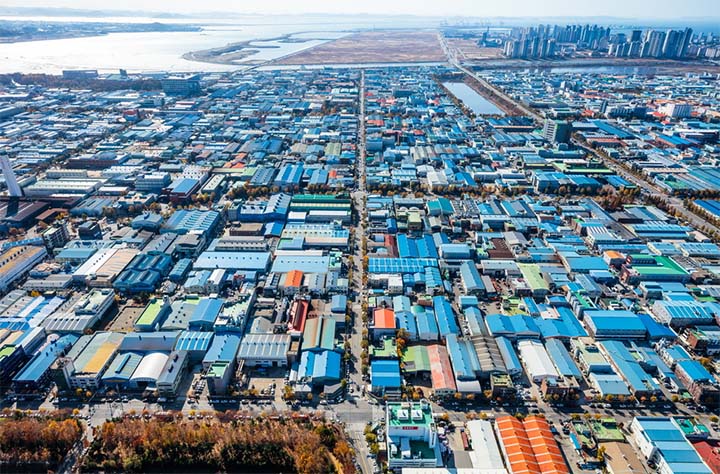
Seoul focuses on tech and services, while manufacturing thrives in regions like Gyeonggi, Chungcheong, Gyeongsang, and coastal industrial zones. Decline in one area does not reflect the whole country.
Looking only at Seoul gives a distorted picture.
Public Perception Versus Reality
Many Koreans feel manufacturing is declining because fewer young people want factory jobs.
However, production output remains strong. The issue is not demand, but labor preference and structural change.
Manufacturing has become quieter, cleaner, and more specialized.
Final Thoughts from a Korean Perspective
Is Korean manufacturing declining or growing?
It is transforming.
Low skill manufacturing is shrinking, while high value, technology driven production is expanding. Korea is not losing manufacturing, it is upgrading it.
For foreigners, this means opportunities still exist, but expectations must align with today’s reality.
Manufacturing Salaries in Korean SMEs (Day & Night Shifts Explained)