
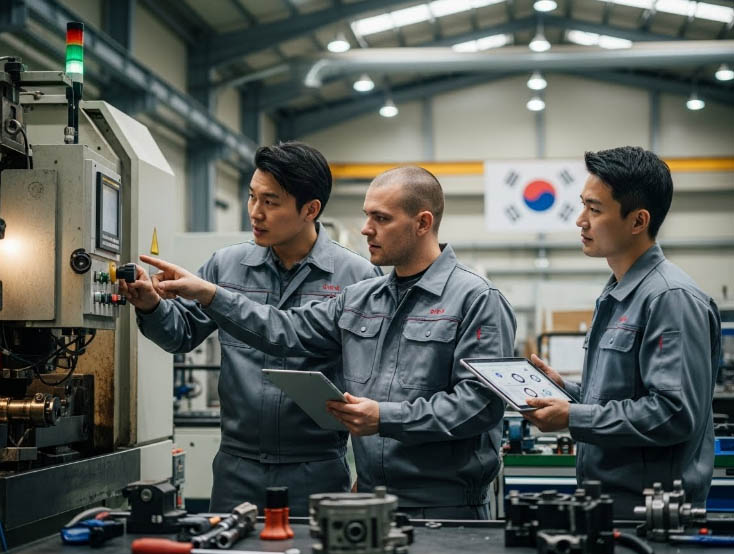
Is Korea’s Manufacturing Industry Foreigner-Friendly? A Local’s Insight
If you’re considering working in Korea’s manufacturing sector — whether it’s electronics, automotive, shipbuilding, or industrial production — you might be wondering how easy it is for foreigners to integrate, succeed, and feel accepted on the factory floor. Having grown up here and watched Korea’s industrial landscape evolve alongside international labor trends, I can tell you the honest truth:
Yes — Korea’s manufacturing industry can be foreigner-friendly, but it depends on the company, role, language skills, and how you approach the environment.
Let’s walk through how this industry works for foreigners in real life — not just what job postings say.
What “Foreigner-Friendly” Really Means in Manufacturing
When we talk about being “foreigner-friendly,” we’re thinking about several aspects:
- Hiring accessibility — can foreigners actually apply and get hired?
- Communication environment — do workplaces support non-Korean speakers?
- Career growth — are there paths to advancement?
- Cultural integration — do local teams welcome international workers?
Each of these factors varies widely across companies in Korea.
Huge Industry, Varied Culture
Korea’s manufacturing industry spans many sectors — from global giants like Samsung and Hyundai to thousands of smaller factories supplying parts and assemblies. These workplaces are not monolithic. Here’s how the landscape generally breaks down:
Large Multinationals and Export Giants
In big companies with global operations — automotive, electronics, heavy equipment — you’ll often find:
- Internal communication in English on international teams
- Formal HR and structured onboarding
- English-friendly documentation and safety training
- Multi-national teams that include foreigners
- Clear career pathways
These companies are generally more foreigner-friendly because they already operate globally. Your role here might require technical skills and relevant experience, but integration tends to be smoother.
Small and Medium-Sized Enterprises (SMEs)
Many of Korea’s factories are SMEs that supply larger manufacturers. These workplaces are:
- Often less formalized
- Usually Korean-language dominant in daily communication
- Less used to international hires
- More flexible in job roles
These environments are not inherently unfriendly, but they often lack structured English-based communication. A foreign worker here needs to be comfortable with Korean or have a liaison who can help bridge gaps.
Language: The Real Gatekeeper
This is where “foreigner-friendly” often breaks down.
In many Korean manufacturing workplaces:
- Korean is the working language
- Safety briefings, shift instructions, and quality discussions are in Korean
- Informal communication (breaks, jokes, social bonding) happens in Korean
If your Korean skills are minimal, you might find yourself dependent on bilingual coworkers or translators — and not all sites provide them.
But in multinational teams or internationally oriented divisions, English is more common, and companies increasingly hire translators or assign bilingual team leads.
So, in reality: the friendlier a workplace is to foreigners, the more likely you’ll encounter English communication pathways; the more inward-focused it is, the more Korean you’ll need.
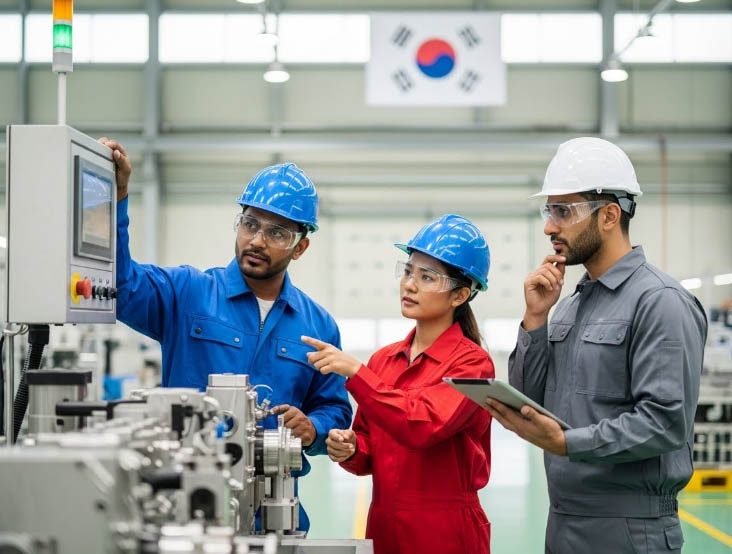
Hiring Practices — Open to Foreign Talent?
In many global roles — engineering design, automation, quality management, R&D, supply chain — qualified foreigners are actively recruited. These roles often:
- Appear on international job boards
- Require professional/technical English
- Include relocation support
- Offer competitive salaries
Entry-level and unskilled labor roles are usually filled through local networks and recruitment agencies, and are less likely to be open specifically to foreigners unless the company has a specific need.
That said, Korea’s industrial recruitment environment has begun to open up a bit more, especially in urban centers and export-focused regions.
Workplace Culture: Respect, Hierarchy, and Teamwork
Korean manufacturing culture has three important features:
Hierarchy and Respect
Senior employees and supervisors expect clear respect and formality.
Team-Oriented Workflow
Production lines run as teams, not individuals. Integration means learning not just the job, but how the team moves together.
Pride in Precision
Korean manufacturing culture values high quality, punctuality, and discipline. This can be good for career development but demanding in expectations.
Foreigners who succeed here typically embrace not just the role, but the team dynamic.
Salary and Compensation — Are Foreigners Paid Fairly?
Salary in manufacturing depends on role, experience, skills, and company scale.
At large companies and technical positions:
- Pay is competitive
- Benefits include insurance, bonuses, overtime pay
- Career progression is structured
At smaller companies:
- Wages may be lower
- Contracts sometimes less transparent
- Negotiation may require confidence and clarity
Foreigners often do well in technical and specialist roles because those positions value global expertise.
Integration Beyond Work — Social Aspects
It’s worth noting that social integration matters a lot in Korean workplaces:
- After-work dinners and drinks are common
- Team building is often social, not just functional
- Showing respect to colleagues helps build harmony
Foreigners who take part in these social rhythms — even gradually — often find their teams becoming more supportive and welcoming.
Practical Tips for Foreigners Considering Manufacturing in Korea
Here’s what successful foreigners often do:
1. Learn or improve Korean.
Even basic skills pay off immediately.
2. Target global or export-oriented companies.
These firms usually have infrastructure for international employees.
3. Understand safety and quality culture.
Korean manufacturing takes compliance seriously.
4. Find bilingual mentors on site.
They help you navigate communication and norms.
5. Prepare for teamwork and respect culture.
Cultural adaptability enhances trust.
Final Thought — It’s Not One Size Fits All
Is Korea’s manufacturing industry foreigner-friendly? The honest answer is:
It can be — especially in globalized, export-oriented, English-accommodating workplaces — but in more local, Korean-centric environments, your success will depend on language skills, cultural adaptability, and mutual respect.
From a local perspective, Korean companies that want to grow internationally are increasingly embracing international talent. But the pace of that change varies from factory to factory.
If you come prepared — with skill, language curiosity, and cultural awareness — many parts of Korea’s manufacturing sector can be welcoming, rewarding, and career-building.