
Is Restaurant Water Safe for Foreigners in Korea? A Local’s Honest Take
One of the tiny but persistent questions newcomers ask when they start dining in Korea is this: Can I safely drink the water served in restaurants? It’s a simple query, but the answers floating around the internet range from “Absolutely!” to “Only drink bottled water!” That contradiction can leave first-time visitors confused.
Let’s clear it up from the perspective of someone who lives here, eats out regularly, and sees this question come up over and over again.
The short answer is this:
Yes — in most restaurants in Korea, the water served is safe to drink for both locals and foreigners.
But the longer, more useful answer requires a bit of context, and that’s what we’ll walk through together.
Water Quality in Korea: The Big Picture
Korea has a well-developed municipal water system. In cities like Seoul, Busan, Daegu, and many others, tap water is treated and monitored under strict national standards. That means the water that comes into buildings — and ultimately into restaurants — is generally clean and safe at the source.
Most Koreans grow up drinking tap water, and public health officials maintain frequent testing and quality checks. In that sense, the foundational water quality in urban Korea is on par with developed countries.
Restaurant Water Comes from the Same Source
When you sit down at a restaurant and someone offers you water, the water you’re being served is typically just the local tap water — sometimes filtered, sometimes not.
Unless a restaurant specifically advertises bottled or purified water, restaurant water is usually the same municipal water that runs through public faucets.
Here’s what that means in practice:
- In modern restaurants in cities, the water is almost always safe.
- In small, older establishments, water is still usually safe — but perceptions of taste may vary.
Locals generally accept restaurant water as safe, and it’s common to see families, children, and elderly people drinking it without hesitation.
Why Some People Are Cautious
Even though the water itself is safe at the treatment plant, there are a few real-world reasons some people hesitate:
1. Taste and Odor
Korean tap water sometimes carries a mild chlorine smell or metallic taste, especially in older pipes. This doesn’t mean it’s unsafe — it’s just how the water residuals can feel on the tongue.
2. Building Plumbing
In older buildings or restaurants with poorly maintained plumbing, water quality at the faucet can be affected. If pipes are rusty or poorly flushed, the taste might be off even if the water is technically safe.
3. Personal Sensitivity
Some people are just sensitive to changes in water chemistry, especially if they come from countries with very soft water or differently treated systems.
These concerns aren’t unique to Korea; they’re common in many cities worldwide.
When Restaurants Offer Bottled or Purified Water
At many sit-down restaurants, especially mid-range to higher-end places, you’ll see two kinds of water options:
Filtered or Purified Water
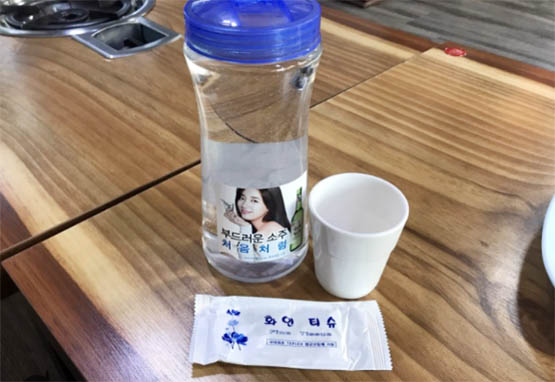
Some restaurants bring you a pitcher of filtered water (정수물) instead of straight tap water. This is usually a step above regular tap water in taste and perceived comfort.
Bottled Water
Occasionally, especially in places catering to international visitors or in higher-end dining, you might be offered bottled water, either gratis or for a fee. In Korean casual dining spots, bottled water is not standard unless requested.
Both choices are safe — the only real difference is taste and how the restaurant brands its service.
Local Customs Around Drinking Water in Restaurants
From a Korean perspective, it’s totally normal to drink water served at a restaurant without worrying. When guests arrive, it’s common for servers to bring cups of water even before menus. This is part of hospitality, not an assumption about your preference.
That said, Koreans themselves often prefer filtered water or even boiled water at home for taste — but that’s about comfort, not safety.
Traveler and Foreigner Experiences
Ask a mix of long-term foreigners living in Korea, and you’ll hear a range of opinions:
Some say:
“Restaurant water is fine — I drink it all the time.”
Others prefer:
“I still go for bottled or filtered water just because of the taste.”
Both approaches are common and generally healthy. The key difference is comfort, not legality or safety.
Practical Tips for Drinking Water in Korea
Here are real-world tips that locals often suggest:
Look for Filtered Water First
If a restaurant brings filtered water without asking, that’s a good sign the establishment cares about water comfort.
Don’t Be Afraid to Ask
You can politely ask for bottled water if you want:
“May I have bottled water instead?”
This is perfectly acceptable and often accommodated.
Trust Your Senses — Cautiously
If the water tastes strongly metallic or unusual, it’s okay to be cautious. That might be about plumbing, not safety.
Restaurants Take Water Safety Seriously
Because health inspections routinely check kitchens and food prep areas, restaurant water — like other kitchen systems — is regulated.
My Local Take: Is It Safe?
As someone who lives in Korea and eats out regularly, here’s my honest conclusion:
Restaurant water in urban Korea is generally safe for foreigners to drink.
It’s the same infrastructure that serves homes and public places, and regulatory oversight is strong.
If the taste is not comfy for you, it’s absolutely fine to ask for bottled or filtered water — local staff understand this and won’t think it’s strange.
In Korea, drinking restaurant water is normal, everyday behavior — whether you’re a local, a student, a worker, or a long-term resident.