
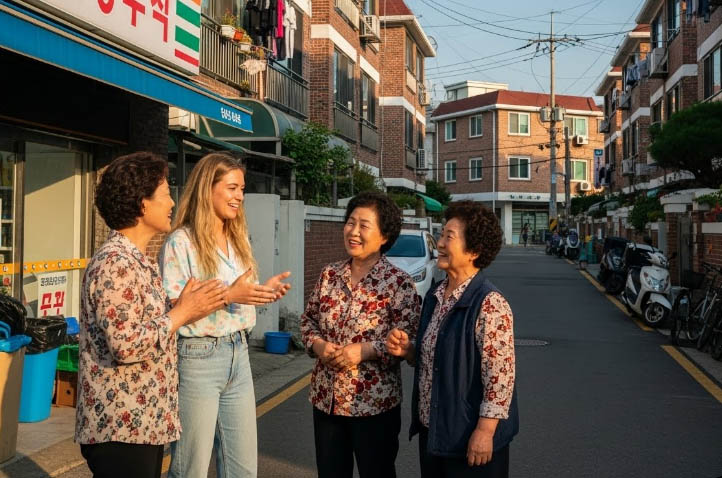
Is There Racism Toward Foreign Spouses in Korea? A Korean Local’s Honest Take
If you search online about marriage in Korea, one question pops up again and again: Is there racism toward foreign spouses in Korea?
It is not an uncomfortable question. It is a realistic one. Korea has seen a sharp rise in international marriages over the past two decades, and with that change comes curiosity, concern, and sometimes fear from people considering life here.
As a Korean woman who lives in Korea and sees multicultural couples every day, I want to answer this question the way locals actually experience it, not the way headlines or comment sections frame it.
The short answer is yes, racism can exist.
The longer answer is more nuanced, more human, and more hopeful than many expect.
Why Foreign Spouses Worry About Racism in Korea
Korea’s image abroad is often shaped by two extremes. On one side, you see K-dramas filled with romance and warm family scenes. On the other, you hear stories about discrimination, staring, and cultural isolation.
Foreign spouses worry about how they will be treated by in-laws, neighbors, schools, and even strangers. They wonder whether they will always be seen as outsiders, no matter how long they live here or how fluent their Korean becomes.
These concerns are valid. Korea has historically been a very homogeneous society, and rapid change does not always come with perfect social manners.
The Difference Between Curiosity and Discrimination
One thing foreigners often misunderstand is the Korean habit of being very direct.
Questions like “Why did you marry a Korean?” or “Do you like living here?” may feel invasive, but they are usually driven by curiosity rather than judgment. Many Koreans simply do not know how to interact smoothly with people from different cultural backgrounds, especially older generations.
That said, curiosity can cross the line. Some foreign spouses experience comments that feel dismissive, patronizing, or based on stereotypes. This is especially true for spouses from Southeast Asia, Central Asia, or Africa, where class and nationality biases can still exist.
Intent does not erase impact, and Korea is slowly learning that lesson.
Family Life and In-Laws: The Most Sensitive Area
If racism appears anywhere, it is most often within family dynamics.
Some Korean parents worry about language barriers, cultural differences, or social judgment from relatives. In rare cases, this turns into open resistance to international marriage. More commonly, it shows up as emotional distance or subtle pressure rather than outright rejection.
However, things often change after marriage. When parents see their foreign daughter-in-law or son-in-law making an effort, learning Korean, caring for family traditions, and raising children, attitudes soften. Many families end up fiercely defending their foreign family member once that bond is formed.
Time matters more than first impressions in Korea.
Public Life: Stares, Silence, and Slow Improvement
In public spaces, foreign spouses may notice stares or feel ignored in certain situations, especially outside major cities.
This is less about hostility and more about unfamiliarity. Korea is becoming more multicultural, but it is still adjusting. Seoul and other large cities are far more accustomed to international couples, while rural areas can feel isolating at first.
The encouraging part is that discrimination in official settings is taken more seriously than before. Public offices, schools, and hospitals now receive multicultural training, and translation services are more common than they used to be.
How Younger Koreans View Foreign Spouses
Generational change is one of the biggest reasons for optimism.
Younger Koreans are far more accepting of international marriages. Many see them as normal, even unremarkable. They grew up consuming global media, studying abroad, and interacting online with people from everywhere.
For them, a foreign spouse is not a social issue. It is just another life choice.
This shift does not erase racism overnight, but it does change the direction Korea is heading.
So, Is There Racism Toward Foreign Spouses in Korea?
The honest answer is that it can happen, but it is not constant, universal, or always intentional.
Foreign spouses in Korea are more likely to experience awkwardness than aggression, curiosity more than cruelty, and gradual acceptance rather than instant belonging.
Korea is still learning how to live with diversity, but it is learning faster than many outsiders realize. For those willing to navigate cultural differences with patience and confidence, Korea can become not just a place to live, but a place to belong.