
Job Opportunities After Study in Korea: A Complete Guide from a Local Perspective
Studying in South Korea can be more than just an academic journey — for many international students, it’s the first step toward a global career. Over the past decade, Korea has become a hub not just for study, but also for serious job opportunities in various industries. As someone who lives in Korea and interacts with foreign graduates regularly, I’d like to share a clear, practical view of what awaits you after graduation.
Why Korea Can Be a Great Career Destination
People often assume that Korea is only about technology and pop culture. But when you look closer, Korea is:
- A major global economy with strong export industries
- Home to world-class companies in tech, automotive, biotech, and finance
- A country with increasing demand for international talent
- Connected to global markets through trade and innovation
Korea’s job market is evolving, and employers are beginning to value global perspectives, language skills, and cross-cultural experience — things that international graduates naturally bring.
How Your Degree Can Translate to a Career
Each field has its own pathway, but some sectors are particularly open to international graduates:
Technology and Engineering
Korea is home to giants like Samsung, LG, Hyundai, and dozens of emerging start-ups. They hire:
- Software developers
- Data analysts
- AI and machine learning specialists
- Automation engineers
- R&D professionals
If you graduate with a tech, engineering, or computer science degree, you’ll find many companies looking for people who can innovate.
Business and Finance
With Seoul as a financial hub in East Asia, graduates in:
- International business
- Finance and accounting
- Marketing and analytics
- Supply chain management can find opportunities in multinational and local firms.
English fluency and global perspective are assets here.
Creative and Cultural Industries
Korea’s media, game development, design, and content industries are booming. Graduates in:
- Digital media
- Game design
- UX/UI
- Creative marketing
often find vibrant, creative roles in both local and international teams.
Visa Options for Working in Korea After Study
One of the most important things students ask is: Can I stay after graduation?
Korea offers career pathways if you transition from a student visa (usually D-2) to a working visa, such as:
- E-7 Professional Visa for skilled employment
- D-10 Job Seeker Visa to find work after graduation
- Internship visas or company-sponsored visas
Many universities have career services that guide graduates through this process. Planning early is critical: start exploring internships or networking before you graduate.
Internships: Your Bridge to Employment
Internships aren’t just optional — in Korea, they often serve as stepping stones to full-time jobs. They give you:
- Real-world experience
- Professional references
- Industry contacts
Companies in Korea (especially in tech and multinational firms) value interns who understand Korean business culture and have at least basic Korean language ability.
The Role of Korean Language Skills
Being fluent in Korean isn’t mandatory for every job, but it makes a huge difference.
Here’s how language affects your prospects:
- English-only roles exist, but they are often limited to international teams or specific functions.
- Mid-to-senior roles usually require Korean.
- Everyday office life and team integration are far smoother if you speak Korean.
Many graduates continue learning Korean in their final year of study — and it pays off both professionally and socially.
Job Search Tips That Work in Korea
Finding a job in Korea is different from other countries. Here’s what works well:
Network Early
Make connections with professors, alumni, and professionals in your field. Korea values relationship-based referrals.
Use University Career Services
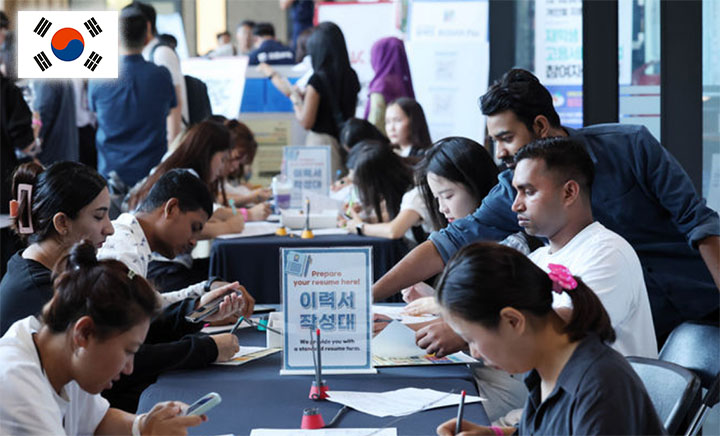
Most universities have job boards, résumé workshops, and interview coaching. Take advantage of these while you’re still a student.
Attend Job Fairs
Career fairs — both on campus and in the city — are great for meeting recruiters and understanding market demand.
Tailor Your Application
Korean résumés often require:
- A photo
- Detailed academic history
- Structured personal information
Customizing your application for Korean standards shows seriousness.
Industries with Growing Demand for Foreign Talent
Several sectors are particularly active in hiring international graduates:
IT and Software
- Start-ups and global tech firms
- Mid-sized companies expanding internationally
Automotive and Machinery
- Engineering, production innovation, business strategy
Biotechnology and Healthcare
- Research, lab management, clinical support
Finance and Consulting
- International branches and global strategy roles
Teaching and Localization
- English teaching, content localization, cultural liaison positions
Reality Check: What’s Challenging
No country is perfect, and Korea has challenges too:
- Competitive job market in major cities
- Language proficiency often expected
- Corporate culture can feel hierarchical
- Long working hours in some industries
But many international graduates find that their adaptability, global experience, and bilingual ability give them an edge once they understand how things work here.
Success Stories: What Graduates Often Report
International alumni in Korea often tell me:
- Graduating helped them build confidence in a global context
- Internships made the job hunt far easier
- Learning Korean opened unexpected opportunities
- Local and global companies respect Korea degrees
This isn’t just anecdotal — more graduates are finding meaningful, long-term careers here than ever before.
Final Thoughts: Your Career Start Can Be in Korea
For Indian students and other international graduates, Korea offers a real chance to build a career after study — not just a degree. Strong industries, growing international networks, and evolving visa pathways make this a genuine option.
If you combine solid academic performance with language skills, networking, and real-world experience, Korea can lead to exciting professional opportunities — locally and globally.
Studying here is just the beginning. What you do after graduation depends on your preparation, persistence, and willingness to embrace the culture and workplace here.
And from what I see every day, many international graduates are doing just that — building careers, shaping industries, and becoming global citizens. That’s a story worth telling.