
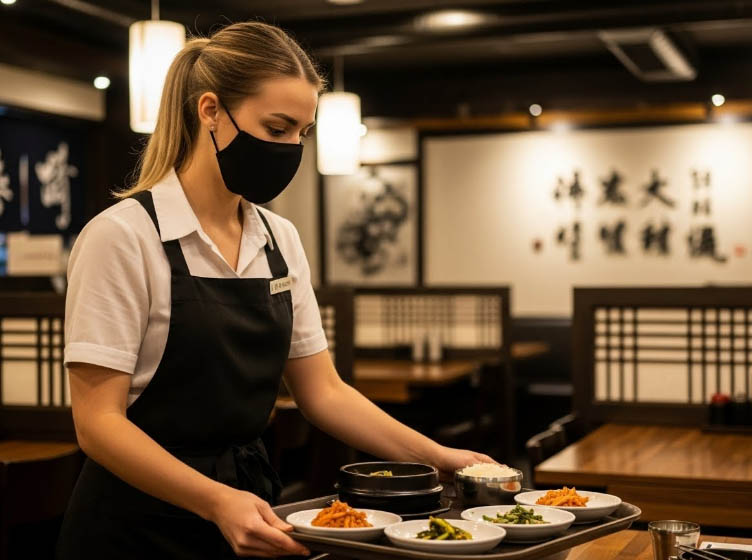
Salary Levels and Working Hours at Korean Restaurants
Korean restaurant job salary
You love Korean food, you thrive in a fast-paced environment, and you’re looking for work in Korea’s dynamic service industry. Working at a Korean restaurant, whether it’s a high-end BBQ spot or a busy local Gukbap (rice soup) joint, offers a direct immersion into Korean culture and a reliable income stream.
But what is the reality of the hours and the pay? Unlike corporate jobs with fixed contracts, the restaurant industry (Yoesik Eop, 요식업) is governed by fast turnover, high energy, and the strict demands of peak meal times.
As a local, I’m here to give you the honest breakdown of salary levels and typical working hours at Korean restaurants—the vital information you need before you step behind the counter.
1. The Salary Snapshot: Pay Levels by Role
Restaurant pay is often dictated by experience and the intensity of the work, but salaries are generally competitive, especially when overtime is included.
Entry-Level/Server (Hall Staff)
- Monthly Salary Range: ₩2.2 million to ₩2.7 million KRW (approx. $1,650 – $2,050 USD).
- What to Know: Often includes a high reliance on the minimum wage as a baseline, but the pay is stable. Tips are not customary in Korea, so your income is primarily fixed salary.
Kitchen Staff/Cook (Experienced)
- Monthly Salary Range: ₩2.5 million to 3.5 million+ KRW (approx. $1,900 – $2,650+ USD).
- What to Know: Higher pay reflects the skill level and the more demanding physical labor in the kitchen. Salaries increase significantly with specialization (e.g., Jajangmyeon chef, Gogi prep).
Part-Time (Hourly Wage)
- Hourly Rate: Generally aligned with or slightly above the national minimum wage.
- What to Know: Often employed during peak times (lunch/dinner rush) or late-night shifts in major cities. This is a common job for students (D-2 visa holders are restricted to part-time hours).
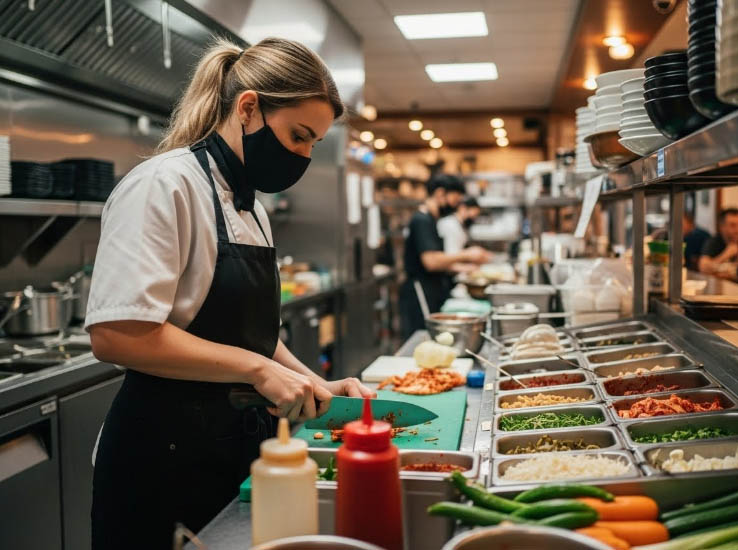
2. The Working Hours Reality (The Split Shift & Intensity)
Restaurant hours are famously demanding, often requiring long days that cover both lunch and dinner rushes.
The Full-Time Standard: Full-time hours often range from 48 to 60+ hours per week. While the legal standard is 40 hours, the service industry commonly requires scheduled overtime, especially on weekends and holidays.
The Split Shift (Beureikeu Taim): Many restaurants employ a split shift (break time). You may work 10:30 AM to 2:30 PM (lunch rush) and then 5:00 PM to 9:30 PM (dinner rush). The 2-3 hour break in the middle is typically unpaid downtime.
Overtime Compensation is Law: Remember that the Korean Labor Standards Act mandates 150% pay for all hours worked beyond 40 hours per week, and for night work (10 PM to 6 AM). While cultural pressure for efficiency is high, legal pay for required overtime must be maintained.
3. Perks and Pitfalls for Foreigners (E-7 & D-2 Visas)
E-7 Visa Path: Specialized culinary roles (e.g., highly experienced foreign chefs) can qualify for the E-7 visa, offering high stability and good pay. Most general hall/kitchen staff jobs do not qualify for the E-7.
Part-Time for Students (D-2): Students can work part-time, but they must strictly adhere to the government’s hourly limits (usually 20 hours per week during the semester) to maintain their visa status.
Immersion Bonus: Working in a restaurant is instant, full-throttle cultural and language immersion. You will master survival Korean and Banmal (casual speech) quickly!
The service industry hustle is intense, but the pay is reliable, and the cultural experience is priceless. Know your hours, calculate your overtime, and be ready for the rush!