
Korean Etiquette for International Students
A Friendly Local Guide to Surviving (and Thriving) in Korea
If you’re planning to study in Korea, you’re about to step into one of the most exciting, fast-paced, and culturally unique countries in the world. But to truly enjoy your life here—and avoid those “oops, did I just offend someone?” moments—you’ll want to learn a bit about Korean etiquette.
Don’t worry. You don’t need to memorize ancient rules from a history book. You just need to understand how Koreans naturally interact in daily life. As a Korean local who has spent years helping international students adjust, here’s your simple, friendly, and honest guide to behaving like a pro in Korea.
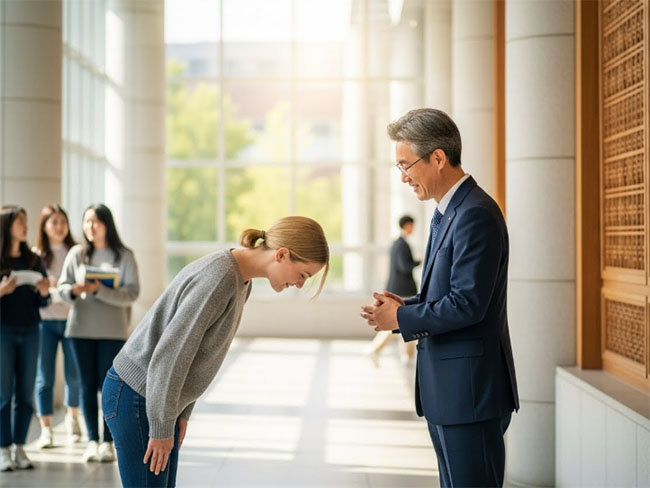
Bowing: The Universal “Hello”
Koreans bow as a sign of respect. You don’t need a deep royal bow. A small nod is enough when:
- Greeting someone older or in a higher position
- Saying thank you
- Apologizing
- Meeting professors or seniors
Think of bowing as the Korean version of a warm handshake—just simpler and less awkward.
Honorifics: The Secret to Polite Korean
Korean language has formal and informal speech levels. If you speak casual Korean to someone older, it can sound rude, even if you didn’t intend it.
Two easy tips:
- Use formal speech (-요) with anyone you don’t know well.
- Never call people older than you by their first name alone. Use “언니, 오빠, 누나, 형, 선배, 교수님” depending on the relationship.
Trust me, Koreans will immediately appreciate your effort to show respect.
Shoes Off Indoors
If someone invites you to their home or if you enter a traditional space, take your shoes off at the door.
This is non-negotiable.
Dorms, cafes, libraries, and restaurants don’t require this, so don’t panic—only private homes and certain traditional areas.
Eating Etiquette: Don’t Start Before the Eldest
Korean meals are social. Before eating:
- Wait until the oldest person starts eating first
- Don’t lift your bowl to your mouth
- Use both hands when receiving something from someone older
- If someone pours you a drink, hold your cup with two hands
These small gestures go a long way in Korean dining culture.
Public Behavior: Quiet Is Better
You’ll notice very quickly: Koreans stay quiet in public spaces.
- Avoid loud phone calls on buses or trains
- Don’t block the streets to talk
- Keep conversations soft inside elevators or stores
It’s not about being strict. Korea is crowded, so everyone tries to respect shared spaces.
Personal Space Is Different
Koreans can sometimes stand closer than what you’re used to. But at the same time, we’re not big on hugging strangers or new acquaintances.
A simple nod or wave is perfect. Save hugs for close friends.
Punctuality Matters
If something starts at 2:00, Koreans often arrive at 1:55.
Being late, especially for class or meetings, can be seen as disrespectful. Try to be on time—your professors will remember it.
Respect for Professors and Seniors
Hierarchy is strong in Korea. Treat professors, older students, and senior coworkers with extra politeness. Some simple ways to show respect:
- Make eye contact without staring
- Refer to them with titles
- Offer help when possible
- Thank them after classes
You don’t have to be overly formal. Just be considerate.
Trash Rules Are Serious
Korea has strict recycling and trash rules. If you’re in a dorm:
- Separate food waste carefully
- Follow recycling instructions
- Throw trash in designated bags only
- Don’t leave trash in hallways
Your dorm manager will thank you later.
When You Don’t Know a Rule—Ask
Nobody expects international students to know everything. Koreans actually think it’s polite when foreigners ask questions instead of guessing.
A simple “Is this okay?” works wonders.
The truth is, Korean etiquette isn’t about perfection. It’s about showing respect, understanding cultural differences, and being considerate of the people around you.
With these basics, you’ll feel more confident, more included, and more connected to Korean life.