Korean School Culture: A Guide for Multicultural Parents
Raising a child in Korea can feel like you’re learning two things at once: the language, and the school culture that shapes daily life. Korean schools are excellent in many ways — they emphasize teamwork, respect, and cooperation — but if you’re not familiar with the culture, some of these norms might feel surprising or even confusing at first.
As a Korean woman and a local observer of both traditional and multicultural families, I want to give you a friendly, real-world guide to understanding Korean school culture from a multicultural parent’s perspective.
Why School Culture Matters More Than You Think
Korean school culture isn’t just about learning math and reading. It’s about how a child belongs. In Korea, schools shape habits, social behavior, and even communication style. Understanding this culture helps you support your child — not just academically — but socially and emotionally.
Respect and Group Harmony Are Cornerstones
If there’s one word that captures Korean school culture, it’s harmony. In classrooms, students are encouraged to think of the group first. This doesn’t mean individual achievement isn’t valued — it is — but cooperation and mutual respect are emphasized from day one.
You’ll see:
- Students standing and bowing when teachers enter
- Polite language toward adults
- Group tasks where consensus matters
For children from more individualistic cultures, this may feel strict at first. But it helps create a supportive environment where everyone knows the rules and feels safe.
Punctuality and Routine Are Non-Negotiable
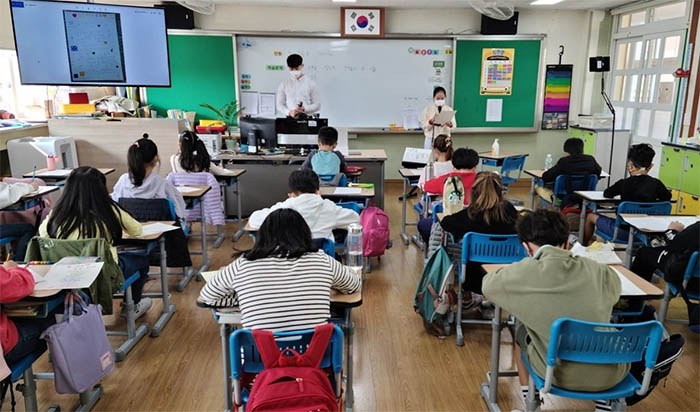
In Korea, time is serious business. Schools begin and end on time with little wiggle room. Students are expected to arrive early, line up quietly, and prepare their desks before class starts.
For multicultural families, routines can feel intense at first. But once your child learns the rhythm, it becomes a source of security — they know what comes next, and that certainty builds confidence.
Parent Involvement Is Close and Constant
Korean schools regularly communicate with parents. Some of the ways this happens include:
- Weekly or monthly class updates via apps
- Parent-teacher meetings
- Homework support guidance
- Invitations to school festivals and events
In many ways, Korean schools expect parents to be partners in education. For multicultural parents, this may require extra effort in communication — but it also means you’re kept in the loop and can advocate for your child.
Uniforms and School Rules Set the Tone
Most Korean schools have uniforms, dress codes, and clear rules about classroom behavior, hairstyles, and even nail polish. These rules are not meant to suppress individuality; instead, they create equality and reduce social pressure among students.
Explaining this at home helps children see rules as structure, not restriction — and kids often feel proud when they follow expectations well.
Homework and Study Expectations Are Real
Korean school culture includes regular homework and group projects. Teachers may assign reading, problem sets, or group research work. While this may seem academic, it also teaches:
- Responsibility
- Time management
- Teamwork
Multicultural children often learn quickly once they understand expectations. Don’t hesitate to ask teachers how homework is structured — most are understanding and helpful.
Lunch Time and Social Eating
School lunch in Korea is an institution of its own. Meals are balanced and government-regulated. Students eat together in classrooms or cafeterias. This practice reinforces community and shared experience.
Many foreign parents are surprised by the quiet efficiency of lunch time — students serve themselves, clean up together, and chat politely. It’s one of the moments when school culture truly feels like family culture.
Peer Relationships Are Everything
In Korea, friendships often form quickly and deeply. Playtime, class clubs, after-school activities, and even study groups shape social life more than classroom lectures.
For multicultural children, making friends may come easily once language barriers lower. Even when children are shy, peers often invite them into games simply because Korean children are curious and generally open to play.
Bullying Is Taken Seriously, But Awareness Varies
Like many countries, Korea has been working hard to prevent bullying and social exclusion. Schools increasingly have anti-bullying programs, counseling systems, and peer mediation. If your child expresses concern, take it seriously — and don’t hesitate to talk to teachers. Korean schools want to create safe environments.
Festivals and Traditions: Community Moments
Korean schools celebrate many cultural events throughout the year. These include:
- Sports Day
- Cultural Festivals
- Art Exhibitions
- Language Days
These activities are not just fun. They help children feel proud of their school and connected to their community. For multicultural families, festivals are great opportunities to share your own cultures too. Many schools welcome diversity and encourage cultural exchange.
Child Development Is More Than Academics
Korean school culture balances academic learning with emotional and social support. Teachers often act as mentors, and activities outside class strengthen self-esteem and teamwork.
As a parent, your role is to reinforce this balanced growth at home — celebrate small achievements, encourage communication about school life, and help your child see learning as a shared adventure.
Final Thought: Understanding Is the Best Support
Korean school culture may feel unfamiliar at first — but once you see the logic behind routines, respect, and social expectations, it begins to make sense. For multicultural families, understanding the why behind the culture is far more helpful than memorizing rules.
Supporting your child means walking the journey with them, celebrating their progress, and communicating openly with teachers and peers.
School is not just a place they go every day — it’s a culture they belong to, and that belongs to them too over time.