
Korea’s Amazing History That Foreigners Don’t Know Well — A Local’s Perspective
When people abroad think of Korea, they usually picture modern achievements — superfast internet, pop culture phenomena like K-pop and dramas, and cutting-edge technology. And while all of that is very real, it sometimes overshadows something deeply meaningful: Korea’s history is long, rich, and full of surprising stories that most foreigners don’t know. As someone who grew up hearing these stories from grandparents, teachers, and local elders, I’ll take you on a journey through some of the most fascinating facets of Korea’s past — the parts that don’t always make it into textbooks overseas.
More Than One Kingdom: Korea’s Ancient Roots
When we talk about Korean history, it’s not a single timeline that begins and ends neatly. Long before modern Korea existed, this peninsula was home to several powerful and sophisticated kingdoms.
The earliest cornerstone is Gojoseon, said to have been founded in 2333 BC by the legendary figure Dangun. This myth blends spirituality, origin mythology, and early state formation in a way that still resonates with many Koreans today. Whether interpreted literally or symbolically, it sets the tone for a long sense of identity and continuity.
Later, three great kingdoms rose to prominence:
- Goguryeo in the north, known for its military strength
- Baekje in the west, influential in art and culture
- Silla in the southeast, which eventually unified much of the peninsula
This early era wasn’t tidy or peaceful — it involved battles, alliances, and cultural exchange — but it laid the foundations for Korean civilization.
Silla and the Golden Age of Culture
Among Korea’s ancient kingdoms, Unified Silla deserves special attention. After centuries of conflict, Silla united most of the peninsula in the 7th century. What followed was a golden age of art, Buddhism, and cultural exchange.
Bulguksa Temple and Seokguram Grotto — both UNESCO World Heritage Sites — were created during this period. Their architectural elegance and spiritual depth still surprise visitors today. These are not just ancient ruins; they are living testimonies to an era when Korean craftsmen competed with the greatest of Asia.
The Dynasty Everyone Should Know: Joseon
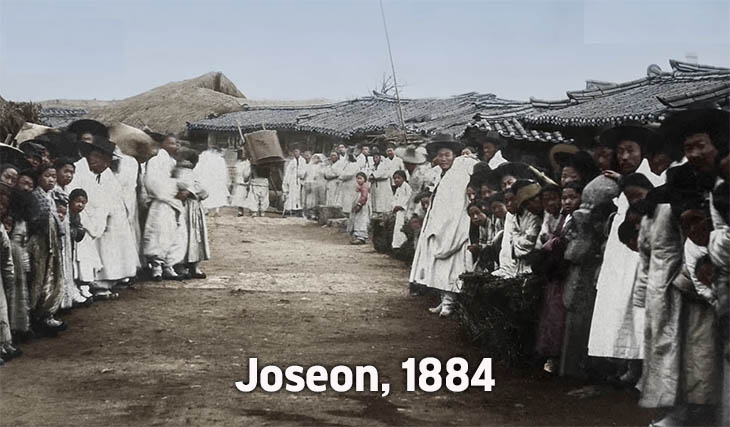
If Gojoseon was the mythical beginning and Silla was cultural blossom, then Joseon (1392–1910) was the era that most defined what it means to be Korean.
Here’s what makes Joseon remarkable:
- Confucianism became the national philosophy, shaping family life, education, governance, and social structure.
- Hangul, the Korean alphabet, was created in the 15th century by King Sejong the Great. Imagine inventing the most efficient writing system in the world — a system designed so every person, not only elites, could read and write.
- Neo-Confucian scholars debated ethics, politics, and social order with a passion that rivals any ancient academy.
Joseon’s legacy still shapes daily life in Korea — from respect for elders to family hierarchy and even some aspects of workplace etiquette.
Between Empires: Invasions and Resilience
History isn’t just about achievements; it’s about endurance.
In the late 16th century, Korea faced one of its darkest chapters: the Japanese invasions of 1592. These conflicts brought devastation, but also stories of extraordinary resistance. Local militias, famously led by Admiral Yi Sun-shin, used innovative turtle ships to confront overwhelming forces. Admiral Yi is still celebrated as one of Korea’s greatest heroes, not because he won every battle but because he embodied resilience and strategic genius against all odds.
Colonial Rule and Struggle for Identity
Fast forward to the 20th century — Korea suffered nearly four decades of colonial rule under Japan (1910–1945). This period was a time of hardship, cultural suppression, and profound social upheaval. Korean language, traditions, and education were restricted. Yet Koreans did not lose their identity. Underground schools, secret newspapers, and cultural resistance kept the spirit of Korea alive.
This chapter is important not because it is dark, but because it shapes the modern understanding of why independence and cultural identity matter so deeply to Koreans today.
The Korean War: More Than a War, a Turning Point
Most foreign visitors know the term “Korean War,” but few grasp the emotional and structural impact it had.
From 1950 to 1953, Korea was split — not as a diplomatic decision but as a result of conflict. Families were separated. Cities were destroyed. The war ended with an armistice, not a peace treaty, which means that technically the Peninsula is still at war.
This war wasn’t just military; it reshaped society, accelerated modernization in the South, and fostered a collective determination that still echoes in Korean life today.
Rapid Transformation: Rise of a Modern Society
Compare Korea in the 1950s with the Korea of today, and you’ll see one of the most dramatic transformations in modern history. What was once a war-torn country became a global economic and cultural powerhouse through decades of determination, innovation, and collective effort.
This is why many Koreans talk about “Han” — a word that describes a collective feeling of perseverance through hardship. It is not pessimism; it is an emotional story of depth, survival, and eventual achievement.
Hidden Historical Gems You Won’t Hear in Every Guidebook
Foreign visitors often miss these gems:
- The cultural exchange between Korea and ancient Japan — Baekje art and craftsmanship influenced early Japanese culture.
- The role of Buddhism and Confucianism in shaping not just religion but social relationships.
- Traditional village life patterns in places like Andong and Jeonju — living museums of Joseon heritage.
- Royal tombs, fortresses, and Confucian academies that tell stories older than many European cities.
These are not just tourist sites; they are chapters of a long, intricate story that continues to shape people’s minds and daily routines.
Why Korea’s History Still Matters Today
History isn’t dusty. In Korea, it’s woven into:
- Language and proverbs
- Family rituals
- Respect for elders
- Seasonal celebrations
- Modern politics and identity
When a Korean bows, eats with shared dishes, or studies hard, there’s a long historical logic behind it — not just tradition for tradition’s sake.
Final Thoughts from a Korean Local
Korean history is layered, emotional, and often surprising. It’s not just an academic subject; it’s living memory. If foreigners only see Korea through the lens of pop culture, they miss the deep stories that have shaped everything they enjoy today.
Korea’s history is not hidden because it’s secret — it’s hidden because you have to feel it beyond Wikipedia entries.
And trust me, once you do, Korea won’t feel foreign anymore. It will feel human in its complexity, resilient in its spirit, and unforgettable in its lessons.
Why Do K-Dramas Have Such High Production Quality? A Behind-the-Scenes Look from Korea