
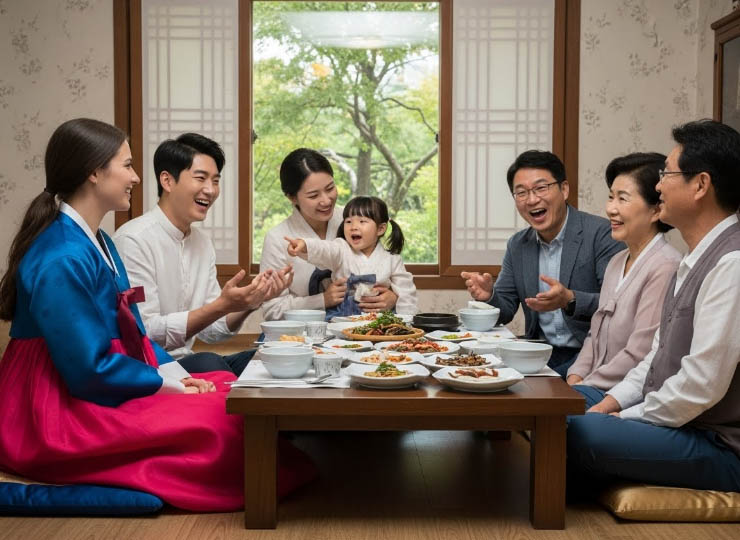
Learning Names by Family Relationships in Korea
A Korean Local’s Straightforward Guide for Foreigners
When you first start learning Korean or spend time with a Korean family, one thing hits you immediately: relatives are not called simply “uncle,” “aunt,” or “cousin.” Instead, the way Koreans address family members is precise, detailed, and—frankly—quite clever once you get the hang of it.
In Korea, relationship names reflect not only who someone is to you, but also their gender, age relative to you, and sometimes even the side of the family they come from. As a Korean woman who grew up hearing and using all of these terms daily, I can tell you it’s not just vocabulary—it’s a peek into how Koreans see family.
Let’s walk through it in a way that makes sense, stays natural, and helps you actually use these words in real life.
Why Family Names Matter in Korean Culture
Before we jump into the list, here’s the most important concept:
In Korean, family relationships are specific because respect and hierarchy matter.
Knowing whether someone is older or younger than you changes how you address them. Korean language has levels of politeness built in, and family language is no exception.
So when you learn these names, you are learning both language and social context.
Direct Family: Parents and Siblings
In many cultures, “mother,” “father,” “big brother,” and “little sister” are simple. In Korea, you have the same basic set, but with gender and relative age clearly marked.
- 아버지 (abeoji) – father
- 어머니 (eomeoni) – mother
- 형 (hyeong) – older brother to a male speaker
- 오빠 (oppa) – older brother to a female speaker
- 누나 (nuna) – older sister to a male speaker
- 언니 (eonni) – older sister to a female speaker
- 동생 (dongsaeng) – younger sibling (gender neutral, but often clarified with male/female)
Notice how “older brother” has different words depending on your gender? This is one of those uniquely Korean nuances you won’t forget once you start using them.
Extended Family: Aunts and Uncles
In English we sometimes call multiple relatives “uncle” or “aunt,” but in Korean, the words change based on whose side of the family they are and whether they are older or younger than your parent.
Here’s a simplified way to remember:
Your Father’s Side
- 큰아버지 (keun-abeoji) – father’s older brother
- 작은아버지 (jageun-abeoji) – father’s younger brother
- 이모 (imo) – mother’s sister (but some also use it informally for certain aunts)
- 고모 (gomo) – father’s sister
Your Mother’s Side
- 삼촌 (samchon) – mother’s brother (can be older or younger than your mom)
- 이모 (imo) – mother’s sister
These terms may sound long at first, but they give you a precise sense of who is who in the family.
Cousins: Same or Different?
Cousins in Korean are generally called 사촌 (sachon).
If you want to be specific, you can add gender markers for male or female cousins, but most of the time Koreans just say “sachon” and clarify with context if needed.
This is a bit simpler than the rich variety of aunts and uncles.
In-Law Names: When Family Expands
Once you’re married, you meet new family titles that reflect your in-law status.
For example:
- 시아버지 (si-abeoji) – father-in-law
- 시어머니 (si-eomeoni) – mother-in-law
- 시아주버니 (si-ajubeoni) – older brother-in-law
- 시누이 (sinui) – sister-in-law
These words may feel formal at first, but Koreans use them all the time, not just at weddings.
Why These Words Feel So Specific
Korean family names reflect not just who someone is, but also how you should relate to them.
In English, “uncle” could mean anyone older in the family. In Korean, the name often tells you:
- Whose parent they are
- Whether they are older or younger than your parent
- Whether they are on your mother’s or father’s side
This might feel like extra work, but it also makes family interactions very clear.
Tips for Foreigners Learning These Terms
- Start with your own family tree. List members and match each term.
- Practice with context, not flashcards. Say the words in sentences you would actually use.
- Ask a Korean friend or partner to correct you. Koreans love explaining family terms.
- Don’t be afraid to ask for pronunciation help. Many of these words sound similar if you’re new to Korean.
Final Thoughts
Learning family relationship names in Korea is more than vocabulary. It’s learning how Koreans view family, respect, and social order. Once you understand these terms, you’ll connect more deeply not only with language, but with real people and their lives.
Whether you’re visiting family in Korea, living here long-term, or simply curious about Korean culture, these words unlock more than just meaning—they unlock understanding.