
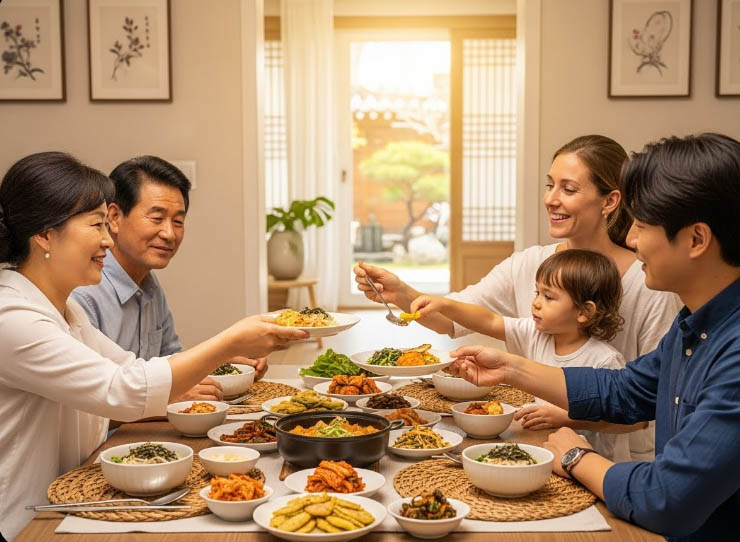
Living with Korean Grandparents in Multicultural Families
An Honest and Practical Guide from a Korean Local
Co-living with grandparents in Korea can be an enriching experience, but it’s not always simple — especially in multicultural families where different languages, traditions, and expectations meet under one roof.
As a Korean woman who has watched many international families navigate shared living spaces with grandparents, I can tell you this: Korea’s multigenerational living culture is rooted in deep respect and care, but it requires clear communication and cultural understanding to work smoothly.
This article explains how life really unfolds in these households, and how multicultural families can thrive together.
Why Multi-Generational Living Is Common in Korea
In Korean culture, living with parents and grandparents isn’t unusual — it’s an extension of family solidarity. Many Korean couples expect to support aging parents, and grandparents often look forward to spending more time with their grandchildren.
For multicultural families (especially those involving foreign spouses), this can be beautiful, exhausting, confusing, and rewarding all at once.
Understanding the cultural foundation helps manage expectations from day one.
The Reality of Daily Life Together
Living together generally means close physical and emotional proximity:
- Shared meals
- Co-parenting support
- Household chores divided informally
- Extended family events and holidays
But these positives come with pressures, too:
- Different ideas about noise levels
- Different standards for cleanliness
- Different approaches to child-rearing
These differences can be subtle or significant, depending on personalities.
Language: The First Cultural Divide
One of the biggest challenges for multicultural families living with Korean grandparents is language.
Grandparents usually speak Korean, and even if they know some English, their vocabulary may be limited. When grandchildren come home speaking both the non-Korean parent’s language and Korean, grandparents sometimes feel left out.
This can create frustration on both sides — not because of malice, but because everyone wants to be understood.
Parents can ease this by using simple strategies:
- Repeat key phrases in both languages
- Translate basic routines (meal, homework, sleep)
- Encourage grandparents to learn a few words in the second language
This does not have to be perfect. It just needs to feel intentional.
Child-Raising Philosophies: Unspoken Expectations
Grandparents in Korea often come with strong ideas about children’s routines: early bedtime, focused study time, proper manners, and group conformity.
Meanwhile, foreign parents may prioritize independence, emotional expression, or bilingual communication.
These differences sometimes lead to gentle disagreements like:
- “Why does Grandmom wake him so early?”
- “Why can’t she use more English with the child?”
- “Why is discipline so strict today?”
These moments are normal. In fact, navigating them is part of becoming a cohesive family.
Finding Common Ground Without Losing Yourself
Living with grandparents does not mean you have to surrender your daily rhythm. What matters is mutual respect and basic agreements.
Here’s how families I’ve observed make it work:
Agree on Daily Routines Together
Discuss mealtimes, sleep times, language use, and discipline upfront.
Create Shared Activities That Build Bonds
Cooking, storytelling, walking together — familiar activities build trust and joy.
Establish Clear Roles
Grandparents help with care and cultural traditions. Parents make final decisions on language use and values.
Clarity prevents misunderstandings before they grow into resentment.
Emotional Challenges That Often Go Unspoken
Living together intensifies emotions. Some parents feel the grandparents are too overbearing. Some grandparents feel unappreciated or worried about cultural loss.
Here’s a simple truth: frustration often comes from care.
Grandparents are deeply committed to family continuity. They see children as carriers of heritage, manners, and family pride. When they worry, they act — sometimes loudly.
The key is to remember: their presence is a sign of love and deep connection, even if the delivery feels overwhelming at times.
Balancing Korean Culture with Your Family Culture
Multicultural families in Korea often find themselves in a balancing act:
- Preserving the foreign parent’s traditions
- Celebrating Korean holidays and rites
- Negotiating which rules matter most
- Making space for multiple identities
Grandparents often want children to know Korean culture deeply — not just language, but respect for elders, communal meals, and holiday rituals.
This isn’t about erasing another culture. It’s about creating a family narrative that includes both.
What Korean Grandparents Appreciate Most
From experience, grandparents treasure:
- Effort in learning Korean
- Respectful communication, even when opinions differ
- Involvement in family traditions
- Seeing grandchildren happy and healthy
Respect in Korean culture is not about obedience. It’s about recognition — showing elders you see them as important parts of your family’s story.
Cultural Differences That Turn into Strengths
Some multicultural families eventually find that the very differences that once caused friction become family strengths:
- Bilingual children who bridge worlds
- Grandparents who learn new phrases
- Parents who model cultural compromise
- Shared celebrations that mix traditions
These are not easy accomplishments, but they are deeply meaningful.
A Korean Woman’s Real Talk
Living with Korean grandparents in a multicultural family is not always seamless, but it is often richer than families expect.
Grandparents bring cultural depth, historical memory, and emotional continuity. Parents bring fresh perspectives, new norms, and bilingual fluency. Children become cultural hybrids walking in both worlds.
That is not just coexistence. That is living culture.
Final Thoughts
Living with Korean grandparents in a multicultural family is a journey — one that requires patience, communication, and shared joy. It’s not simply about cohabitating. It’s about blending worlds, learning from each other, and forming a family story that honors all voices.