
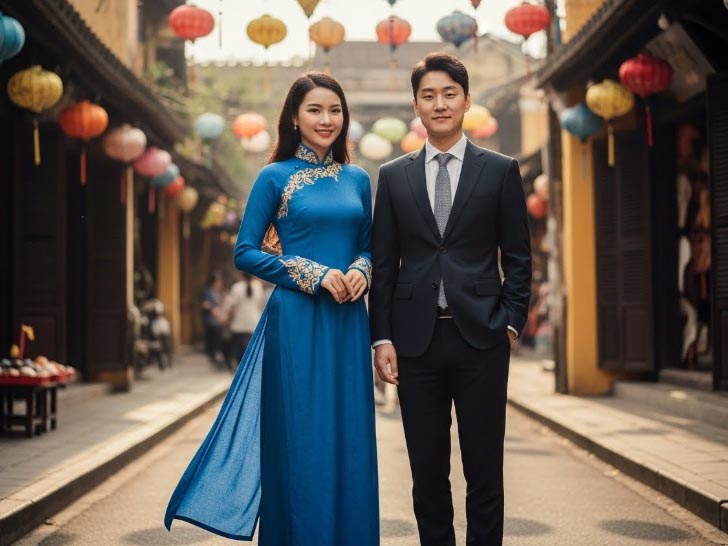
How Women from Non-English Speaking Countries Marry Koreans
When you look at the statistics for international marriage in South Korea, you quickly realize that the story is far more diverse than just Western couples. A significant and rapidly growing number of marriages involve Korean men marrying women from non-English speaking countries across Asia, Europe, and elsewhere.
This trend highlights a fascinating reality: the language barrier is often not the biggest hurdle—commitment, cultural understanding, and the streamlined F-6 visa process are the real keys to success.
As a local, I’m here to explain the common paths and crucial factors that enable women from non-English speaking countries to successfully marry and build a life with their Korean partners.
Pillar 1: The Language Solution (Mandatory Clarity)
For these couples, the language barrier is addressed directly, often using a “third language” or focusing intensely on Korean proficiency.
1. The Dominance of Korean Study
The Korean government requires clear communication for the F-6 Marriage Visa. For couples without a shared language, this often means the foreign spouse must achieve TOPIK Level 1 (or higher) proficiency. This official requirement acts as a built-in language curriculum that ensures the foreign spouse can integrate.
2. The “Third Language” Connection
Many couples may use a shared third language (such as Japanese, Chinese, or Russian, which are common in specific regions) for their communication, especially in the early dating stages. This shared tongue allows them to build the crucial emotional foundation before mastering Korean.
3. Support from Government Programs
These couples often make extensive use of free resources like the Social Integration Program (KIIP) and local Multicultural Family Support Centers (Da-Munhwa Centers). These resources provide essential, structured language and culture classes, directly facilitating the foreign spouse’s adaptation.
Pillar 2: The Social and Economic Factors
These marriages are often driven by shared cultural values and specific social conditions.
4. Shared Values and Proximity
Women from nearby East Asian countries often share cultural values with Korea, particularly regarding family hierarchy, respect for elders, and collective harmony. This existing foundation of understanding simplifies the integration into the Korean family unit compared to marriages with individuals from highly individualistic cultures.
5. Economic Stability and Family Focus
Many women are attracted to the economic stability and security offered by life in Korea. The focus of the Korean partner on financial planning, clear commitment, and family loyalty is a huge drawing card, especially for those seeking a stable environment to raise children.
Pillar 3: The Visa Procedure (Fairness and Scrutiny)
The F-6 visa process is standardized to ensure fairness, regardless of the applicant’s origin.
6. Standardized Requirements
The Ministry of Justice ensures that the core requirements for the F-6 visa—income proof, housing stability, and communication proof—apply to everyone. This standardization means the legal process is predictable for all applicants who meet the criteria.
7. Scrutiny is High, but Manageable
While embassies in certain regions may apply high scrutiny to ensure the marriage is genuine (not fraudulent), couples who provide detailed, consistent evidence of their relationship (photos, communication logs, clear family support) successfully overcome these checks. The love must be proven, but the path is open.
In short, for women from non-English speaking countries, the marriage path to Korea is powered by intentional effort—mastering the language, leveraging supportive government programs, and building a partnership based on shared stability and strong family values.