
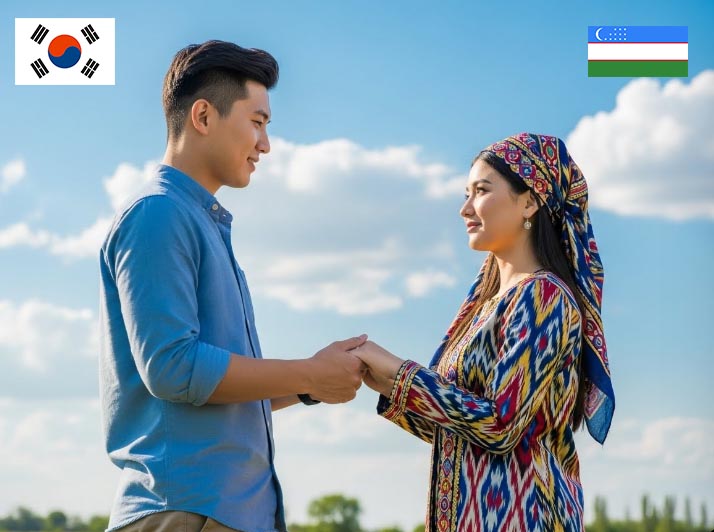
Main Paths for Uzbek Women to Marry Korean Men
Why This Question Comes Up So Often
From inside Korea, I often notice how curious foreigners are about international marriage here, especially marriages between Korean men and women from Uzbekistan. People usually ask the same things: How do they meet? Is it arranged? Is it about money, visas, or love? The short answer is that there is no single path, and the reality is far more ordinary and human than most stereotypes suggest.
As Korea becomes more connected to Central Asia through work, education, and migration, these relationships have emerged naturally in multiple ways. Below are the main paths I see most often, explained from a local, everyday perspective.
1. Marriage Agencies: Still Common, but More Structured Than Before
Marriage agencies remain one of the most visible paths, especially in rural areas or among older Korean men. These agencies introduce Korean men to Uzbek women who are interested in marriage abroad. Compared to the past, the process today is far more regulated, with background checks, interviews, and legal requirements designed to reduce abuse and misunderstanding.
From the Korean side, this option often appeals to men who struggle to meet partners locally due to age, location, or social circumstances. From the Uzbek side, women who choose this route are often looking for stability, long-term commitment, and a family-centered life.
Despite common assumptions, many of these marriages are not rushed. Couples often communicate for months, sometimes longer, before deciding. Still, cultural gaps can be large, which is why preparation and realistic expectations matter more than romance alone.
2. Work and Labor Migration Turning into Relationships
Another major path begins with work.
Some Uzbek women come to Korea legally through employment programs, factories, service jobs, or language-related work. Over time, they meet Koreans through workplaces, mutual friends, or community life. These relationships often grow slowly, starting as friendships and turning into romantic partnerships.
From what I see, marriages that begin this way tend to feel more balanced because both partners have already experienced real Korean daily life together. The woman usually understands Korean culture, work expectations, and social norms before marriage, which reduces early shock after settling down.
This path is especially common in cities with more diverse populations and foreign worker communities.
3. Study and Language Programs Leading to Personal Connections
Education is another quiet but important path.
Uzbek women studying Korean language, university programs, or exchange courses sometimes meet Korean men through school, social circles, or volunteer activities. These relationships are usually organic and resemble how couples meet anywhere else in the world.
Because these women already speak some Korean and are familiar with Korean society, the transition into marriage is often smoother. Families on both sides may still have concerns, but shared communication and mutual understanding help bridge gaps.
This path tends to produce marriages that look very similar to intercultural couples in Western countries.
4. Online Dating and Social Media Connections
Like everywhere else, online platforms now play a major role.
Some Uzbek women meet Korean men through international dating apps, language exchange platforms, or social media. What starts as casual conversation can turn into long-distance relationships and eventually marriage.
This path allows people to connect beyond geography, but it also requires extra caution. Long-distance relationships can create idealized images that don’t always match real life. Couples who succeed usually take time to meet in person, understand family expectations, and talk seriously about life in Korea before marriage.
5. Personal Networks and Community Introductions
Finally, some marriages happen through very traditional means: introductions.
Friends, relatives, coworkers, or religious communities sometimes connect people who share values or similar life goals. In these cases, trust plays a big role. Families may feel more comfortable knowing someone who can vouch for the couple.
This path may not be flashy, but it often leads to stable relationships because expectations are clearer from the beginning.
What Korean Men Often Look For in These Marriages
From a Korean perspective, men who marry Uzbek women often value strong family orientation, commitment to marriage, and emotional warmth. Many also appreciate cultural traits such as respect for elders and close family bonds, which feel familiar to traditional Korean values.
That said, successful marriages depend less on nationality and more on communication, patience, and shared expectations.
Challenges Uzbek Women Commonly Face After Marriage
Marriage is not the finish line; it’s the beginning.
Uzbek women in Korea often face challenges such as language barriers, loneliness, cultural misunderstandings, and pressure to adapt quickly. Daily life, parenting styles, and relationships with in-laws can all require adjustment.
Women who do best usually have access to language education, supportive spouses, and some form of community, whether online or offline.
Breaking the Stereotypes
One important thing to say clearly: there is no single reason Uzbek women marry Korean men. It is not just about visas or economics, and it is not always about romance either. Like any marriage, motivations vary, and outcomes depend on effort from both partners.
Reducing these relationships to simple narratives does a disservice to the real people involved.
How Korean Society Is Responding
Korean society is slowly adapting. Multicultural families are more visible, schools are more diverse, and public awareness is growing. While prejudice still exists, younger generations tend to view international marriage as normal rather than unusual.
These marriages are quietly reshaping what family looks like in modern Korea.
Final Thoughts from a Local Perspective
As someone living in Korea, I see Uzbek–Korean marriages as part of a broader social transition. They don’t follow one script. Some start through agencies, others through work, study, or chance meetings. What matters most is not how they begin, but how couples support each other after marriage.
For readers abroad trying to understand Korea beyond headlines, this is an important reminder: social change often happens quietly, through ordinary people making deeply personal choices.
And in Korea today, many of those choices are crossing borders.