
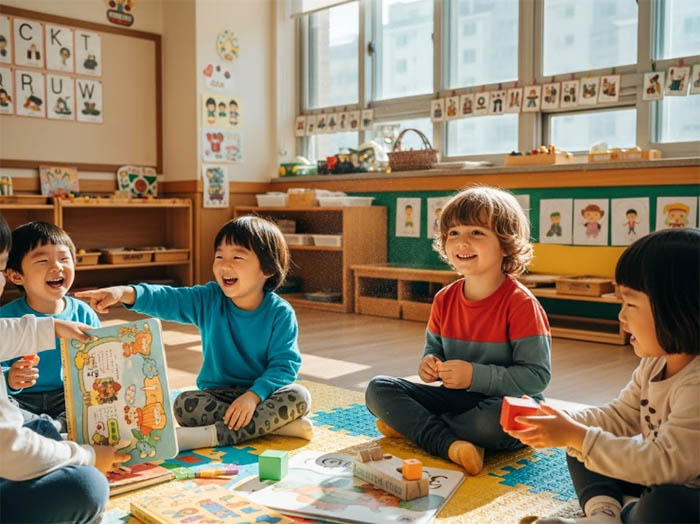
Making a Bilingual Lifestyle in Korea
A Korean Local’s Honest Guide for Families Living Here
Living in Korea as a multicultural family can be challenging and delightful in equal measure — especially when you’re trying to nurture a bilingual lifestyle for your children. Korean society, daily routines, school environments, media, and even grocery stores all naturally favor Korean. That reality can make parents wonder: How do I make both languages thrive here?
Let me share a real and practical roadmap based on what works in everyday life — from someone who sees families walking this path year in, year out.
What a Bilingual Lifestyle Really Means
Before anything else, let’s define what “bilingual lifestyle” means here.
A bilingual lifestyle in Korea doesn’t just mean a child knows two languages. It means they live and use both languages comfortably in real daily settings — at home, at school, with friends, and in their own thoughts.
In Korea, that requires intentional design, not just hope.
Why Korea Makes One Language Easier Than the Other
Korean is everywhere: school, playgrounds, stores, TV, signs, public transport — you name it. Even if an expat family speaks another language at home, Korean inevitably becomes dominant outside.
The challenge for bilingual families is not just teaching two languages, but creating real contexts where both languages are useful and meaningful.
Create Language Zones at Home
One of the most effective strategies is to establish clear language zones — places or times dedicated to one language.
For example:
- Morning routines in the minority language
- Mealtimes in Korean
- Playtime in the minority language
- Bedtime stories in the minority language
Mixing languages randomly forces the child to constantly switch without building confidence in either.
Clear boundaries help the brain associate each language with purpose, not confusion.
Use Real Life as Curriculum
Adults often look for structured classes, apps, and flashcards. Those have their place, but real life — the messy, unscripted, emotional stuff — is where language sticks.
Here’s what that looks like in Korea:
- Grocery shopping in Korean
- Ordering at local cafes in Korean
- Storytelling in the minority language
- Talking about feelings, memories, and dreams in both languages
If language use stays on practical topics only, it won’t expand. Give language emotion, story, and choice.
Don’t Wait for School to Teach English or Other Languages
Public schools in Korea are excellent for Korean literacy and academics. They are not designed to teach English (or other languages) as a identity language. Korean language exposure is inevitable there — that’s why you must protect and plant the minority language at home.
International schools help, but many multicultural families choose local schools. That’s fine — just reinforce the minority language outside of school.
Grandparents Can Be Linguistic Allies or Unintentional Roadblocks
Korean grandparents often communicate primarily in Korean. This is not a problem; it’s a cultural reality. But it does mean the child has enormous exposure to Korean once they start school or spend time with grandparents.
One strategy is to involve grandparents in supportive ways:
Teach them a few phrases in the minority language
Invite them to read stories in both languages
Explain gently why both languages matter
When grandparents become fans of bilingualism, not just Korean, the process accelerates naturally.
Media: A Double-Edged Sword
Media matters. In Korea, children’s media is overwhelmingly in Korean.
That’s great for Korean immersion, but if the minority language is not present:
Kids associate entertainment with Korean
They hear only one language in fun contexts
So curate media intentionally:
Apps and books in both languages
Cartoons and stories in the minority language
Music playlists that mix both
Let both languages sound like fun, not work.
Find Community Outside the Home
Language thrives socially.
Look for:
- International play groups
- Multicultural family centers
- Foreign language book clubs
- Language exchange meetups
These become real reasons for children to use their second language outside of school and home routines.
Celebrate Both Cultures, Not Just Language
Language is tied to culture, not just vocabulary.
Celebrate:
- Holidays from both cultures
- Food traditions
- Family rituals
- Stories about heritage
When children feel pride in both worlds, the motivation to maintain both languages strengthens.
Language becomes identity, not chores.
Be Patient With Codeswitching and Imperfection
Children who grow up bilingual often mix languages. That’s not confusion. That’s efficiency. They use what they need to express what they feel.
Codeswitching is normal, not a problem. Gentle correction and consistent modeling help them refine each language over time.
A Korean Woman’s Perspective on Long-Term Success
From where I stand, the families who succeed in creating a bilingual lifestyle in Korea are not the ones who have perfect routines or the most resources — they are the ones who:
- Design clear language use patterns
- Make both languages emotionally rich
- Create social contexts where both languages flourish
- Celebrate culture as much as vocabulary
Korean immersion is inevitable. Bilingualism requires intention.
Final Thoughts
A bilingual lifestyle in Korea is not a destination; it’s a daily practice. It’s the little choices — the language of bedtime stories, the songs you play in the car, the values you attach to each language — that make the difference.
How K-Pop Companies Scout Trainees: Inside Korea’s Idol Discovery System