
Manufacturing Salaries in Korean SMEs
(Day & Night Shifts Explained)
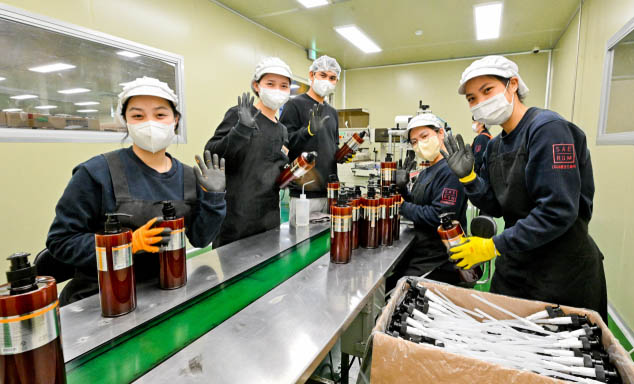
You’re looking beyond the typical desk job and considering a crucial role in Korea’s engine room: manufacturing. Working in a Korean Small to Medium Enterprise (SME) often involves a disciplined, efficient, and well-compensated system, especially when working the day and night two-shift system (주야 2교대).
This type of work is physically demanding, but it offers a significantly higher take-home salary than standard office jobs, thanks to the mandatory overtime and late-night premiums guaranteed by Korean labor law.
As a local, I’m here to give you the honest breakdown of the salary levels, how the shift system boosts your pay, and what you can realistically expect to earn as a foreign worker in a Korean SME manufacturing setting.
1. The Base Pay Reality: Starting Point
Your base salary is the foundation, but it’s only part of the final paycheck. For an entry-level worker (E-9 Non-Professional Employment visa or similar) in a manufacturing SME, the base salary before any premiums typically starts around ₩2.2 million to ₩2.8 million KRW (approx. $1,650 – $2,100 USD). This aligns closely with the legal minimum wage for the full 40-hour workweek. If you only worked 9-to-5, this salary would be manageable but tight for major city living. However, the shift work premiums are your biggest financial asset.
2. The Shift System Boost (The Real Money Maker)
The two-shift system is usually structured as rotating day (e.g., 8 AM – 5 PM) and night (e.g., 8 PM – 5 AM) shifts, often involving mandatory overtime. This structure automatically triggers substantial legal wage premiums
- Overtime Compensation: Applied for all hours worked beyond the standard 40-hour week. You must be paid 150% (1.5 times) your regular hourly wage for these hours.
- Night Shift Premium: Applied for all hours worked between 10 PM and 6 AM, regardless of whether it’s standard time or overtime. You must be paid 150% (1.5 times) your regular hourly wage for this window.
- Weekend/Holiday Work: Applied for all work done on legally designated rest days. You must be paid at least 150% (1.5 times) your regular hourly wage.
3. The Realistic Take-Home Salary (With Shift Premiums)
Because the two-shift system automatically includes night hours and overtime hours, your final paycheck is dramatically higher than the base rate.
Realistic Monthly Gross Salary (2 Shifts): You can expect to earn between ₩3.5 million to ₩4.5 million KRW (approx. $2,650 – $3,400 USD).
Annual Salary (Pre-Tax/Excl. Severance): This translates to approximately ₩42 million to ₩54 million KRW (approx. $31,800 – $40,800 USD).
This substantial difference—often 50% to 80% higher than the base salary—is why many foreign workers actively seek out the two-shift system, as it provides the fastest way to build savings while working in Korea.
4. What to Watch Out For
When reviewing a contract for shift work, ensure these benefits are clearly stated and legally compliant
Housing/Dormitory: Many manufacturing SMEs provide subsidized housing or dormitories, which significantly reduces your living costs and boosts your savings potential.
Severance Pay (퇴직금): You are legally entitled to this, equivalent to one month’s salary for every year of service after one full year of work. Ensure your contract adheres to the Korean Labor Standards Act (LSA).
Contract Clarity: Confirm the shift rotation schedule (e.g., how often day shifts rotate to night shifts) and ensure the contract clearly specifies the premium rates and pay structure.
The two-shift system is challenging, but it is one of the most reliable and high-paying employment paths for foreigners looking to build savings and contribute to Korea’s crucial manufacturing sector.