Multicultural Families’ Experience With Korean Holidays
Korean holidays are more than dates on a calendar — they’re rhythms of life. For local Koreans, holidays like Seollal (Lunar New Year) and Chuseok (Harvest Festival) mean family meals, ancestral rites, and synchronized time off. But for multicultural families — those with international spouses, kids with dual heritage, or homes that blend customs — Korean holidays are both deeply meaningful and delightfully complex.
As someone who lives in Korea and sees how families navigate these occasions up close, I want to share what multicultural families truly experience — the emotions, the surprises, the challenges, and the laughter that often comes with blending traditions.
Let’s explore how Korean holidays become shared culture in motion for families from many backgrounds.
What Makes Korean Holidays Special
Korean holidays usually emphasize family togetherness, shared meals, ritual respect for ancestors, and seasonal transitions. They come with days off schools and work, so communities slow down and people gather. Anyone living here begins to feel the seasonal pulse:
- Seollal(설날) marks the Lunar New Year with family rituals, games, and special foods like tteokguk (rice cake soup).
- Chuseok(추석) is often described as Korean Thanksgiving — families return to hometowns, visit ancestral graves, and share bountiful feasts.
- Children’s Day(어린이날) and other civic holidays focus on family fun, outings, and gifts.
For multicultural families, these traditions become anchors around which cultural exchange happens.
First Impressions: Wonder and Uncertainty
Many foreign spouses and children experience their first Korean holiday with a mix of excitement and confusion. Holidays in Korea are rich in ritual:
- Respectful bows to elders
- Ancestral table settings with food arranged just so
- Group games and story traditions passed down through generations
For someone raised with Western holidays or other cultural rhythms, the structured respect and formality can feel unfamiliar. But most multicultural families describe this stage as wonder and curiosity — a time of learning and gentle cultural immersion.
Blending Traditions at the Dinner Table
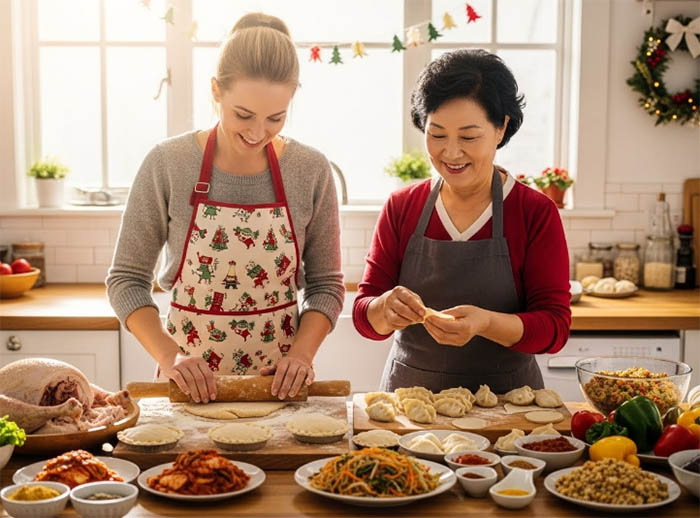
Food is the heart of holiday experience in Korea. A multicultural family table might include:
- Korean staples like galbi, jeon, and songpyeon during holidays
- Dishes from the international spouse’s homeland beside Korean classics
- Kids bridging tastes with ease, sharing both cultures on their plates
These blended holiday tables become joyful spaces where tradition meets creativity. One family I know serves traditional Korean dishes alongside Russian salads for Seollal — everyone ends up with favorites on the table.
Rituals and Respect: A Learning Curve
Korean holidays often include formal rituals, especially honoring ancestors. For foreign spouses, things like charye (ancestral table ceremony) can feel solemn and unfamiliar. Some multicultural families choose to participate fully, others adapt elements in ways that feel respectful yet inclusive.
A common phrase I hear is: “It looked intimidating at first, but we learned it together.” Participation becomes less about perfection and more about shared intention, and family members appreciate the effort because it’s heart-centered, not transactional.
Kids as Cultural Ambassadors
Children in multicultural families often act as cultural bridges during holidays. They know both sides of the table — from Korean greetings and bows to language fragments from their other heritage. They might explain parts of a holiday to a parent, or just smile when a tradition feels familiar in a new way.
This role isn’t pressure; it’s playful empowerment. Kids enjoy sharing their knowledge, and communities — neighbors, cousins, teachers — notice that these families often bring a fresh, warm energy to celebrations.
Language and Laughter
Language plays a role too. Essentials like sebae (the respectful bow greeting during Seollal) require learning, not because they’re difficult, but because they carry meaning. Holidays often become the time when foreign spouses learn a phrase that feels emotionally rich rather than just practical.
Laughter follows where misunderstanding once stood — mispronouncing holiday greetings turns into shared jokes and learning moments. For many multicultural families, these experiences become treasured memories.
Creating New Family Rituals
Over the years, many multicultural couples create their own holiday rituals. Some include elements from both cultures:
- Cooking dishes from different countries
- Setting up small traditions for their children
- Inviting friends from both cultural backgrounds for holiday meals
These blended rituals don’t replace either tradition. Instead, they expand what holiday means in that family unit.
Challenges and Community Support
No cultural journey is without bumps. Some foreign spouses mention:
- Feeling unsure in extended family settings
- Not knowing holiday etiquette deeply at first
- Missing family back home during big celebrations
But what’s remarkable in Korea is how communities tend to respond. Local support groups, multicultural centers, and friends often step in with invitations, shared meals, or holiday workshops that help families feel included rather than isolated.
Over time, many foreign spouses describe holiday season in Korea as expected warmth rather than foreign obligation.
How Holidays Shape Identity
For many kids in multicultural families, holidays become moments of identity weaving — where pieces of two or more cultures coexist beautifully. They learn it’s okay for their household to do both or their own version. This resonates deeply: holidays become markers not of difference, but of both-ness.
As one mom put it: “It used to feel like we were adapting. Now it feels like we are contributing.”
Final Thought: Holiday Spirit, Shared and Evolving
Korean holidays are rooted in centuries of tradition, but through multicultural families they are becoming shared cultural expressions — open, flexible, and heartfelt. They show that culture isn’t a static script but a living conversation. When different traditions meet, the result isn’t confusion but connection.
For foreign families living in Korea, holidays become chapters in an ongoing story — framed by respect, reshaped by creativity, and defined by the laughter and love that happen when one family brings many worlds to the table.