Precautions When Working at a Construction Site in Korea — A Local’s Practical Guide
This guide is particularly useful for workers from Russia, Kazakhstan, Uzbekistan, etc
Working on a construction site in Korea can be a rewarding experience — especially if you’re interested in hands-on work, team environments, or gaining practical skills abroad. But Korea’s work culture, legal framework, and site expectations can be quite different from what foreigners might be used to.
As someone deeply familiar with Korean workplace norms and safety standards, I want to give you a clear, practical, and realistic guide to the precautions you should take if you or someone you know plans to work at a construction site in Korea.
This guide is grounded in how things actually work on the ground here, not just theory.
Understanding the Korean Construction Culture
Working on a construction site in Korea means being part of a highly structured, team-oriented environment. Korean work culture places a strong emphasis on:
- Hierarchy and direction from supervisors
- Clear adherence to schedules
- Respect for senior workers
- Collective responsibility
This cultural context affects how safety instructions are given and followed. Knowing this helps you respond appropriately and stay safe.
Legal Requirements Before You Start
Before you step onto a construction site in Korea, make sure your paperwork is in order:
1. Appropriate Work Visa
Your visa must legally allow labor work. Certain visas (like E-series work visas or specific industrial visas) permit construction work; tourist or educational visas do not.
2. Employment Contract in Writing
Korean labor law requires a written contract, even for construction workers. Make sure you understand:
- Your job description
- Working hours
- Wages and payment schedule
- Terms of termination
If something is unclear, don’t sign it before asking for clarification.
This may seem like paperwork, but it protects you legally.
Site Safety Orientation — Don’t Skip It
Most Korean construction companies provide a site safety orientation before you begin. This covers:
- Emergency procedures
- Required safety gear
- Hazardous areas
- Communication channels
Even if it feels repetitive, pay full attention. Korean safety briefings are practical, specific to that site, and skipping them increases risk.
Personal Protective Equipment (PPE) Is Not Optional
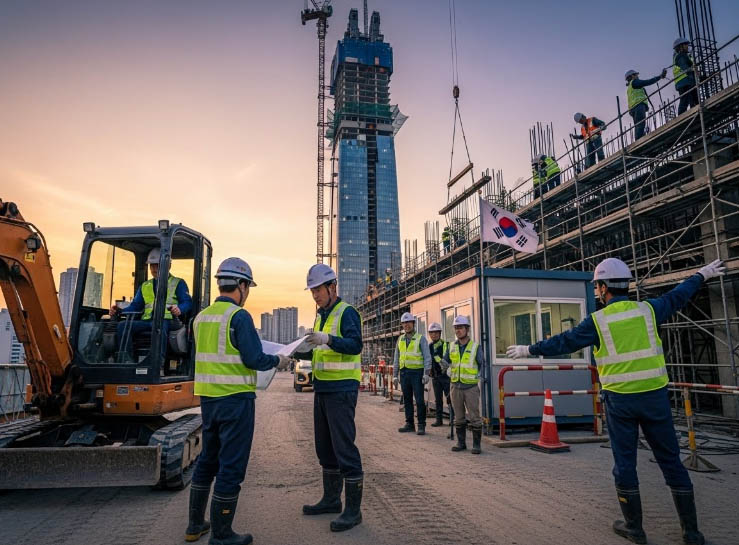
In Korea, construction sites enforce PPE strictly. You will almost always need:
- Safety helmet
- Safety boots
- High-visibility vest
- Gloves
- Ear protection (if noisy)
- Dust mask or respirator (if required)
Korean sites can be strict about compliance. If you show up without proper gear, you may be asked to leave or denied entry until you’re properly outfitted.
From a local perspective, Koreans expect safety gear as standard — not optional.
Communication on Site — Clear and Direct
Language barriers can be one of the biggest safety challenges for foreigners. Here’s how to handle it:
- Learn key safety terms in Korean (e.g., 위험 “danger”, 조심 “be careful”, 멈춰 “stop”)
- Use simple English and confirm understanding
- Don’t hesitate to ask supervisors to repeat or demonstrate
- Pay attention to gestures and non-verbal cues
Korean workers value clear, respectful communication. Mistakes happen less when you speak up early rather than waiting until later.
Know the Common Hazards
Construction sites have risks everywhere. On Korean sites, common hazards include:
Slips, Trips, and Falls
Scaffolding and uneven ground are standard, especially in rainy seasons.
Falling Objects
Always wear a helmet — and keep your head out of places where tools or materials may drop.
Heavy Machinery
Korean sites often use compact and mobile heavy equipment. Always make eye contact with operators before approaching.
Electrical and Welding Hazards
These require special attention. If you’re not trained, leave the task to specialists.
Understanding these common hazards lets you anticipate risk before it happens.
Work Hours and Breaks — What to Expect
Korean construction sites generally run on schedules that may feel intense:
- Early start times (often before 8 am)
- Breaks in mid-morning and lunch
- Overtime depending on deadlines and weather
Korean workers value diligence, and sometimes this means long days. But Korean labor law does mandate breaks and limits on maximum working hours, so know your rights.
Health and Injury Reporting — Be Proactive
If you feel unwell, injured, or uncomfortable, report it immediately. Korean workplaces may expect you to speak up rather than quietly endure pain.
When reporting:
- Talk to your immediate supervisor
- Use site safety officers if available
- Get medical attention if needed
- Keep records of communication
Timely reporting protects your health and your legal right to compensation if needed.
Respect Site Rules and Local Norms
Korean construction sites have specific rules about:
- Smoking areas
- Lunch and rest areas
- Tool storage
- Safety inspection routines
These may seem minor, but ignoring them can put you and your team at risk. Koreans take routine seriously; following rules shows respect and promotes safety.
Integration With Local Workers
Getting along with Korean co-workers makes your workday smoother and safer. People trust those who show:
- Respect for seniority
- Willingness to learn
- Punctuality
- Team responsibility
This doesn’t mean changing your personality — just adapting to local norms around respect and cooperation.
Final Thoughts — Safety and Respect Go Together
Working on a construction site in Korea demands respect for both safety standards and workplace culture. The two are tightly connected here — Koreans don’t separate rules from daily working life, they embed them.
So whether you’re here short-term or planning a longer stay, keep these precautions in mind:
- Be prepared.
- Wear proper gear.
- Communicate clearly.
- Respect rules and hierarchy.
- Speak up early if something feels unsafe.
That’s how Koreans approach construction work — and how you can navigate it successfully too.
Stay safe, stay aware, and you’ll not just work — you’ll thrive.