
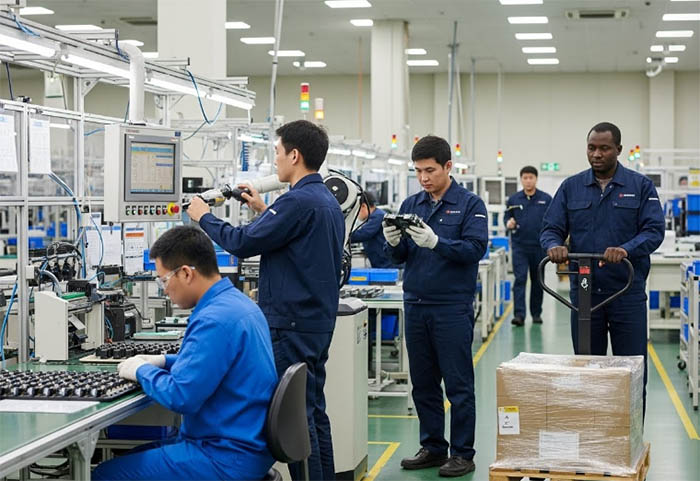
Pros and Cons of Working in Korean Factories
If you’re considering working in South Korea, especially through the EPS system, you’ve probably heard that factory jobs are the most common and stable option. But what is it actually like? Are these jobs worth it for foreigners?
As a Korean local who’s seen many foreign workers arrive, adjust, struggle, and succeed, here’s the honest and balanced look at both the ups and the downs of working in Korean factories.
The Pros: Why Many Foreigners Choose Factory Jobs
Stable Income and Predictable Pay
Let’s start with the biggest advantage: consistency.
Factory salaries in Korea may not be glamorous, but they are reliable. Overtime is usually available, and for many workers, overtime pay becomes the real income booster. If your goal is to save money quickly, manufacturing can be one of the fastest ways to do it.
Long-Term Work Opportunities
Korea’s manufacturing sector constantly needs workers because the local younger generation prefers office jobs. This labor shortage means:
- Regular hiring
- Renewed contracts
- A path to stay up to 4 years and 10 months on the E9 visa
It’s not “easy,” but once you’re in, you typically have stable work.
Straightforward Tasks
Factory work is often repetitive, but that’s exactly what some workers prefer. You don’t need advanced Korean or specialized skills to start. Learning the tasks usually takes days, not months.
Less Language Pressure
Of course, some Korean helps a lot — especially for safety. But factory jobs generally require less speaking compared to offices, restaurants, or customer service roles. Foreign workers communicate mostly with supervisors and teammates.
Community Support
Because many foreigners work in factories, newcomers can easily find people from the same country, or other international workers who help them adapt. Housing is usually provided, which makes the transition easier.
The Cons: The Real Challenges You Should Expect
Physically Demanding Work
Factories are not for everyone. Depending on the industry — electronics, automotive, metal processing, food production — the work can include:
- Heavy lifting
- Standing for long hours
- Repetitive motions
- Heat or cold depending on the facility
If you’re not used to physical labor, the first few months can be tough.
Long Working Hours
Overtime is great for your paycheck, but not always great for your body. Shifts often include night work, rotating schedules, and long hours during busy seasons. You need both stamina and discipline.
Noise, Dust, and Safety Rules
Korean factories follow safety standards, but the environment can still be noisy or dusty depending on the job. Wearing safety gear is mandatory, and mistakes can be dangerous.
Limited Career Growth
Factory jobs in Korea are mostly temporary under the E9 system. They’re not designed for career climbing. You won’t typically move up to management or higher-skilled roles unless you switch visas or gain specialized training.
Homesickness and Cultural Differences
Work-life balance is different in Korea. Some workers feel lonely because of:
- Distance from family
- Strict workplace hierarchy
- Korean communication style
- Fast-paced routines
It’s manageable — but very real.
So, Is Working in Korean Factories Worth It?
The answer depends on your goals.
If you want to save money, gain steady income, and experience life in Korea, factory work can be a strong choice. Many foreign workers leave with good savings and a new perspective on Korean life.
But if you’re sensitive to long hours, physical labor, or strict schedules, this path may feel challenging.
Korean factory jobs aren’t perfect, but they’re honest work with clear expectations and predictable rewards. And for many foreigners, that combination is exactly what they’re looking for.