
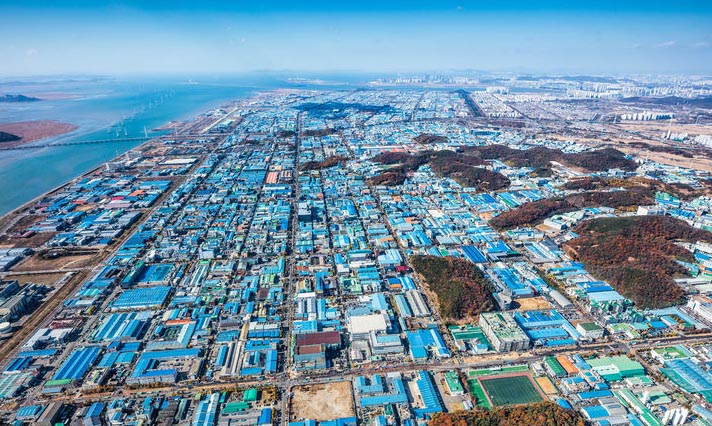
Salary Differences Between Big and Small Manufacturers in Korea
If you’re thinking about working in Korea’s manufacturing sector—or just curious about how wages vary between different workplaces—you’ve stumbled onto something many people don’t intuitively understand at first. In Korea, factory wages are not uniform: where you work (big global plant vs smaller local manufacturer) can make a significant difference in how much you actually take home. Let’s unpack this in a way that feels real, practical, and grounded in local context from a Korean person’s point of view.
Big Manufacturers vs Small Manufacturers: What’s the Real Difference?
In Korea, “big manufacturers” usually refer to multinational or large domestic factories with substantial capital, export markets, and established union systems—think automotive giants, major electronics firms, and global household brands. “Small manufacturers” typically include smaller local firms, subcontractors, or regional production facilities making parts, clothing, plastics, furniture, and other goods.
Both types are essential to Korea’s economy, but the wage structure, benefits, stability, and opportunities for overtime often differ considerably.
1. Base Salary Differences
Generally, employees at big manufacturing companies earn higher base wages compared to those in smaller firms.
Big manufacturers: Many workers start with base monthly salaries in the range of 2.3 million to 2.8 million KRW (approximately 1,700 to 2,100 USD), depending on location and experience. Some specialized technical roles can start even higher.
Small manufacturers: Base wages often hover around 1.8 million to 2.3 million KRW (roughly 1,350 to 1,700 USD) at entry to mid-levels, with less variation upward unless there’s overtime or bonuses.
The difference isn’t always huge right away, but it’s noticeable when you compare take-home pay over a year.
Why the gap? Big manufacturers usually have larger revenue streams, stronger market positions, and formal wage scales that raise the floor of what they pay.
2. Overtime and Premium Pay
Overtime is a major part of manufacturing life in Korea. Big manufacturers often have:
- Structured overtime systems
- Higher overtime rates (sometimes 1.5x–2x base)
- Predictable shift differentials (night/weekend premiums)
For instance:
At a large car or electronics plant, workers might regularly earn 400,000–700,000 KRW extra per month on overtime alone, which is about 300–540 USD.
In smaller companies, overtime may be available, but:
- Shifts are less predictable
- Premium rates may be lower
- Overtime hours may be capped due to smaller order volumes
So while both sizes offer extra pay for extra hours, workers at big manufacturers often earn more overtime overall and have clearer schedules.
3. Benefits and Allowances
One reason big manufacturers pay more isn’t just hourly rates—they offer better benefits:
Health insurance and pension contributions are standard everywhere, but big companies often contribute more or offer additional perks.
Meal allowances, transportation subsidies, and housing assistance are common in large firms.
Performance bonuses and annual incentives are more reliably paid at big manufacturers.
Small manufacturers sometimes do offer these benefits, but often in more limited or informal ways.
From a worker’s viewpoint in Korea, people frequently joke that “the salary is one thing, but the allowances make the lifestyle.”
4. Job Security and Career Growth
Big manufacturers tend to offer more stable employment and clearer career paths, which often translates to higher long-term earnings.
- Regular promotions and structured pay bands
- Training programs that increase skill levels and wages
- Union representation that protects wage standards and working conditions
Small manufacturers may operate more like lean startups—flexible but less structured. Some offer strong growth opportunities, but that’s less predictable.
5. Work Culture and Hours
Here’s a key local insight: work culture influences wages heavily.
In big plants, work is regimented:
- Clear shift patterns
- Union agreements on overtime
- Less day-to-day ambiguity in pay rules
Smaller factories sometimes expect flexibility and may blur the line between regular and overtime hours. This can frustrate workers who feel their actual earnings don’t match the hours they put in.
Put simply:
Big manufacturers usually reward every extra hour clearly; small ones may not always be able to.
How Location Interacts with Company Size
Big manufacturers tend to be located in major industrial regions (Ulsan, Gumi, Changwon) where the cost of living is moderate compared with Seoul. This boosts real income. Small manufacturers can be scattered everywhere, including expensive regions where wages don’t stretch as far.
Workers often choose big factories in mid-sized industrial cities precisely because their salary goes further in rent and daily life.
Examples of Real Worker Experiences
From conversations with people who’ve worked in both environments:
“At the big electronics plant, I almost always earned overtime and got extra benefits. The base was stable, and I could plan my savings. At the small workshop, the base was lower, and overtime wasn’t always paid at premium — it felt like extra work without extra reward.”
Another shared:
“Small manufacturers sometimes talk about family culture, but in the end, the paycheck from a big company made more sense for my future.”
These perspectives reflect real experiences from people around Korean industrial towns.
Summary Comparison: Big vs Small Manufacturing Salaries
Aspect | Big Manufacturer | Small Manufacturer
Base Pay | Higher (2.3–2.8M KRW) | Lower (1.8–2.3M KRW)
Overtime Structure | Clear + High Premium | Less Predictable
Benefits | Robust (allowances, bonuses) | Modest or informal
Job Security | Strong | Variable
Career Path | Clear + Structured | Flexible but less certain
In USD terms (approximate):
- 2.8M KRW ≈ 2,100 USD,
- 1.8M KRW ≈ 1,350 USD
Final Thoughts
From a local perspective, the difference between big and small manufacturer salaries in Korea is rooted in scale, structure, benefits, and predictability. Big companies generally pay more not just in base salary, but in total compensation and career stability. Small manufacturers can offer good work, especially in tight-knit teams or niche industries, but wage growth and benefits usually lag behind.
If you’re seriously considering work in Korea’s manufacturing field, think beyond the headline wage. Consider overtime patterns, benefits, stability, and where you live and spend — because all of these shape your real income and daily life.