
South Korea’s Surprising Defense Ranking and Defense Exports That Foreigners Don’t Know About
When people around the world hear “South Korea,” they often think of K-pop, drama, food, or fast internet. Very few think of Korea as a global defense powerhouse, but that perception is changing — quietly and impressively.
As someone living in Korea, I can tell you that Koreans take national security seriously because of our unique geopolitical realities. But what might surprise many foreigners is how far South Korea has come not just in defending itself, but in building a globally competitive defense industry. In this article, I’ll explain how South Korea ranks in global defense and how its defense exports have become an unexpected success story.
Where South Korea Stands in Global Military Rankings
It’s one thing to talk about local defense, and another to be recognized globally. In recent military rankings — such as those produced by global defense think tanks and indexes that measure capability, readiness, budget, and technology — South Korea consistently appears in the top tier of world military powers.
These rankings consider:
- Total defense budget
- Technological sophistication
- Force readiness and training
- Strategic alliances
- Defense innovation
What’s particularly impressive is that Korea achieves this despite having a population and economy smaller than many nations ahead of it. South Korea’s position reflects its emphasis on quality, not just quantity, in defense planning.
From Conscription Army to High-Tech Force
Many foreigners know that South Korea has mandatory military service for men, but they may not realize how that service connects to innovation. The large reserve army gives Korea a ready pool of trained personnel, but the defense industry pushes that manpower into high-tech roles.
Korea’s military today includes:
- Advanced fighter aircraft
- Sophisticated missile defense systems
- Naval destroyers and submarines
- Cyber defense units
- Surveillance and reconnaissance networks
This focus on technology isn’t accidental. It’s a strategic choice born from living next to a persistent security threat and the need to maximize every defense investment.
A Quiet Export Champion: Korea’s Defense Industry Abroad
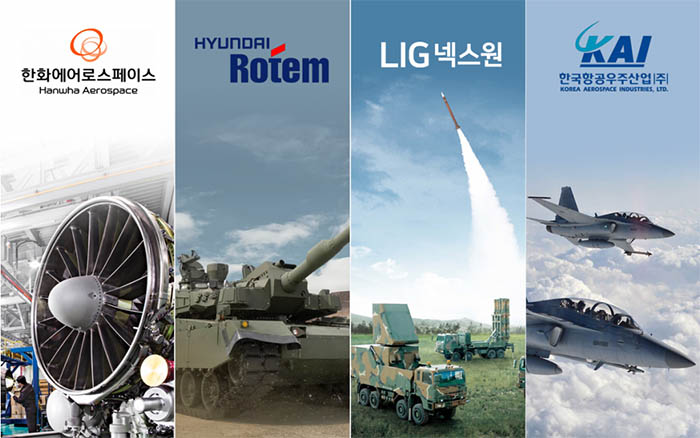
Here’s where the story becomes surprising to many foreigners: South Korea isn’t just building weapons for itself — it’s selling them to countries around the world.
South Korean defense exports have grown rapidly in the past decade. From Asia and the Middle East to Europe and Africa, countries are buying Korean defense products — not because they are cheap, but because they are reliable, effective, and competitively priced compared with Western alternatives.
Some of Korea’s notable export categories include:
- Armored vehicles and tanks — designed for mobility and survivability
- Naval ships and submarines — increasingly popular with coastal nations
- Artillery and rocket systems — praised for range and accuracy
- Military electronics and radar systems — integrated with digital command networks
- Unmanned systems — drones and autonomous surveillance equipment
Export success often comes from performance in testing, real-world applicability, and service reliability after purchase — areas where Korean firms have gained a strong reputation.
Growing Partnerships and Strategic Influence
Defense exports are not just commercial transactions. They build strategic relationships.
When Korea sells a naval vessel or a missile system, it also provides:
- Technical training
- Long-term maintenance
- Shared research initiatives
These extended relationships knit South Korea into global defense networks and diplomatic partnerships. Many countries see Korean defense technology as a way to diversify from reliance on a single supplier and to engage with a globally connected, technologically advanced nation.
Innovation: Why Korean Defense Technology Is Getting Noticed
Several aspects of Korean defense tech are particularly attractive:
- Integration with digital command systems — modern battlefields rely on seamless data and coordination.
- Modularity and upgrade paths — Korea’s systems can evolve without complete replacement.
- Competitive pricing with cutting-edge capability — attractive for countries balancing budgets and performance.
- Joint development initiatives — Korea often co-develops systems with partners, spreading cost and technical expertise.
This innovation mindset stems from a broader national focus on technology development, seen across consumer electronics, automotive, and now defense sectors.
Public Awareness at Home vs. Recognition Abroad
Inside Korea, the public often takes national defense for granted because it’s woven into everyday life through national service, public drills, and media reporting. Many foreigners assume Korea’s military is just about defense against a neighboring threat.
But internationally, foreign governments and defense planners see Korea differently:
- As a serious defense partner
- As a reliable exporter
- As a technology innovator
- As a stable supplier in a competitive market
That shift in perception is recent and remarkable.
Challenges and Global Competition
South Korea’s defense industry isn’t without challenges. It competes with major Western producers and emerging regional players. Issues like export regulations, geopolitical sensitivities, and domestic economic balance all shape how Korea engages in the global defense market.
Yet Korea has navigated these challenges through:
- Strong bilateral ties
- Neutral sales strategies
- Emphasis on quality and customization
- Adapting to global standards
Why This Matters for Foreigners
Foreign audiences often see South Korea as a vibrant cultural exporter. But the defense story reveals something deeper: Korea is a nation capable of world-class engineering under pressure.
Whether you’re a student of geopolitics, a defense enthusiast, or simply someone intrigued by how countries evolve, Korea’s defense achievements offer important lessons about innovation, strategy, and national resilience.
Final Thoughts from a Korean Local
South Korea’s defense ranking and export success are part of a broader national narrative — one that blends necessity, ingenuity, and global engagement. This story doesn’t compete with K-pop, food, or entertainment. It complements them — showing another side of Korea that is serious, strategic, and quietly influential.
For foreigners who think they already know Korea, the defense industry might be one of the most surprising chapters — and one worth understanding deeply.
After all, if you want to know Korea beyond the surface, this is one story that definitely deserves attention.