
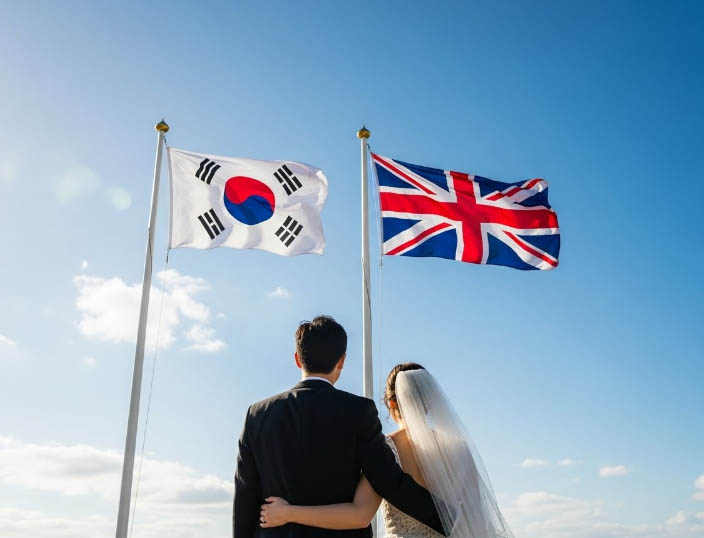
Steps for a UK Citizen to Marry in South Korea
A Practical Guide Written from a Korean Local’s Perspective
Getting married is already a big life decision. Doing it in another country adds paperwork, unfamiliar systems, and a lot of unanswered questions. If you’re a UK citizen planning to marry a Korean partner in South Korea, this guide will walk you through the process clearly, without legal jargon or unnecessary stress.
As someone living in Korea and watching many international couples go through this firsthand, I’ll explain what actually matters and what surprises people the most.
Marriage in Korea Is About Registration, Not the Ceremony
One of the first things foreigners are surprised by is this:
In Korea, the wedding ceremony has no legal meaning.
Whether you hold a traditional wedding, a small ceremony, or no ceremony at all, your marriage only becomes legal once you submit a marriage registration (혼인신고) at a local government office. This applies equally to Korean citizens and foreign nationals.
Proving You’re Legally Free to Marry
As a UK citizen, you’ll need to show that you are not currently married. This is usually done through a document commonly known as a Certificate of No Impediment or an affidavit confirming your single status.
Many couples obtain this through the British Embassy in Korea or prepare it before arriving. Once issued, the document must be translated into Korean, and the translation must be accurate and formally accepted.
This step often takes longer than expected, so it’s wise to start early.
Documents You’ll Need to Prepare
While requirements can vary slightly by district, most couples will need:
- Passport (original and copy)
- Proof of unmarried status
- Korean translations of all foreign documents
- Korean partner’s ID and family registration records
- Completed marriage registration form
Some foreign documents require apostille or consular verification before Korean offices will accept them. Preparing extra copies saves time and repeat visits.
Registering the Marriage in Korea
Once your paperwork is ready, you and your partner visit a local district office together to submit the marriage registration.
If everything is in order, the marriage is typically recorded within a few days. From that moment on, you are legally married under Korean law.
Some couples register through a Korean embassy abroad, but many find it simpler to complete the process inside Korea.
Is the Marriage Recognized in the UK?
A Korean marriage is generally valid internationally, but recognition procedures vary. If you plan to use your Korean marriage certificate in the UK for immigration, taxes, or name changes, you may need:
- An official Korean marriage certificate
- An English translation
- Apostille or verification
Some couples choose to handle this step after marriage, while others plan ahead depending on visa or relocation timelines.
Applying for a Korean Spouse Visa (F-6)
After marriage registration, many UK spouses apply for an F-6 marriage visa, which allows long-term residence and employment in Korea.
The application usually involves:
- Proof of a genuine relationship
- Financial stability of the Korean spouse
- Housing information
- Background checks
Interviews may focus less on paperwork and more on whether your relationship appears authentic and stable.
After Marriage: Documents You’ll Actually Use
Once married, you’ll likely need:
- Korean marriage certificate
- Translated versions for overseas use
- Apostilled copies for legal or immigration purposes
These documents are often required for banking, visas, insurance, and administrative tasks both in Korea and abroad.
Practical Advice from a Local
From watching many international couples go through this, a few tips stand out:
- Start paperwork earlier than you think you need to
- Double-check translations before submission
- Expect small differences between local offices
- Be patient with administrative steps — Korean systems are strict but consistent
Preparation reduces stress far more than rushing.
Final Thoughts
For a UK citizen, marrying in South Korea is not complicated — but it is procedural. Once you understand that registration matters more than ceremonies, and documentation matters more than intentions, the process becomes manageable.
The key steps are simple:
- Prove you are free to marry
- Prepare and translate documents
- Register the marriage in Korea
- Handle recognition abroad if needed
- Apply for residency if you plan to stay
Handled step by step, it’s far less intimidating than it first appears.