
Teaching Your Kids Korean and Your Native Language Together
Raising bilingual children isn’t just about vocabulary lists and textbook drills. It’s about building identity, connection, and confidence in two languages that shape how your child communicates, thinks, and belongs. As a Korean woman who has watched many multicultural families thrive here, I want to share what works — the joys, the quirks, and the strategies that help kids grow fluent in Korean and their native language together.
This is about real life, not language perfection.
Why Bilingualism in Korea Is Worth Nurturing
Families living in Korea often discover this truth early: Korean dominates daily life. School, friends, playgrounds, grocery stores — Korean is everywhere.
But your child’s home language carries identity, emotional expression, and family heritage. Preserving it while nurturing Korean isn’t just academic — it’s emotional and cultural continuity.
Many families tell me that bilingual kids not only speak two languages — they think in two cultures. That’s a lifelong advantage.
Begin With Purpose, Not Pressure
First rule: don’t treat bilingualism as a race. Kids don’t need balanced fluency at age five. They need consistent exposure and positive emotional association with both languages.
Instead of asking “How fast can they speak both?” ask:
- Do they feel comfortable switching between languages?
- Do they use their home language with family warmth?
- Do they use Korean to connect with peers?
These are real milestones, not test scores.
Language Separation Without Stress
One common strategy that works well is contextual separation — not rigid rules, but patterns that help the brain associate language with context.
For example:
- Home language for family conversations, bedtime stories, songs
- Korean during school, playground, group activities
- Shared language moments during family outings or routines
Children notice patterns before they notice grammar. Context helps language feel natural, not forced.
Make Both Languages Emotionally Rich
Language isn’t just about communication. It’s about feeling understood.
Your native language is where your child will first express emotions clearly — joy, frustration, fear, affection. Korean is where they’ll build social and academic skills.
Give both languages emotional depth:
- Talk about feelings in both languages
- Celebrate cultural stories and family history
- Sing bedtime songs in one, morning songs in the other
Kids don’t just learn words — they learn connection.
Use Everyday Moments as Learning Moments
Language is everywhere:
- Cooking together
- Grocery shopping
- Sharing funny moments from the day
- Explaining playground games
These real-life interactions build vocabulary naturally. And the best part? Children aren’t studying — they’re living language.
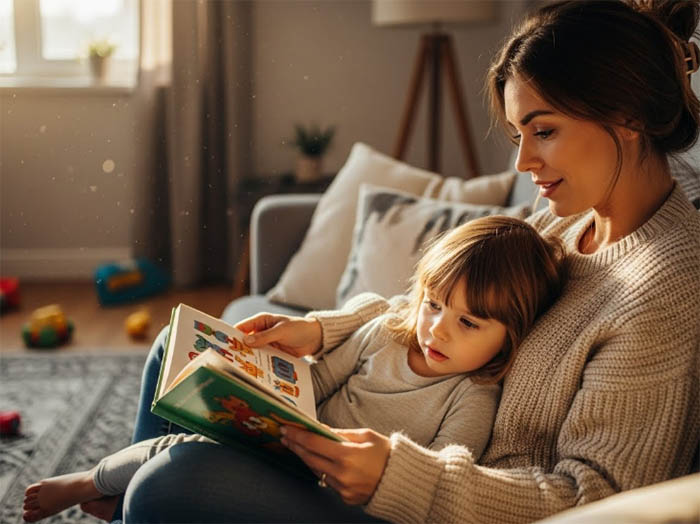
Reading Together Builds Strong Dual Fluency
Books are powerful because they slow language down and enrich vocabulary.
Create a bilingual reading routine:
- Native language books at bedtime
- Korean picture books before school
- Story comparisons — same story in both languages
This doubles exposure and builds reading confidence without pressure.
Encourage Language Play, Not Perfection
Language play — songs, puppets, rhymes, simple role-plays — makes learning joyful. When your child laughs while using a new word, that word sticks for life.
Games like matching words to pictures, simple Korean flashcards tied to daily objects, or “Who says it better?” voice games make both languages fun, not school.
School and Social Language: Support Without Stress
Once your child enters Korean school, expect Korean to accelerate fast — often faster than their home language.
Here’s a strategy that works:
- Support school Korean through playgroups, language buddies, and friendly homework routines
- Keep home language consistent and joyful, not competitive
Kids can do both — and many do beautifully when the environment supports each purpose.
Your Language Attitude Matters Most
Your language confidence rubs off on your child. If you say:
“I’m still learning Korean with you!”
— you reduce stress. If you say:
“We’ll learn this together!”
— you build team spirit.
Confidence doesn’t come from perfection; it comes from practice with love.
Celebrate Small Wins Together
Every bilingual milestone deserves a mini celebration:
- First full sentence in Korean
- Retelling a family story in both languages
- Teaching you a word you didn’t know
These moments build confidence and deepen emotional attachment to both languages.
Challenges: Recognize, Don’t Fear Them
Of course, there will be plateaus and language blending moments. That’s normal.
Some kids reverse bilingual dominance temporarily. Others mix grammar in playful ways. These are not problems — they’re signs of an active, growing bilingual brain.
Patience and presence matter more than correctness.
Final Thought: Bilingual Kids Become Cultural Bridges
Children who grow up fluent in Korean and another language don’t just navigate two vocabularies — they navigate two worlds. They learn empathy, adaptability, and global awareness early. They become natural bridges between family, school, and community.
And for multicultural families living in Korea, that’s not just a skill — it’s a gift.
Walk the Scene: Must-Visit K-Drama Filming Locations in Seoul