
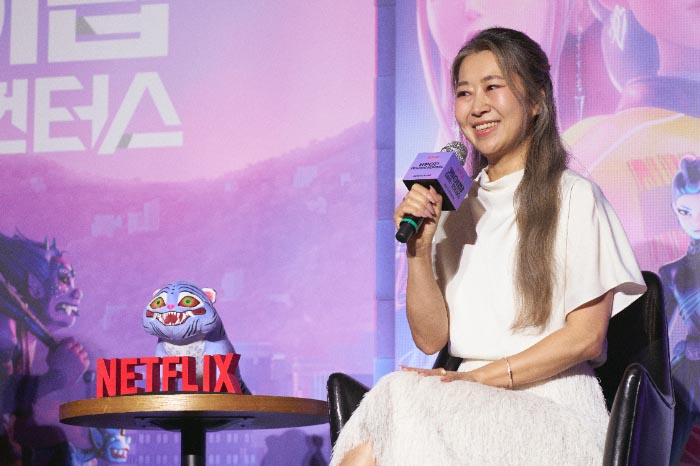
The Birth of a Genius Director: Why Maggie Kang Is a Once-in-a-Generation Filmmaker
I’m publishing a series of K-Pop Demon Hunters reviews that I had previously written only as drafts and never shared until now.
K-Pop Demon Hunters is no longer just an animated movie.
It is a global phenomenon that shattered records, rewrote expectations, and announced the arrival of a truly exceptional director: Maggie Kang.
If you only watched the film once, you might think of it as a fun, stylish, well-made animation. Enjoyable. Memorable. Solid.
But that’s exactly how this film fools you.
Because K-Pop Demon Hunters is not a movie you fully understand on the first watch.
My First Watch: A Light Movie on a Heavy Day
When I first watched K-Pop Demon Hunters, I wasn’t searching for brilliance.
I was simply in a low mood and wanted something light, colorful, and comforting. I avoided heavy dramas and chose animation instead, assuming it would be easy to watch.
At that point, the movie had been out for only three days. There was no global hype yet. No headlines. No viral discussions. I went in completely blind.
Even in my distracted state, I remember thinking, This is surprisingly fun.
If I had rated it then, I would’ve given it an 8 out of 10.
Good, but not life-changing.
Or so I thought.
The Second Watch: Realizing Something Isn’t Normal
A few days later, the world exploded.
K-Pop Demon Hunters hit No.1 on Netflix in country after country.
Its songs entered the Billboard Hot 100.
Articles began calling it a “cultural reset.”
That’s when doubt crept in.
Was I missing something?
So I watched it again.
This time, with focus.
And suddenly, everything changed.
The storytelling was airtight.
The direction was razor-sharp.
The OST wasn’t decorative — it moved the plot.
The humor landed in ways I hadn’t noticed before.
The emotional pacing was flawless.
That’s when I understood: this wasn’t an 8 out of 10 movie.
This was a 100-point film hiding behind a casual first impression.
The Third Watch: Discovering the Director’s Mind
Two months later, I watched it a third time — slowly, deliberately, analytically.
That’s when the truth became undeniable.
K-Pop Demon Hunters is a film obsessed with detail.
Nothing is accidental.
No scene is wasted.
No joke exists just for noise.
Every frame is engineered to guide the viewer’s emotions like music — rising, dropping, surprising, never allowing boredom to creep in.
And that’s when I reached my conclusion:
Maggie Kang is a genius director.
Not a promising one.
Not a talented debutant.
A genius.
Who Is Maggie Kang?
Maggie Kang studied animation in Oakville, Ontario, Canada, and went on to spend over 20 years as a storyboard artist at DreamWorks. There, she worked alongside hundreds of top-tier artists, learning timing, comedy, visual storytelling, and emotional rhythm.
Her credits include major franchises such as Puss in Boots and Kung Fu Panda 3.
K-Pop Demon Hunters is her directorial debut.
Let that sink in.
A Director Shaped by Identity
Though born in Korea and raised in Canada, Maggie Kang has spoken openly about carrying a strong Korean identity throughout her life.
One childhood memory shaped her deeply: during a school history class, a teacher asked where she was from. When she answered “South Korea,” the teacher couldn’t find it on a globe.
That moment stayed with her.
From then on, Korea wasn’t just heritage — it was purpose.
She spent every school break at her grandmother’s house in Korea. She was a devoted K-pop fan long before it was global, collecting albums, loving H.O.T., and sharing music with anyone willing to listen.
K-Pop Demon Hunters is the result of seven years of imagination, preparation, and persistence.
Why This Film Should Have Failed (But Didn’t)
On paper, this project was risky.
A first-time director.
A niche theme combining K-pop, demons, and folklore.
A limited runtime of 90 minutes.
A restricted budget.
Industry politics and production pressure.
And yet, the film feels limitless.
Why?
Because Maggie Kang understands something most directors don’t:
Attention is currency.
The Greatest 10-Minute Opening in Modern Animation
Streaming audiences decide within ten minutes whether to continue watching.
Maggie Kang uses those ten minutes like a master.
In that opening alone, she introduces:
- The meaning of the title
- The personalities of Rumi, Mira, and Joy
- K-pop fandom culture
- Korean food and visual identity
- The demon world and occult rules
- The Huntresses’ weapons
- Humor, chaos, vulnerability
- A rival group
- The concept of soul gates
- A full-scale K-pop performance
All without confusion.
All without slowing down.
It’s storytelling compression at its finest.
Comedy That Respects the Audience
Maggie Kang never settles for a single laugh.
She stacks humor.
A gag begins visually, escalates emotionally, and finishes with a subtle callback.
She lets the audience laugh — then surprises them into laughing again.
The flowerpot scene with Derpy.
The slow-motion K-drama parody.
The perfectly timed pauses.
This is not accidental comedy.
This is storyboard-level precision.
A Film for Every Generation
Children love it.
Teenagers obsess over it.
Adults get pulled in unexpectedly.
Even viewers in their 60s stay glued.
That kind of universal resonance is rare.
And it’s why this film became a global healing movie — endlessly rewatchable, endlessly rewarding.
Why Maggie Kang Is a Genius
The word “genius” is not given lightly.
A genius doesn’t just create something new.
They create something that works — everywhere.
K-Pop Demon Hunters didn’t just succeed.
It changed the conversation.
It became a reference point.
A case study.
A modern textbook for animated storytelling.
Even legendary directors like James Cameron publicly praised the film’s craftsmanship.
Looking Ahead to 2029
They say sequels are never better than the original.
I disagree.
Because K-Pop Demon Hunters was Maggie Kang’s first step.
And now, she knows exactly how powerful she is.
That’s why the 2029 sequel isn’t just anticipated — it’s inevitable.
Not because of hype.
But because genius has only just begun.