
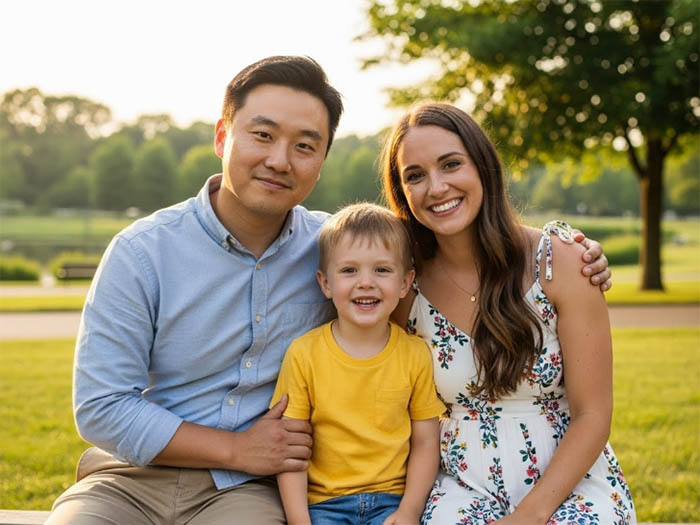
The Identity Challenges of Biracial Children in Korea
Growing up is always an identity journey — but for biracial children in Korea, that journey often comes with unique twists. As someone who has lived in Korea all my life and watched many multicultural families raise kids here, I can tell you this: the identity experience of a biracial child in Korea is shaped not just by culture, but by language, community, schooling, and subtle social expectations.
This isn’t a simple topic or a quick fix, but it’s one that parents talk about — quietly, thoughtfully — when they want what’s best for their children.
What “Biracial” Can Mean in Korea
In Korea, the image of “one people, one culture” was dominant for many decades. This began changing as international marriages and migration increased. Kids whose parents come from different backgrounds are now a visible part of everyday life — in schools, neighborhoods, and parks.
But that visibility can cut both ways. Some biracial children are admired for their uniqueness. Others feel different in ways they can’t quite explain. Identity for them isn’t just about race — it’s about belonging in multiple worlds and sometimes feeling pulled between them.
When Your Child Doesn’t Fit the “Typical” Box
One of the first challenges many parents notice is how children interpret “sameness” and “difference.” In Korea, children grow up surrounded by people who often look and speak similarly. For a biracial child who looks different, this can raise questions as early as kindergarten:
- Why do I look different?
- Why do people ask where I’m from even though I live here?
- Do I belong here or somewhere else?
These questions aren’t just curiosity — they are identity puzzles that children carry with them.
Language and Identity — Two Sides of the Same Coin
Language plays a huge role. A child who speaks Korean fluently at school but uses another language at home often feels a split between spaces. Korean may become the “school language” and the family language may become “home identity.”
This isn’t a problem in itself, but it can create emotional complexity. Children may worry about being “too foreign” or “not Korean enough.” Helping them connect both languages to value and identity — not division — is key.
School Dynamics and Social Belonging
Schools are where identity often feels most tested. Peer groups form quickly in Korea. Children tend to form close circles based on shared routines and cultural norms.
Some biracial children blend in easily — others don’t feel like they fit any single group. While most peers are curious rather than unkind, repeated comments about appearance or heritage can wear on a child’s confidence over time.
Parents often tell me that the tone of these interactions matters more than the content. A comment made with curiosity feels very different from one made with exclusion.
Family Identity and Strength
At home, family routines — language, food, celebrations — form the bedrock of identity. Many multicultural families find strength by creating hybrid traditions that honor both sides of a child’s background.
Raising a child with dual heritage is an opportunity to show:
- Identity is layered
- You belong in more than one culture
- Being different is strength, not a limitation
When these messages become part of daily life, children internalize resilience.
External Perception vs Self-Perception
Identity isn’t just what a child feels inside — it’s also shaped by how others see them. In Korea, this can be a delicate balance. People may ask where a child is “really from” — not to be hurtful, but simply because multicultural families were uncommon not long ago.
These questions can feel like simple curiosity, but for a child, repeated questioning about belonging can be confusing or even diminishing.
One way parents navigate this is by reframing responses, teaching children phrases that affirm their identity, and celebrating the uniqueness that being biracial brings.
Role Models Matter
Children need mirrors — people who look like them or share similar experiences — to feel grounded in their identity. As Korea becomes more multicultural, more representation is appearing in media, education, and community spaces.
Books, cartoons, school materials, and community events that show diverse families help children see themselves reflected in everyday life.
When children see others who look like them, they think: I belong here too.
Cultural Confidence Takes Time
Identity confidence doesn’t happen overnight. It is built through:
- Repetition of positive messages
- Encouragement to express feelings openly
- Celebration of both heritages at home and in community
- Parent modeling of pride in multicultural identity
Children need space to question, explore, and eventually embrace their whole selves.
Supporting Identity Through Open Conversation
Parents often underestimate how deeply words matter. Simple conversations like:
- “What do you think about that comment?”
- “How do you feel when someone asks that?”
- “What do you most like about being you?”
help children shape a nuanced self-picture, rooted in understanding rather than pressure.
Final Thought — Identity as a Journey, Not a Destination
The identity challenges of biracial children in Korea are real but not insurmountable. They reflect the beautiful complexity of living between worlds. When adults approach identity not as a problem to fix but as a journey to understand, children gain the tools to become confident, empathetic, and culturally fluent individuals.
Korea may still be evolving in how it views diversity, but biracial children are often leading that evolution simply by being themselves — brave, curious, and wonderfully layered.
Korean Internship Programs for Foreign Students: What It’s Really Like