
Where Did My Evening Go?
The Reality of Korea’s Overtime (Yageun) Culture
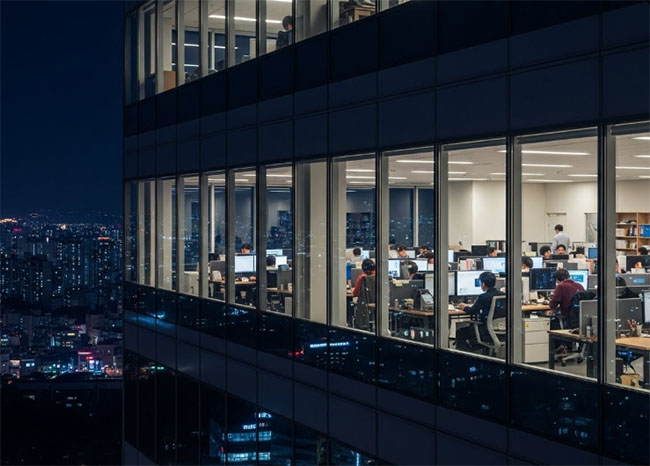
So you’ve landed that dream job in Korea. Great! You’re ready for the sleek offices, the fast-paced work, and the smart-dressed colleagues. But then 6 PM hits, and instead of everyone grabbing their bags, the office gets… quieter. And everyone keeps working.
Welcome to the pervasive reality of Yageun (야근), or Korean overtime culture. It’s a fundamental part of the corporate landscape here, and understanding it is key to surviving and thriving in a Korean workplace.
As a local, I’m here to give you the honest, witty lowdown on why the lights stay on so late in Seoul, and how to navigate the unwritten rules of staying past quitting time.
Fact 1: It’s About Loyalty, Not Just Deadlines
In the West, working late often signals a tight deadline or poor time management. In Korea, the motivation is often more social than logistical.
The “Nunchi” Factor
Nunchi (눈치) is the subtle, social superpower of reading the room. If your manager (or anyone higher up the hierarchy) is still at their desk, leaving can feel like a serious breach of social decorum.
The Rule: You might not have a huge stack of work, but if the team leader is there, the expectation is that the team stays. It’s a display of loyalty, respect, and shared commitment to the collective effort. The physical act of being present is often more important than the productivity of the final two hours.
The Collective Guilt
There’s a strong cultural belief that success is a collective effort. If you leave on time, you might feel (or be subtly made to feel) that you are offloading your burden onto your colleagues. This feeling, and the fear of letting the team down, drives a lot of unnecessary overtime.
Fact 2: The Different Types of Overtime (Know Your Yageun)
Not all overtime is created equal. Knowing the type helps you manage expectations.
The “Real” Yageun: This is the genuine, deadline-driven work. Everyone understands it, it’s necessary, and it often comes with a meal allowance or official compensation.
The “Nunchi” Yageun: The voluntary (but mandatory) stay-late simply because the boss hasn’t left. This is the most frustrating type, as little actual work gets done.
The “Hwae-shik” Yageun: This isn’t technically working, but the team dinner (Hwae-shik, 회식) is often scheduled right after work and is considered an extension of your job—you are building team harmony and loyalty. Don’t skip it!
Fact 3: How to Manage the Culture (Survive and Thrive)
Foreigners often struggle with this the most, but there are ways to adapt without sleeping under your desk.
1. The Strategic Departure
If you genuinely need to leave on time, don’t just quietly slip out.
Communicate Up: Always inform your direct manager respectfully that you need to leave. A simple, “I have a prior arrangement/appointment, so I will head out now. I’ll finish [specific task] first thing tomorrow morning. Have a good evening, Manager-nim!” shows respect and responsibility.
Timing: Try not to leave right at 6 PM. Give it 15-30 minutes, or wait until one or two others have left.
2. Find the “Flex Time” Sweet Spot
Some companies, especially those in tech or global firms, are adopting more flexible hours. If your company offers it, use it strategically to balance the late nights.
3. Embrace the “All-Nighter” Culture (Sometimes)
For big projects, the all-nighter (bam-sae-da, 밤새다) is a badge of honor. While exhausting, participating in a major bam-sae-da shows your commitment and can buy you social credit for leaving earlier on lighter days.
The Korean overtime culture is a marathon, not a sprint. It’s a testament to the nation’s work ethic and commitment to collective success. Learn to read the room, master the subtle communication, and you’ll manage your life (and your sleep schedule) just fine!