
Decoding the Difference Between Korean and Western Acting Styles
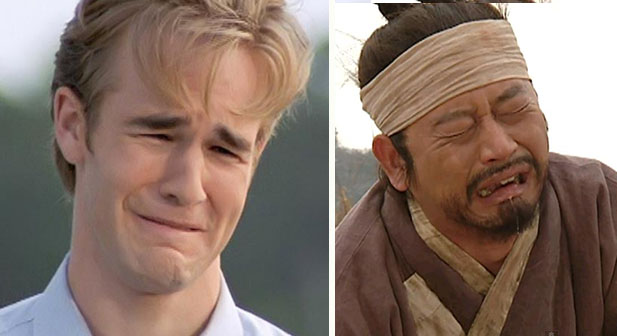
You’ve watched both Hollywood blockbusters and K-Dramas, and you’ve likely noticed a distinct difference in the way emotions are expressed. Why does a Korean actor’s crying scene feel so intense, or why does a Western actor’s subtle expression feel restrained by comparison?
The difference lies in deep cultural roots and the unique demands of the respective screen industries. Korean acting often prioritizes emotional intensity and dramatic expression, while much of modern Western acting leans towards subtle realism and naturalism.
As a local who grew up with both, I’m here to decode the fundamental differences between Korean and Western acting styles and explain why K-Drama emotion hits you right in the heart.
1. The Korean “Han” (한) and High Emotion
Korean acting often allows for, and even demands, a higher degree of emotional intensity. Actors are not afraid to show big, expressive emotions—from explosive anger to prolonged, gut-wrenching grief. This is often rooted in the concept of Han (한), that deep, collective feeling of sadness, resentment, and injustice that runs through Korean history.
The Result: Crying scenes are often loud, messy, and lengthy. This style is incredibly effective at conveying deep melodrama and pathos, which is a staple of K-Dramas.
2. The Western “Mumblecore” and Naturalism
Modern Western acting, heavily influenced by the Method acting tradition, often emphasizes naturalism. The goal is to make the performance appear as close to real-life behavior as possible, which means emotions are often shown through subtle facial twitches, restrained dialogue, and quiet intensity.
The Result: Western emotion is internalized and often subtle, contrasting sharply with the explicit emotional display common in K-Dramas.
3. Explicit Versus Implicit Conflict
In K-Dramas, especially those dealing with family or social conflict, the tension is often explicit. Characters frequently engage in loud arguments, dramatic confrontations, and high-energy showdowns, reflecting the high stakes of honor and hierarchy in the culture. The emotion is outward.
4. The “Subtext” Dialogue
In contrast, Western dialogue often relies on subtext—what the character isn’t saying. Conflict is often implied through silence, passive-aggressive comments, or body language. The audience is expected to read between the lines.
5. Live Shooting and Rapid Production (K-Drama)
Traditionally, K-Dramas were filmed live (episodes were still being shot while the early episodes aired). This incredibly fast production schedule requires actors to be ready to deliver massive emotional scenes on demand and with immense consistency.
The Skill: Korean actors must master delivering immediate, strong emotional impact, which favors an expressive, physically intense performance style.
6. Prestige and Restraint (Western Film)
Western cinema often equates “great acting” with subtle restraint, rewarding actors for internalizing emotion and delivering highly nuanced, less explosive performances. The slow pace of film production allows for meticulous fine-tuning of these subtle gestures.
The Korean style is a unique, powerful artistic blend. It embraces the full, visceral spectrum of human emotion, and when done well (as it often is!), it’s a completely addictive and unforgettable viewing experience.