
Meeting the Korean Parents
You’ve made it past the Sseom phase, you’ve celebrated your 100th day, and now comes the moment that makes every Korean partner nervous: meeting the parents.
This isn’t just a casual dinner. In Korea, meeting the parents means the relationship is officially serious, and you are being evaluated not just as a potential partner, but as a potential member of their family. The stakes are high, but with the right preparation, you can nail this important rite of passage!
As a local, I’m here to give you the honest, essential playbook for impressing your Korean in-laws-to-be, from the moment you bow to the moment you leave.
Preparation: The Three P’s of Success
Before you even step out the door, these three things are non-negotiable.
1. Practice the Politeness (Titles and Bows)
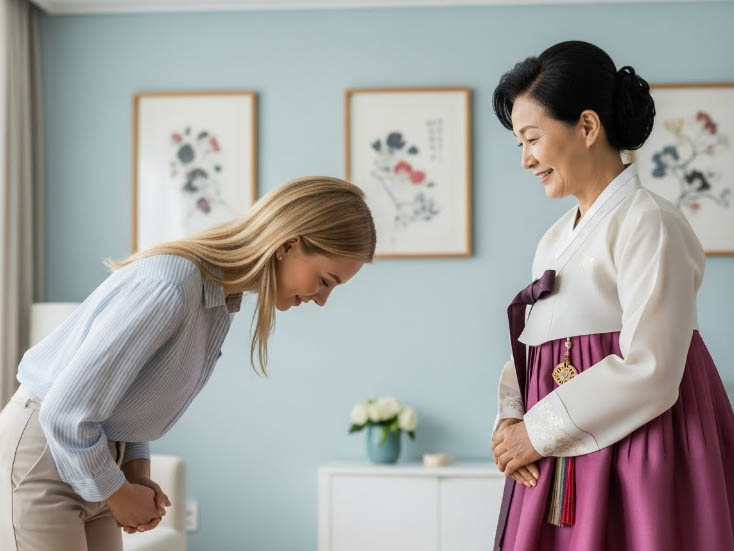
The Bow: When you first meet, offer a sincere, deep bow. This shows immediate respect. Your partner will guide you, but make sure it’s lower than a quick nod.
The Titles: Never refer to them by their first name.
Call the father Abeonim (아버님).
Call the mother Eomeonim (어머님).
Using these formal titles is the first, crucial sign that you understand and respect Korean hierarchy.
2. Prepare the Presentation (Appearance Matters)
Korean culture emphasizes respect through presentation. This means clean, formal attire.
The Look: Dress smartly. For men, a nice button-down shirt and smart trousers (a suit jacket is even better for a first meeting). For women, a modest dress or blouse and slacks. Avoid anything too revealing, overly casual (shorts, ripped jeans), or flashy. Neatness equals respect.
3. Purchase the Present (The Essential Gift)
You cannot show up empty-handed. A thoughtful gift is mandatory and symbolizes your sincerity.
The Rule: Your partner should advise you, but common, safe gifts include high-quality fruit (expensive fruit shows high respect!), high-end beef (Hanwoo), traditional Korean sweets (Tteok or Yakgwa), or a gift related to their specific hobbies (e.g., wine, if they enjoy it). Never give sharp objects (knives, scissors) as they symbolize cutting ties.
During the Dinner: Navigating the Table
The rules of conduct at the table are just as important as your conversation.
1. The Hierarchy of the Spoon and Chopsticks
The order in which people eat is important.
The Rule: Wait until Abeonim (the father) or Eomeonim (the mother) picks up their spoon or chopsticks before you start eating. This is a sign of respect for elders.
Table Manners: Don’t hold your bowl up to your mouth (unlike in Japan or China). Keep your mouth closed while chewing.
2. The Drink Dynamic (If Alcohol is Present)
If you are offered alcohol, you may accept one or two drinks, but there are rules for drinking with elders:
Pouring: When pouring for them, hold the bottle with both hands (or one hand supporting the pouring arm).
Receiving: When they pour for you, receive the glass with both hands.
Drinking: When you drink, turn your body slightly to the side so your back is facing them, and cover your mouth with your hand while swallowing. Never drink facing them directly. This shows modesty.
Conversation: The Questions to Expect
Korean parents will often ask very direct questions that might seem intrusive to a foreigner. They are asking this out of genuine care and concern for their child’s future.
The Big Three: Be prepared to politely answer questions about your job/career stability, your family background (where they live, what they do), and your future plans with their child (marriage, housing).
Your Strategy: Be honest, but focus on showing stability, ambition, and most importantly, your deep commitment to their child.
The Final Impression: Leaving with Grace
When the meal is over, don’t just relax—your final movements are the most memorable.
Offer to Help: Always offer to help clear the table, wash dishes, or put away food, especially if you are the daughter-in-law-to-be. Even if they refuse (and they probably will!), the offer is essential.
The Goodbye Bow: Offer a final, sincere, deep bow and thank them for the meal and their hospitality.
Meeting the Korean parents is a performance of respect and sincerity. Get the basics right, show genuine effort, and focus on how happy you make their child. You’ve got this!