
Thinking About Marrying a Korean Partner? Essential Guide
So you’re dating a Korean partner and starting to picture the future together. Maybe you’re wondering what Korean in-laws are really like, whether weddings are dramatic like in K-dramas, or if family expectations will suddenly level up the moment you say “We’re getting married.” As a Korean writing for international readers, here’s a friendly, honest, and slightly witty guide to help you understand what marriage with a Korean partner actually looks like.
This isn’t a fantasy version. This is the real, modern Korea in 2025 — traditions, expectations, and all the charming quirks included.
Understanding Korean Family Culture
Your relationship is between two people, but Korean marriage often feels like a package deal: you, your partner, and the extended family network that comes with them.
Here’s what to expect
Family is deeply valued.
Parents are involved, supportive, and sometimes more hands-on than Western families. They may ask about your job stability, future plans, or even how often you can visit during holidays.
Respect for elders matters.
Korean family culture prioritizes politeness, modesty, and showing care through actions rather than words. Small gestures go a long way.
But modern Korean families are changing fast.
Traditional expectations are softening. Many families are open-minded about multicultural marriages and focus more on compatibility and happiness than nationality.
Meeting the Parents: What to Expect
The first meeting can feel serious, but it’s usually warm and welcoming.
- Dress neatly. Not fancy, just clean and respectful.
- Bring a small gift (fruit, cookies, or something meaningful from your culture).
- Expect questions about your background, future goals, and how you met.
- Politeness matters more than perfect Korean language skills.
Think of it as a formal coffee meetup, not an interrogation.
Differences You Might Notice in Daily Life
Marrying a Korean partner often means navigating cultural habits that feel new at first:
Direct vs indirect communication
Koreans sometimes express feelings through actions instead of words. A warm bowl of soup on a cold day might be “I love you” in disguise.
Food culture is big
Meals are social, often shared, and come with side dishes that magically refill. Being open to Korean food makes life easier and happier.
Holiday traditions
Chuseok and Lunar New Year are major family gatherings. Some families celebrate lightly; others host big events. Talk with your partner early so expectations don’t surprise you.
Work culture rhythms
Long working hours still exist in some industries, though many modern companies offer better balance. Understanding this helps reduce misunderstandings.
Korean Weddings: Beautiful and Surprisingly Fast
A typical contemporary Korean wedding is short, elegant, and efficient. Most ceremonies last around 30–45 minutes, with guests giving monetary gifts instead of registry presents.
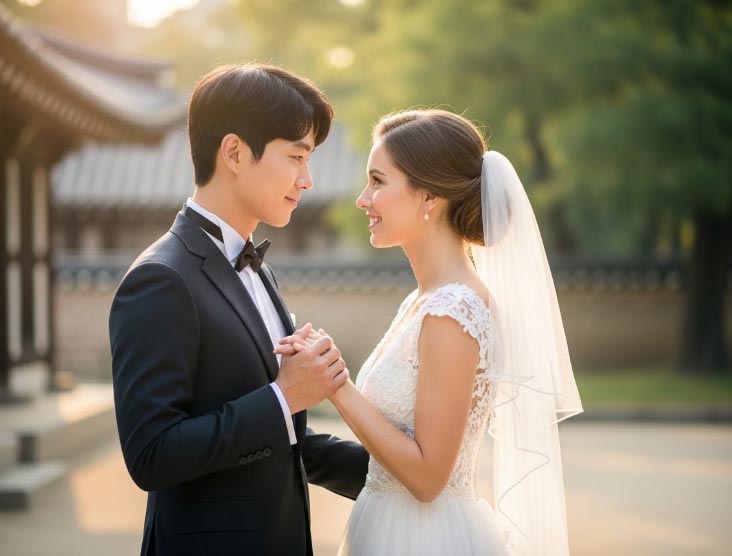
After the ceremony, families often gather for a meal, and later couples may choose to take elaborate pre-wedding photos (a uniquely Korean tradition).
International couples usually blend both cultures — Korean-style ceremony plus a Western-style celebration or private vow exchange.
Legal Steps for International Marriage
The paperwork isn’t romantic, but it’s important. Requirements differ by nationality, but generally you’ll need
- Certificate of no marriage (or similar document)
- Passport
- Korean partner’s 주민등록등본 (family registry document)
- Translation and notarization for foreign documents
Once the marriage is registered in Korea, you may also need to register it in your home country depending on your law.
Always check both countries’ embassy websites — rules change, and the latest info is your best friend.
Building a Healthy Intercultural Marriage
Strong international couples share three major habits
They communicate openly.
Cultural differences aren’t problems; misunderstandings are. Regularly talk through expectations.
They stay curious.
Learn about each other’s backgrounds, holidays, family styles, and values.
They create their own “third culture.”
Not fully Korean, not fully foreign — something uniquely yours.
This approach strengthens the relationship and helps both families understand your shared lifestyle.
Final Thoughts
Marrying a Korean partner can be an incredibly rich experience. The blend of cultures, traditions, and values adds depth and meaning to your future life together. Yes, there will be differences, but there will also be warmth, humor, strong family support, and a deep sense of connection that many foreigners appreciate.
If you approach it with openness and curiosity, you’ll find that cross-cultural marriage in Korea is not only possible — it can be beautifully fulfilling.