
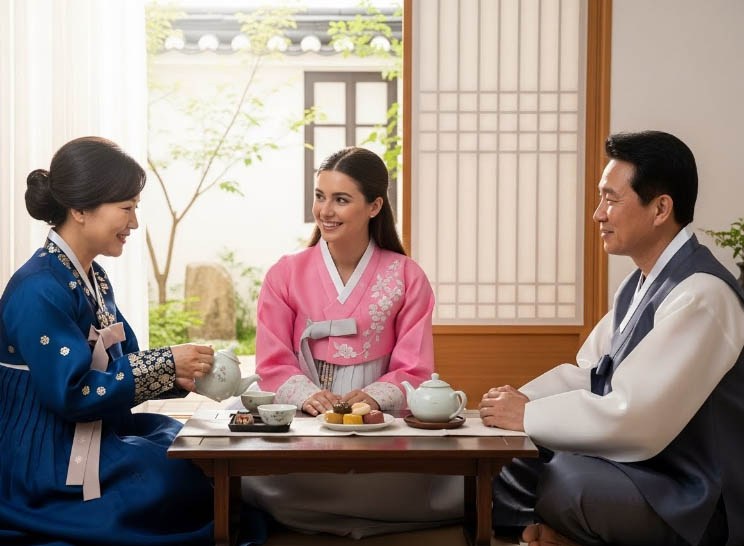
Understanding the “In-law Culture” in South Korea
A Korean Local’s Honest Guide for Foreigners
If you are married to a Korean or even seriously dating one, chances are you have already heard a warning like this:
Meeting the parents is important in Korea.
As a Korean woman living here and writing for foreigners, I want to say this gently but clearly.
In-law culture in South Korea can feel confusing, overwhelming, and sometimes intimidating, especially if you come from a culture where marriage is mostly about two individuals.
This does not mean it is bad. It just means it works differently.
Let me explain what Korean in-law culture really looks like from the inside, without drama, stereotypes, or exaggeration.
Why In-Laws Matter So Much in Korea
Traditionally, marriage in Korea has never been just about two people. It has been about connecting two families.
Even today, when society is more modern and individualistic, that mindset still influences expectations. Parents often feel deeply invested in their child’s marriage, not because they want control, but because family responsibility runs deep in Korean culture.
For many Koreans, caring about in-laws is not optional. It is part of being a responsible adult.
The Role of Parents After Marriage
One thing that surprises many foreigners is how involved parents can remain after their child gets married.
This does not always mean interference. Often, it shows up as advice, concern, frequent contact, or expectations around holidays and family events.
Some families are very hands-on. Others are relaxed and distant. There is no single Korean in-law experience, but the cultural baseline assumes continued connection, not independence through distance.
Why Holidays Can Feel So Heavy
Holidays reveal in-law culture more clearly than anything else.
Traditional holidays like Lunar New Year and Chuseok are family-centered events. In the past, daughters-in-law were expected to help extensively with food preparation and rituals. This history still shapes expectations, even if actual practices have softened.
Modern families are changing, but emotional weight remains. For Koreans, showing up matters, even if roles are negotiated differently now.
Titles, Language, and Respect
Language plays a huge role in Korean in-law relationships.
Koreans use specific titles for in-laws rather than names. These titles signal respect and relationship hierarchy. Foreign spouses are not always expected to master this immediately, but effort is noticed and appreciated.
Politeness, tone, and indirect communication are often valued more than direct honesty. What feels neutral in English may feel blunt in Korean.
Money, Gifts, and Unspoken Expectations
This is one area foreigners often misunderstand.
Gift-giving is not about price. It is about thoughtfulness and timing. Small gestures during holidays, birthdays, or visits carry symbolic meaning.
Financial expectations can also exist, especially around family events, ceremonies, or emergencies. These are rarely explained clearly. Koreans often assume others understand the rules because they grew up with them.
Asking your partner to explain expectations is not rude. It is smart.
Living Together or Living Nearby
Some Korean parents expect their married children to live close by or stay connected geographically. This does not always mean living together, but proximity can feel important.
For foreigners who value physical distance as independence, this can feel restrictive. For Koreans, closeness often equals care, not control.
Understanding this difference helps prevent resentment.
Conflict Is Often Silent, Not Explosive
Korean families tend to avoid direct confrontation. Discomfort may be expressed through silence, indirect comments, or emotional distance rather than open arguments.
Foreigners sometimes miss these signals or misinterpret them. What feels calm may actually mean unresolved tension.
Patience and observation go a long way.
How Foreign Spouses Are Usually Viewed
Many Korean parents are genuinely curious about foreign sons- or daughters-in-law. At the same time, they may worry about cultural differences, communication, or long-term stability.
Trust often builds slowly. Consistency, reliability, and respectful behavior matter more than perfect language skills.
You are not expected to become Korean. You are expected to be considerate.
How Modern Korea Is Changing In-Law Culture
This part is important.
Younger generations in Korea are actively reshaping in-law expectations. Many couples set boundaries, divide holiday time, or reject outdated roles.
In-law culture today exists somewhere between tradition and negotiation. It is not fixed, and it is not hopelessly old-fashioned.
Advice from a Korean Local
The biggest mistake foreigners make is assuming bad intentions. Most conflicts come from mismatched expectations, not hostility.
Talk openly with your partner. Ask questions. Clarify roles. Korea values harmony, but harmony requires understanding, not silence.
Your partner is your bridge. Use that bridge.
Final Thoughts
Understanding in-law culture in South Korea is less about memorizing rules and more about reading context.
Respect, effort, and patience matter more than perfection.
And remember, many Koreans also struggle with these expectations. You are not alone.
When you understand why in-laws matter in Korea, the culture feels less overwhelming and more human.