Useful Korean Expressions for Navigating Daily Life
Whether you’ve just arrived in Korea or you’ve been living here for a while, there comes a moment when you realize that knowing basic Korean expressions changes your experience — from confusing to confident, from hesitant to connected. As someone who lives here and hears these moments firsthand, I’ll share the practical Korean expressions that truly help in daily life, from grocery runs to school pickup.
This isn’t textbook Korean. This is street-smart Korean — what locals actually say.
Greetings That Make Every Day Smoother
Before anything else, greetings set the tone. Korean is a highly polite language, and using the right greeting shows awareness and respect.
- 안녕하세요 — Hello
- 좋은 아침이에요 — Good morning
- 안녕히 가세요 — Goodbye (to someone leaving)
- 안녕히 계세요 — Goodbye (when you’re leaving)
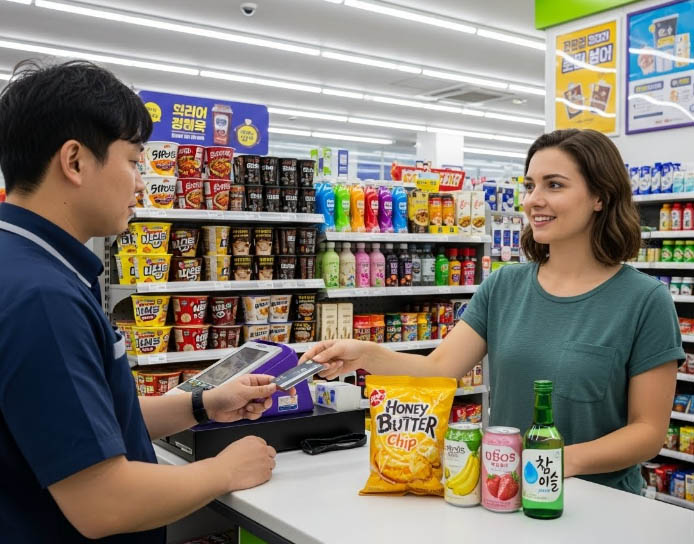
At the supermarket checkout or the bus stop, a warm “안녕하세요” goes a long way.
Essential Expressions for Shopping
Whether you’re buying snacks, groceries, or clothes, these expressions will save you time and confusion.
- 이거 얼마예요? — How much is this?
- 조금 깎아 주세요 — Can you discount it a little?
- 카드 돼요? — Do you accept card?
- 영수증 주세요 — Please give me the receipt
Even if your pronunciation isn’t perfect, these simple phrases help you navigate transactions with ease and confidence.
Getting Around: Public Transport Korean
Korea’s public transport is efficient, but announcements and signs can feel fast.
- 다음 역은 어디예요? — Where is the next station?
- 몇 번 출구예요? — Which exit number is it?
- 이 버스는 (place name) 가요? — Does this bus go to (place name)?
- 내릴게요 — I’ll get off (useful on buses)
Use “내릴게요” when you’re getting off a bus — it signals to the driver you’re ready. Local commuters do this, and they’ll smile when you use it too.
At a Restaurant: Order Like a Local
Korean menus can be confusing, especially when item names are unfamiliar. These expressions help.
- 추천 메뉴 있어요? — Do you have a recommended dish?
- 물 좀 더 주세요 — Please give me more water
- 계산서 주세요 — Please give me the bill
- 맵지 않게 해 주세요 — Please make it not spicy
Korean food often comes with spicy options, so “맵지 않게 해 주세요” is a comforting phrase if you’re sensitive to heat.
Daily Life Essentials: Around Town
Things like errands and appointments suddenly feel more doable with these.
- 화장실 어디예요? — Where is the bathroom?
- 도와주세요 — Please help me
- 천천히 말해 주세요 — Please speak slowly
- 잘 이해가 안 돼요 — I don’t understand well
If someone speaks too quickly, “천천히 말해 주세요” isn’t rude — it’s effective. Most Korean speakers appreciate your courage to ask.
School and Kids’ Activities: Parent Mode Korean
For parents involved in school life, here are some phrases that actually come up:
- 오늘 숙제 있어요? — Does (my child) have homework today?
- 선생님과 얘기할 수 있을까요? — Can I speak with the teacher?
- 언제 등하교 시간이에요? — What are the school start/end times?
- 아이랑 같이 있어도 될까요? — Can I stay with my child?
These help you navigate school communications with both professionalism and warmth.
At the Doctor or Pharmacy
Health situations are sensitive, and clear communication matters.
- 어디가 아프세요? — Where does it hurt?
- 이 약은 어떻게 먹어요? — How do I take this medicine?
- 알레르기 있어요 — I have allergies
- 긴급이에요 — It’s an emergency
These phrases help you stay safe and understood, especially when urgency matters.
Politeness Matters More Than Perfection
Korean people notice effort more than flawless grammar. When you preface sentences with:
- 실례합니다 — Excuse me
- 죄송합니다 — I’m sorry
- 감사합니다 — Thank you
— it softens interactions and creates warmth even if your sentence isn’t perfect.
Fun Expressions That Connect Culture
Korea has some fun daily phrases you’ll hear everywhere:
- 잘 먹겠습니다 — Said before eating, like “I will eat well”
- 잘 먹었습니다 — Said after eating, like “I ate well”
- 수고하셨습니다 — A respectful thanks for someone’s effort
Using these makes you feel in sync with everyday Korean life — and local friends often appreciate the effort.
Practice Makes Confidence
Start with a few expressions, use them every day, and build from there. If you feel shy, remember this: locals are usually delighted when foreigners use Korean in day-to-day situations — not because it’s perfect, but because it shows respect and engagement.
Final Thought: Language Is the Door to Belonging
Language isn’t just about getting what you need. It’s about feeling connected. When you use Korean expressions like 안녕하세요 at the grocery store, or 잘 먹었습니다 after dinner, you’re participating in everyday life — not just observing it.
And that’s where real belonging begins.