What Are the Biggest Culture Shocks When Moving to Korea?
A Korean Local’s Honest Guide for New Residents
Moving to a new country is exciting, but it also comes with surprises. South Korea is often praised for its efficiency, friendliness, and modern lifestyle, but there are cultural quirks and societal norms that can feel unfamiliar — sometimes pleasantly surprising, sometimes genuinely jarring.
As a Korean woman living here and also connected with many foreigners who have made Korea their home, I’ll walk you through the biggest cultural shocks that people often experience — not as judgments, but as real insights that help you adapt faster.
Hierarchy and Respect in Everyday Life
One of the first culture shocks many foreigners notice is how deeply age and hierarchy influence daily interactions.
In Korea:
- Older people are greeted with polite language
- Younger people often use honorifics and respectful gestures
- Seating, speech level, and even dining etiquette can depend on age
This extends beyond formal situations — it’s not just respectful, it’s expected. For someone from a more egalitarian culture, this can feel unfamiliar at first. Koreans aren’t being cold — they’re communicating respect in a structured way.
Public Transportation Etiquette
Korea’s transport system is often praised for being clean and efficient. But with efficiency comes unspoken etiquette.
Expect:
- Quiet, orderly behavior on subways
- People lining up for buses
- Minimal phone calls on trains
- Priority seating strictly left for those who need it
This isn’t rule policing — it’s part of a collective mindset that values consideration for others.
Personal Space and Physical Contact Norms
If you come from a culture where hugs, loud expressions, or casual physical contact are common, Korea may feel reserved.
In Korea:
- Personal space is respected in public
- Physical affection in public is less frequent
- Casual touching with acquaintances is rare
This doesn’t mean Koreans are cold. Once relationships deepen, warmth shows easily — but the initial pace may be slower than what you’re used to.
Work Culture and Overtime Norms
Work culture is one area that surprises many expats — especially those from countries where work-life balance is strongly emphasized.
In many Korean workplaces:
- Long hours are common
- After-work dinners or group socializing are frequent
- Silence or indirect communication is normal in meetings
Some companies are much better than others, and the corporate world is evolving. Still, the general approach to work in Korea can feel intense if you’re used to very strict boundaries between office and personal life.
Dining Customs and Sharing Food
Korean dining culture is communal. Meals are often shared, and the sense of eating together — not against each other — is strong.
You may notice:
- Side dishes shared by the table
- Eating rice and soup with an expectation of finishing your portion
- Older people served first or offered the best parts
These practices are not rules, but cultural rhythms that reflect community over individualism.
Direct Versus Indirect Communication
Communication in Korea can feel subtle or indirect compared to some Western styles.
For example:
- Saying “no” directly may be avoided
- People may imply rather than state feelings outright
- Politeness can sometimes feel like distance
Understanding Korean communication often means learning what isn’t said as much as what is said.
Pace of Urban Life — Fast but Polite
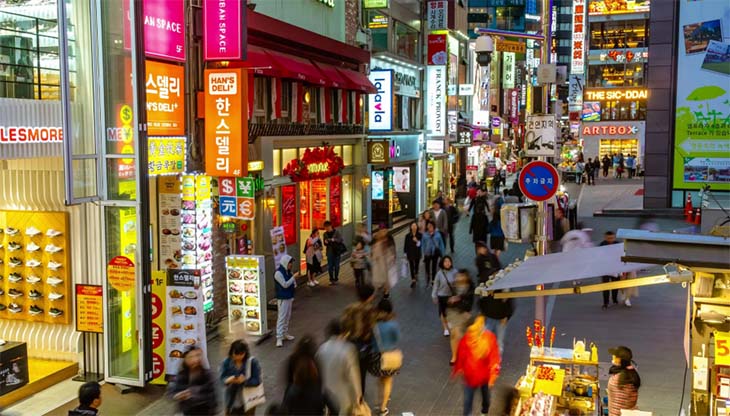
In cities like Seoul, Busan, and Daegu, life moves fast. Sidewalks are crowded, crosswalks have precise timing, and people move with purpose — but there’s politeness beneath the rush.
People will:
- Step aside to let you pass
- Help if they see you confused
- Apologize even when it’s not your fault
It’s a rhythm that feels swift but civil.
Social Drinking Culture
Alcohol and socializing play a strong role in Korean social life — especially after work.
This is one area where foreigners often feel culture shock, even if they enjoy social drinking.
Expect:
- Group dinners with colleagues
- Soju or beer often part of gatherings
- Toasting rituals and drinking etiquette
Participation isn’t mandatory, but saying “no” can sometimes require tact.
Cleanliness and Order in Public Spaces
Koreans take pride in public spaces. Streets, subways, parks, and public restrooms tend to be cleaner and more orderly than in many other countries.
Rules are followed not just because of enforcement, but because people take responsibility for shared spaces. It’s a subtle but impactful cultural norm.
Relationship With Technology
Korea’s connectivity and tech integration can feel like a culture shock in itself.
Here:
- High-speed internet is everywhere
- Apps handle almost every service — from taxis to food delivery
- QR codes, digital payment, and mobile everything are normal
What feels futuristic abroad is just daily life in Korea.
Language – The Real Cultural Bridge
The biggest cultural shock isn’t a single behavior — it’s the language gap. Even people with strong Korean skills often talk about how much nuance they only understand after months of living here.
Understanding not just words, but cultural context — when to use formal speech, how to express gratitude, how to interpret indirect remarks — takes time, patience, and observation.
Final Thoughts from a Korean Local
Culture shock is not a problem — it’s a process. Korea is full of warmth, structure, and rhythms that make life here feel familiar once you settle in. The shocks you experience early on often become the very things you laugh about, bond over, and cherish later.
The key to navigating culture shock is curiosity, humility, and openness. Korea has layers — and each one adds depth to your experience, not stress.