
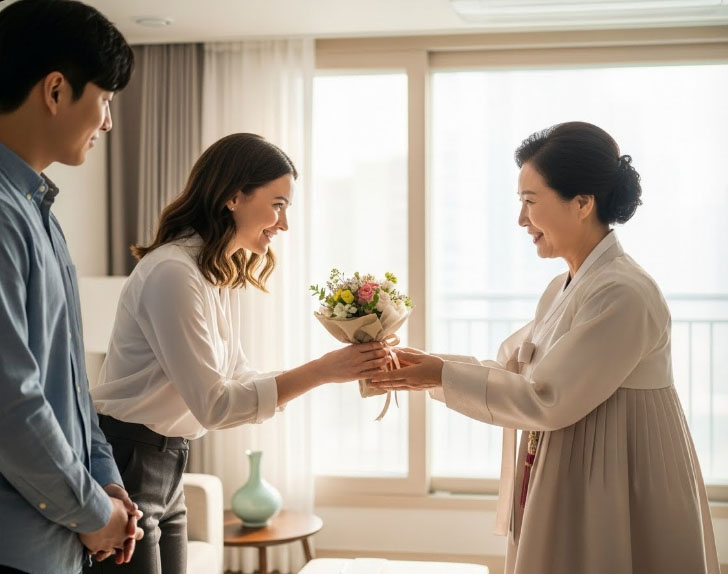
What Do Korean Families Expect from Foreign Spouses?
A Realistic Guide from a Local
If you’re dating a Korean and wondering what their family might expect from you, don’t worry. You’re not alone. As a Korean woman who talks to many expats living here, I’ve noticed that this question pops up constantly. Korean families aren’t nearly as intimidating as K-dramas make them look, but yes, they do have expectations. Some are cultural, some are practical, and some are simply rooted in wanting their child to be happy.
Let’s walk through the real deal, from a local’s point of view.
Understanding Korean Family Culture
Before jumping into specific expectations, it helps to understand how Korean families think.
Family Is a Collective, Not Just Individuals
In Korea, family identity holds strong cultural weight. Marriage is seen as the union of two families, not just two people.
This doesn’t mean you’re signing a lifetime contract with your in-laws, but it does mean they care deeply about harmony, mutual respect, and long-term stability.
They Value Effort Over Perfection
Foreign spouses often assume they need to be perfect in Korean language, etiquette, and culture.
But that’s not true. Korean families usually admire effort: trying the food, learning basic phrases, showing interest.
The sincerity matters more than flawless execution.
So, What Do They Expect from Foreign Spouses?
1. Basic Respect for Korean Culture
Learning a Little Korean Goes a Long Way
You don’t need to be fluent, just willing.
A simple greeting or a polite phrase shows you respect their world enough to enter it.
Understanding Unspoken Manners
Things like sitting politely at family meals, offering help after dinner, or speaking modestly are small, but meaningful.
To Koreans, these actions reflect character more than language ability.
2. Stability and Responsibility
Showing You’re Serious About the Relationship
Korean parents often want reassurance that the relationship isn’t temporary or based only on “romance excitement.”
They value long-term plans, responsibility, and emotional maturity.
Being Able to Support Your Life Together
This doesn’t mean you need a high-paying job.
It simply means you’re dependable and aware of the realities of building a life in Korea or abroad.
3. Family Harmony and Good Communication
Avoiding Unnecessary Conflict
Korean families value peaceful relationships.
Being gentle, patient, and considerate avoids misunderstandings, especially with older relatives.
Showing Respect to Elders
It’s not about bowing deeply or following strict rules.
It’s more about your tone, kindness, and acknowledgment of their role in your partner’s life.
4. Willingness to Participate in Family Life
Holiday Gatherings and Meals
Chuseok, Seollal, and major family dinners can feel overwhelming, but participation is often appreciated.
Even joining for a few key events can build strong trust.
Helping with Small Tasks
Offering small help during family cooking or cleaning leaves a surprisingly strong impression.
Effort equals respect in Korea.
5. Emotional Support for Your Korean Partner
Korean Society Can Be Stressful
Many Korean parents know their adult children face intense work pressure, long hours, and social expectations.
They want to see that you support and understand their child.
Showing That You Truly Care
If a foreign spouse is kind, patient, and loving, that alone reassures most Korean families more than anything else.
Misconceptions Foreigners Often Have
“Do Korean families expect total obedience?”
No. They may have traditional values, but most modern families respect personal boundaries and independence.
“Do I need to change my entire identity?”
Definitely not. Korean families don’t expect foreigners to become Korean.
They expect curiosity and respect, not transformation.
“Will they judge me for being foreign?”
In most modern families, not at all.
Actually, many Korean parents find foreign spouses refreshing, open-minded, and even exciting.
The Bottom Line
Korean families aren’t looking for perfection.
They’re looking for sincerity, stability, and respect.
If you can show you’re committed to building a life with their child, learning their culture gradually, and being kind to the family, you will likely be welcomed warmly.
And remember: every family is different, just like anywhere else in the world.