
What Is a K-Pop Fandom Culture Like?
A Korean Local’s Inside Look at a Global Phenomenon
If you’ve ever wondered why K-Pop fans act the way they do — coordinating streaming parties, mastering fan chants, or defending their favorite groups online with almost military precision — you’re not alone. K-Pop fandom culture can feel baffling to outsiders. It’s more than fan clubs and Instagram likes. It’s a community, a lifestyle, and in many ways a global social movement.
From the outside, someone might think fans are simply “very enthusiastic” — but as someone living in Korea and observing both domestic and international fandoms closely, I can tell you: K-Pop fandom culture is a unique ecosystem shaped by music, identity, social media, and collective purpose.
Let’s unpack what makes it so distinct and compelling.
1. More Than Fans: A Shared Identity
In Western pop, you might hear people say, “I love Taylor Swift’s music” or “I’m a fan of Beyoncé.” That’s fandom based on personal taste.
In K-Pop, people don’t just like a group. They belong to a group’s fandom.
They adopt a fandom name, wear it proudly, and connect with others under that banner.
For example:
- BTS fans call themselves ARMY
- BLACKPINK’s fans are BLINKs
- NewJeans supporters are Bunnies
These names aren’t casual labels. They represent an identity and a collective ecosystem that fans use to connect, create culture, and support their artists.
2. Fan Chants: Collective Performance Rituals
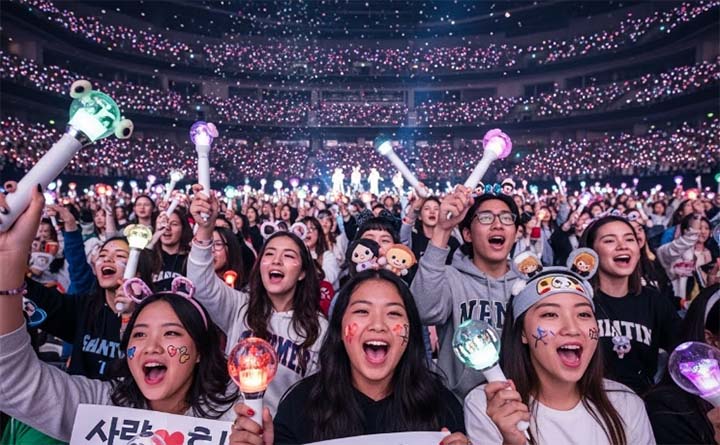
Unlike Western concerts where audiences typically sing along or shout artist names, K-Pop concerts have fan chants — synchronized call-and-response lines that occur during specific parts of songs.
These chants are:
- practiced in advance
- precise in timing
- considered essential for live shows
They’re not noise. They’re a co-created performance between fans and artists — a collaboration unique to K-Pop.
This collective chanting creates electric shared experiences that feel immersive and participatory rather than passive.
3. Streaming Together — A Strategy, Not Chaos
When a K-Pop group has a new release, you’ll notice fans urging one another to:
- stream the album on multiple platforms
- watch the music video repeatedly
- share playlists internationally
- use specific hashtags at launch
This isn’t random enthusiasm — it’s organized strategy.
Fandoms coordinate:
- streaming schedules
- voter campaigns for music shows
- hashtag tracking
- algorithm engagement techniques
Why? Because success in global charts, awards, and visibility often depends on collective data generation.
Here in Korea, we often joke that K-Pop fandoms are “part fan club, part team of analysts,” because the level of coordination and commitment rivals professional marketing.
4. Fan Projects and Social Impact
Some people think fans exist just to stream and buy albums. But K-Pop fandoms often lead social campaigns in the artist’s name.
Examples include:
- charity donations
- environmental actions
- awareness campaigns
- community support initiatives
These actions aren’t just lip service. They reflect a belief among fans that their support should extend beyond music — into positive social influence.
This aspect rarely exists in the same structured way in Western fandoms.
5. Art, Creativity, and Fandom Content
Fandom culture thrives on creation.
Fans don’t just consume music.
They produce:
- fan art
- fan fiction
- dance covers
- reaction videos
- lyric breakdowns
- theory threads
Some of these creations gain millions of views, becoming part of the culture itself.
This reflects a deep emotional investment where fans evolve into co-creators, blurring the lines between audience and culture producer.
6. Global Community Through Language and Emotion
K-Pop is a Korean cultural product, but its fandoms are global. From Seoul to São Paulo, Tokyo to Toronto, fans of all backgrounds share languages, humor, and emotional experiences.
Even when language differs:
- fans learn Korean phrases
- they teach each other pronunciation
- they share local translations
- they celebrate cultural quirks
Fandoms become multilingual, multicultural communities with their own shared language and norms.
7. Fandom Loyalty and Long-Term Engagement
In many Western pop fandoms, fans might enjoy a musician for a season or a hit song.
K-Pop fandom loyalty often spans entire careers.
Why?
Because K-Pop artists debut at young ages and evolve publicly with their fans. From trainee days to world tours, fans grow up with the artists.
This creates loyalty that feels intergenerational and lifetime-oriented, not just trend-based.
8. Respect, Manners, and Fandom Etiquette
K-Pop fans also tend to emphasize politeness, respect, and community etiquette.
Online:
- they moderate forums
- they protect against hate speech
- they maintain respectful tones
- they organize kindness campaigns
Offline:
- they donate to causes in idols’ names
- they send gifts to hospitals
- they support fellow fans in need
This aspect reflects broader Korean cultural values — respect for community, harmony, and collective harmony — but expressed through a global digital culture.
9. The Fandom Lifecycle
K-Pop fandom culture isn’t static. It evolves:
- anticipation before debut
- celebration at debut
- active engagement during peak years
- nostalgia and memory after groups disband
Unlike some fandom models where artists fade and fans disperse, many K-Pop fandoms remain active long after group activity ends, preserving legacy and cultural memory.
10. Why the World Is Drawn to K-Pop Fandom Culture
As someone watching this phenomenon from Korea, I see three key reasons global audiences resonate so deeply:
- Belonging – the sense that you are part of something bigger
- Ritual – fan chants and coordinated support create shared experiences
- Impact – fans don’t just stream. They change the conversation
These elements make K-Pop fandom culture not just a system of support for artists, but a global social culture that connects people emotionally, intellectually, and socially.