
What Is Daily Family Life Like in Korea?
A Korean Local’s Honest Look at Everyday Life
When people abroad imagine life in Korea, they often picture fast trains, neon streets of Seoul, or spicy barbecue dinners. What they don’t immediately see — until they live here or befriend locals — is how family life unfolds day by day: the rhythms, the small routines, the shared traditions, and the subtle ways Korean families support each other.
As a Korean woman living here and talking with foreign friends who have moved to Korea, I’ll take you beyond stereotypes and into the real, everyday experience of family life.
Morning Routines: Everyone Has a Role
In many Korean households, mornings are busy:
- Parents wake early to prepare breakfast
- Adults prepare for work or errands
Many families share breakfast together — simple meals like rice, soup, and side dishes — but in larger cities, quick grab-and-go breakfasts at home or convenience stores are also common.
For families with working parents, mornings can be a choreography of timing and transport: school buses, subway rides, and carpooling are all part of the daily rhythm.
Work and School: Long Days, Full Schedules
Korea’s work and school culture is known for intensity.
For students:
- School often starts early and ends mid-afternoon
- After school, many go to hagwons (학원) — private academies for extra study
- Dinner with family may happen later in the evening
For adults:
- Typical work hours are long, especially in traditional companies
- Dinner and social obligations after work are common, especially on weekdays
This doesn’t mean families never see each other — they just make the most of key times like dinner and weekends.
Dinner Time: Where Family Life Comes Alive
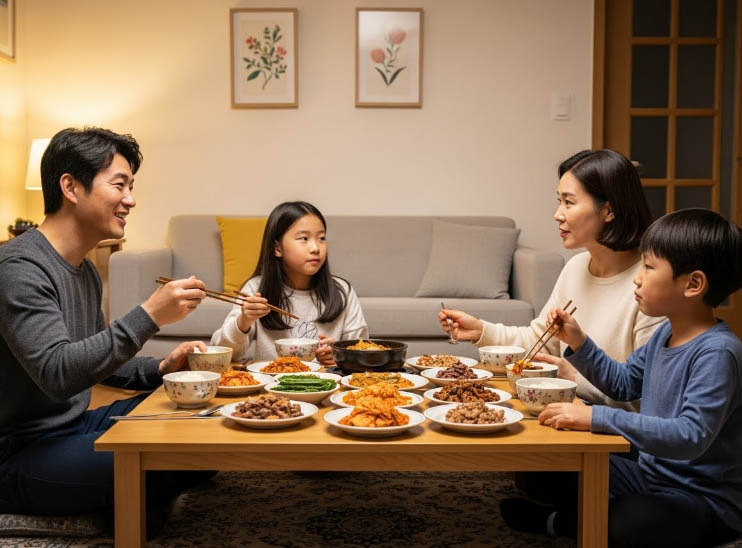
In Korea, dinner is often the heart of the day.
Families gather around:
- A shared table
- Rice, soup, and multiple side dishes (banchan)
- Conversations about each person’s day
It’s not just eating; it’s connection. Even when schedules are tight, families prioritize sharing at least one meal together when possible. Younger people living alone often eat with roommates or face the camera for a video dinner with family back home — a modern twist on tradition.
Weekends: Family Time and Errands
Korean weekends often have a mixed purpose:
- Family outings to parks, markets, or local attractions
- Errands and chores — grocery shopping, cleaning, laundry
- Education and hobbies — piano, swimming, language classes
Older generations might visit local markets early in the morning, while younger families take kids to cultural events or museums.
Weekends are less relaxed than in some cultures, but they’re rich with activity and togetherness.
Extended Family and Respect for Elders
One of the most distinctive aspects of Korean family life is respect for elders.
In many families:
- Older parents live with or near their children
- Grandparents help with childcare
- Younger members use polite language (honorifics) when speaking to seniors
This respect isn’t just polite speech; it’s woven into daily decisions — from seating at the table to who serves tea first. Even in casual moments, deference and care are cultural norms.
Celebrations, Holidays, and Shared Meals
Korean family life is tied to seasonal celebrations:
- Chuseok (추석) — Harvest holiday with family reunions and ancestral rituals
- Lunar New Year (설날) — Family gatherings, traditional games, food, and respect to ancestors
- Birthdays and anniversaries — Often celebrated with special meals and sometimes small gifts
These events reinforce family bonds and cultural heritage, and they often involve several generations coming together.
Parenting: Supportive, Structured, and Social
Parents in Korea are deeply involved in their children’s education and social development.
Common patterns include:
- Early emphasis on education and enrichment
- Supportive roles in homework and activities
- Shared responsibilities between both parents (and often grandparents)
While the intensity varies, the underlying theme is investment in children’s futures, and family discussions about school, goals, and weekends are common.
Modern Family Dynamics: Changing Fast
Modern Korean family life is evolving:
- Dual-income households are common
- Childcare solutions vary (public, private, shared care)
- Couples balance traditional expectations with modern values
Younger generations discuss work-life balance more openly, and many families choose experiences over strict routines.
This blend of tradition and modernity is one reason Korea’s everyday life feels both familiar and unique to many foreigners.
Challenges and Everyday Realities
No family life is perfect, and Korean families face real pressures:
- Work demands
- Children’s education stress
- Balancing elder care and careers
But these challenges often bring families closer, as they share responsibilities and support one another.
What Foreigners Often Notice First
Expats often tell me they notice:
- How families share daily meals together
- The rhythm of education and extracurricular life
- Respect for elders in behavior and language
- That daily life is structured yet warm
It’s not that Korean families are perfect — it’s that they are deeply interconnected in ways that shape almost every day.
A Korean Local’s Final Thoughts
Daily family life in Korea isn’t always dramatic or cinematic. It’s more like a rhythm: morning routines, shared meals, long work and school days, and conversations that matter most at the table.
Family here isn’t just a concept — it’s practiced daily in actions, language, meals, and respect.