
What Is Mugwort and Why Korea Loves It
Walk into almost any Korean beauty shop or traditional tea house and you’ll eventually hear the word ssuk. It’s the Korean name for mugwort, a plant that’s woven into the fabric of Korea’s history, cuisine, traditional medicine, and modern beauty industry. To understand why Koreans embrace mugwort so fully, you have to look at it through more than one lens — botanical, cultural, culinary, and cosmetic. This is a story about an herb that is humble in appearance but rich in tradition.
What Exactly Is Mugwort?
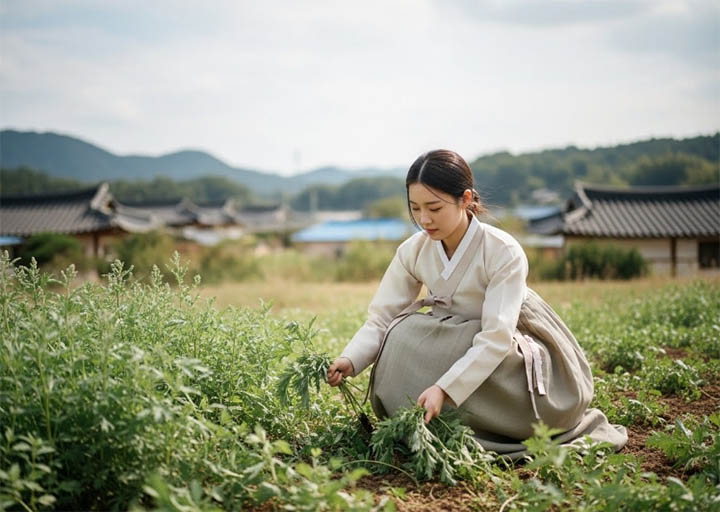
Mugwort refers to several species of the Artemisia family, and in Korea ssuk (쑥) typically points to Artemisia princeps, a plant that grows wild in spring fields and gently blankets hillsides with its silvery-green leaves. It’s been a part of East Asian culture for centuries — used in teas, food, and traditional medicine — long before it became trendy in global wellness circles.
A Herb with Deep Roots in Korean History
To grasp how embedded mugwort is in Korean identity, you can begin with Korea’s founding myth. In the legend of Dangun, a bear and a tiger prayed to become human. They were given mugwort and garlic to eat if they could endure 100 days in solitude without sunlight. The bear succeeded and became a woman who later gave birth to Dangun, the founder of Korea’s first kingdom. This story paints mugwort not simply as food but as a symbol of endurance and transformation.
In everyday life, mugwort was traditionally used to purify homes and ward off bad spirits during festivals like Dano, where bundles of mugwort were hung on doors. Its strong herbal scent was believed to carry protective energy.
Mugwort in Korean Cuisine
In Korea, mugwort isn’t just symbolic — it’s delicious. Young ssuk leaves are used in rice cakes (ssuk-tteok), savory soups (ssukguk), and even innovative desserts. Today’s Korean cafés serve mugwort lattes, and bakeries bake ssuk into bread, cookies, and bingsu (shaved ice). Its earthy, slightly bitter taste pairs surprisingly well with sweet or creamy elements, and culinary uses continue to evolve in Seoul’s trendier neighborhoods.
Traditional Wellness: Herbal Medicine and Rituals
Mugwort isn’t just eaten — it’s medicinal. In traditional Korean medicine (Hanbang), it’s prized for warming the body, aiding digestion, and supporting women’s health, especially menstrual comfort and postpartum recovery. Practitioners believed mugwort’s natural warmth and bitterness helped balance the body’s internal energies and improve circulation.
Another traditional use is moxibustion — in Korean called tteum — where dried mugwort cones or sticks are gently burned near specific points on the body. The aim isn’t to burn the skin but to allow warming herbal properties to soothe aches, stimulate circulation, and support overall wellness.
Why Mugwort Matters in Korean Skincare
K-Beauty’s global footprint is built not just on cutting-edge technology but on a long tradition of harnessing gentle, plant-based ingredients. Mugwort is one of those heroes. Rich in anti-inflammatory, antibacterial, and antioxidant compounds, it’s especially valued for calming irritated, sensitive, or acne-prone skin. This makes it ideal in toners, essences, masks, and creams designed to soothe and support the skin barrier.
In fact, brands like Missha, I’m From, and Round Lab have developed dedicated mugwort lines because consumers love how it calms redness and irritation without the harshness some active ingredients bring. Skincare lovers often reach for mugwort products when their skin feels stressed or sensitive as part of a gentle skincare routine.
Mugwort’s Modern Renaissance
While ancient Koreans appreciated ssuk for traditional medicine and cuisine, today’s Koreans have turned it into something that bridges culture and lifestyle. Mugwort teas, lattes, desserts, and cosmetics can be found from traditional markets to trendy districts like Hongdae and Garosu-gil. This isn’t nostalgia alone — it’s a reimagining of heritage for contemporary tastes.
In global wellness, mugwort is now gaining traction because people are seeking natural, holistic alternatives — and Korea’s long history with this herb gives it authenticity. From antioxidant-rich extracts to soothing skin essences, mugwort is being rediscovered as an ingredient that works gently yet effectively.
Everyday Uses of Mugwort in Korea
From drinking ssuk cha (mugwort tea) in spring to enjoying mugwort pancakes at a local eatery, using mugwort is a tactile way to connect with Korean culture. Many families still pick young mugwort in early spring to make rice cakes or add it to savory broths. During seasonal celebrations, you might see mugwort offered as part of festive tables or community events.
How to Try Mugwort Yourself
If you’re curious, start simple: look for mugwort tea or a mild mugwort toner from Korean skincare brands. In Korean supermarkets, you can also find dried mugwort leaves or powders to make traditional drinks or bake into your own fusion recipes at home. Locals often joke that ssuk is Korea’s secret ingredient — simple yet deeply versatile.
Final Thoughts
Mugwort’s story in Korea is more than a trend. It’s a living cultural thread that connects ancient myth, traditional medicine, culinary creativity, and modern skincare innovation. Love it in your latte, support it in your skincare routine, and discover a little bit of Korea’s soul in every leaf.